

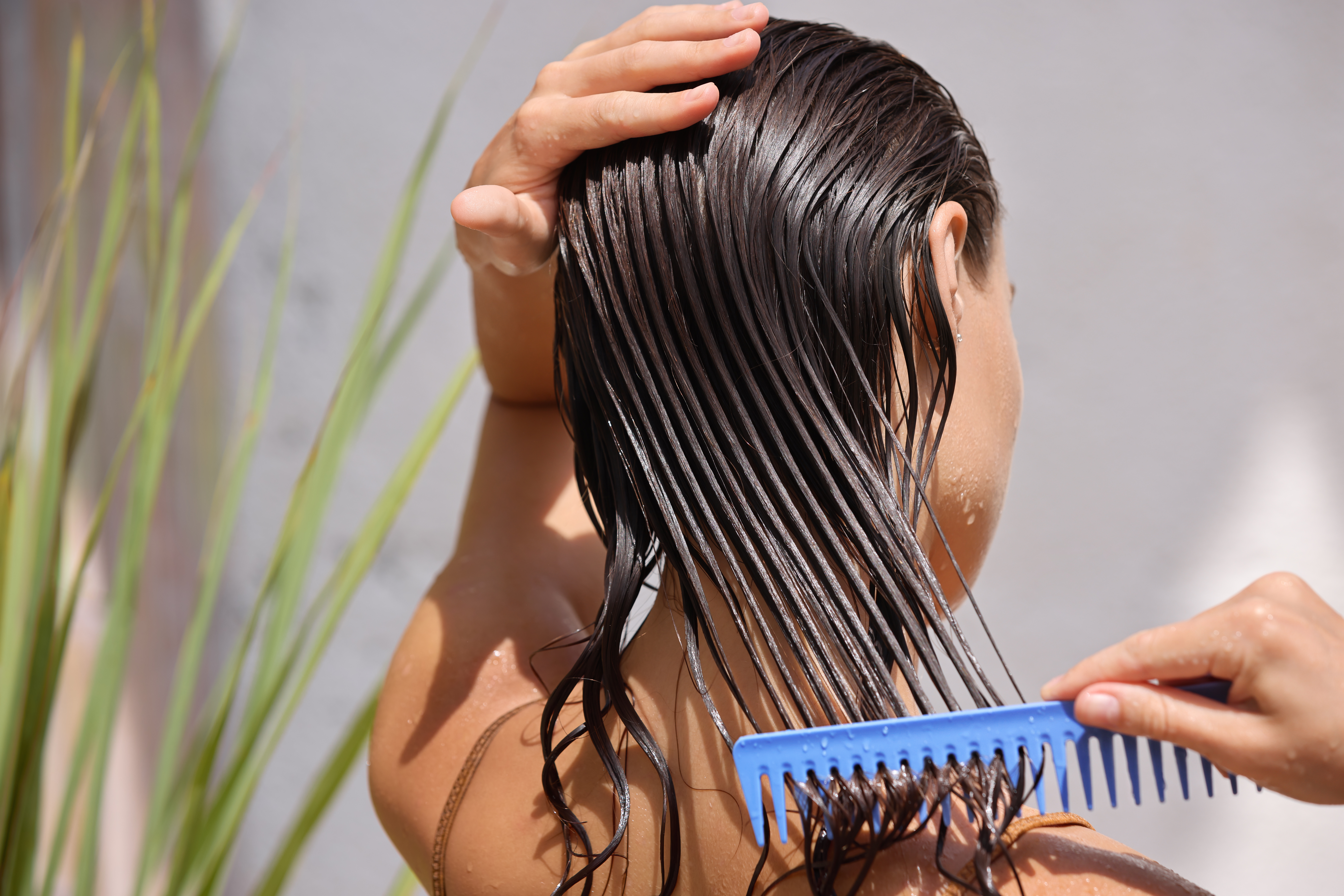
Frizz. Every curly, wavy, or even straight-haired individual has experienced it at some point. It can turn a good hair day into a frustrating battle against flyaways and unruly strands. Frizz can leave your hair looking unruly, undefined and frankly, frustrating. But what exactly causes frizz, and how can you better manage it?
But worry not! We’ll tell you how you can take control of these rebellious locks and achieve smoother, more manageable hair.
The Science Behind Frizz

Hair is made up of keratin, a protein that forms long chains. These chains are arranged in overlapping scales called the cuticle. The condition of the cuticle plays a critical role in frizz. When the cuticle is smooth and flat, it reflects light and gives your hair a healthy shine. However, when the cuticle becomes damaged or lifted, it allows moisture to escape, leading to frizz.
Here’s where science comes in. Hair strands are naturally hygroscopic, meaning they attract and absorb moisture from the environment. This absorption is facilitated by hydrogen bonds, tiny bridges that form between water molecules and the protein chains in your hair.
What Causes Frizz?

I. Hair Structure
The structure of your hair plays a significant role in frizz. Each hair strand consists of several layers like the cuticle, cortex and sometimes a medulla. The outer layer, the cuticle, is made up of overlapping scales that protect the inner layers. When these scales are lifted or damaged, moisture can penetrate the hair shaft, causing it to swell and resulting in frizz.
II. Humidity and Weather
Humidity is a major contributor to frizz. When the air is humid, hair tends to absorb moisture from the environment, causing the cuticle to swell. This leads to the characteristic frizzy appearance as the hair strands lose their smooth texture and become rough and unruly.
III. Porosity
Hair porosity refers to how well your hair can absorb and retain moisture. High porosity hair tends to absorb moisture quickly but also loses it just as fast, making it prone to frizz. Low porosity hair, on the other hand, has a tighter cuticle layer that makes it harder for moisture to enter, often resulting in a lack of moisture and potential frizz.
IV. Damage and Dryness
Damaged hair, whether from heat styling, chemical treatments or environmental factors, has a weakened cuticle layer. This allows moisture to enter the hair shaft easily, leading to frizz. Additionally, dry hair lacks moisture and natural oils, which can exacerbate frizz and make it more difficult to manage.
Tips and Techniques to Manage Frizz

I. Hydration and Moisture
Keeping your hair well-hydrated is key to combating frizz. Use moisturizing shampoos and conditioners designed for your hair type to help maintain moisture balance. Consider incorporating deep conditioning treatments or leave-in conditioners to provide extra hydration.
Try: The Skin Story Keratin Conditioner
II. Avoiding Heat Damage
Limit the use of heat-styling tools such as flat irons and blow dryers, as excessive heat can damage the cuticle layer and contribute to frizz. When using heat, always apply a heat protectant to minimize damage.
III. Protective Styling
Opt for protective hairstyles such as braids, twists, or buns to minimize exposure to humidity and friction, which can aggravate frizz. Use silk or satin hair accessories and pillowcases to reduce friction and help maintain smooth hair.
IV. Seal The Cuticle
After washing your hair, rinse with cool water to help close the hair cuticle and seal in moisture. Finish with a lightweight serum or oil to smooth the hair shaft and reduce frizz. Avoid products containing alcohol, as they can dry out your hair and contribute to frizz.
V. Climate Control
In humid weather, consider using anti-frizz products or serums that contain ingredients like silicone or glycerin to create a barrier against moisture. These products can help smooth the hair cuticle and keep frizz at bay.
VI. Choose The Right Haircut
A well-cut hairstyle can significantly reduce frizz. Discuss frizz-fighting styles with your stylist, such as layers for thicker hair or blunt cuts for finer hair.
VII. Oil Your Hair
Hair oils can be great for frizzy hair. They provide intense moisture and have the ability to strengthen hair. Choose an oil suited to your hair type and apply a small amount to damp hair, focusing on the mid-lengths and ends.
Try: Parachute Advansed Gold Coconut Oil
So there you have it! The mystery of frizz unravelled. It’s all about giving your locks the love and attention they need. Maybe it’s pampering them with a deep conditioning session, or perhaps it’s showing them some TLC by skipping that hot styling tool once in a while. And remember, not every day will be a perfect hair day, but that’s okay. With the right routine and a little patience, you’ll be on your way to smoother, happier hair. Cheers to fewer bad hair days and more fabulous, frizz-free moments!
0 comments on “Frizz Decoded: A Deep Dive into Hair Management”