

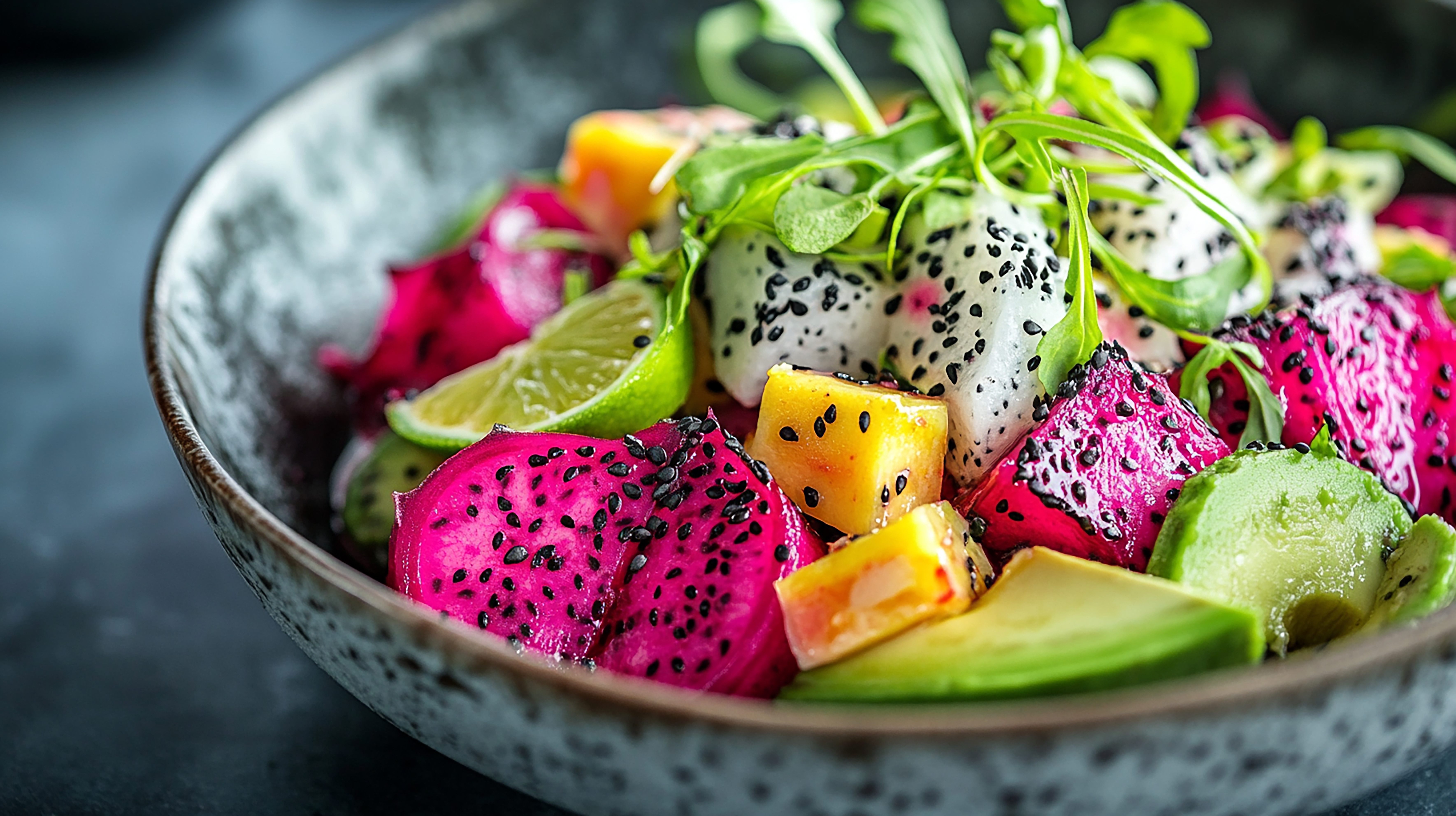
Until a few years ago, exotic fruits were reserved for gourmet grocery shelves or international travelogues. But times have changed. Today, fruits once considered rare—like dragon fruit, blueberries, kiwis, and avocados—are steadily making their way into Indian households, smoothie bowls, skincare products, and even temple offerings. With changing tastes, health consciousness, and globalised agriculture, Indian markets are now buzzing with these vibrant, nutrient-rich imports and homegrown exotics.
Let’s take a closer look at the exotic fruits currently trending in India—and why they’re here to stay.
1. Dragon Fruit (Pitaya)

Origin: Central America
Grown in India: Maharashtra, Gujarat, Karnataka
This striking cactus fruit with fuchsia skin and speckled flesh has become a visual and nutritional hit. Rich in antioxidants, fibre, and vitamin C, dragon fruit is hailed for boosting gut health and immunity. What once arrived only as an import is now being cultivated locally under the name kamalam, especially in arid regions.
Why it’s trending: Eye-catching looks, Instagram appeal, low-calorie nutrition.
2. Avocado

Origin: Mexico
Grown in India: Tamil Nadu, Karnataka, Sikkim
Often dubbed butter fruit, avocado has surged in popularity thanks to its creamy texture and heart-healthy fats. It’s now a staple in urban breakfast menus—think avocado toast, salads, and smoothies. India is slowly picking up pace with domestic cultivation, though imported varieties from New Zealand and Peru still dominate premium markets.
Why it’s trending: Keto-friendly, high in healthy fats, favoured by fitness circles.
3. Blueberries

Origin: North America
Mostly imported
Small but mighty, blueberries pack a punch when it comes to antioxidants, especially anthocyanins. Known for supporting brain health and reducing oxidative stress, these berries have transitioned from niche gourmet stores to online fruit baskets and premium supermarkets. While India is yet to become a significant grower, the demand is growing sharply among health-conscious buyers.
Why it’s trending: Superfood status, immunity-boosting claims, easy snackability.
4. Passion Fruit

Origin: South America
Grown in India: Kerala, Tamil Nadu, Nagaland
This fragrant, tangy fruit with a jelly-like centre is becoming a favourite in juices, desserts, and even cocktails. Its high vitamin C and fibre content make it a nutritious pick. Passion fruit vines grow well in Indian tropical conditions, making it both an export and a local treat.
Why it’s trending: Unique taste, immunity benefits, culinary versatility.
5. Rambutan & Mangosteen

Origin: Southeast Asia
Grown in India: Kerala, Tamil Nadu (limited cultivation)
These tropical Southeast Asian fruits are slowly gaining visibility in Indian metros. Rambutan, with its hairy red shell and juicy flesh, is often compared to lychee. Mangosteen, known as the ‘queen of fruits’, has a mildly tangy flavour and is loaded with xanthones, a type of antioxidant.
Why they’re trending: Novelty factor, rising interest in Thai and Malaysian cuisines.
6. Kiwi

Origin: China, developed in New Zealand
Grown in India: Himachal Pradesh, Arunachal Pradesh
Once an exclusive import, kiwi has found a stronghold in India’s colder regions. Its tangy-sweet taste and high vitamin C content make it a favourite in salads and fruit bowls. With consistent supply from Indian orchards and increasing consumer familiarity, kiwi is no longer “exotic” for many.
Why it’s trending: Locally grown, good for digestion, child-friendly taste.
7. Longan & Starfruit (Carambola)

Origin: Southeast Asia
Grown in India: North-East India, Karnataka (limited)
Starfruit, with its star-shaped cross-sections and crisp tartness, is a tropical gem that’s slowly appearing in fruit stalls. Longan, a cousin of lychee, is often eaten fresh or used in desserts. Both are low in calories and packed with vitamin C.
Why they’re trending: Aesthetics, low sugar, and curiosity among young consumers.
What’s Driving the Trend?
-
Global Palates: As Indians travel more and explore international cuisines, they’re developing a taste for foreign fruits.
-
Health Awareness: Superfoods and immunity boosters are in demand, especially post-pandemic.
-
E-commerce Access: Online grocery platforms have made it easier to try exotic fruits without stepping out.
-
Domestic Cultivation: Farmers are experimenting with non-native crops to diversify income and meet urban demands.
Challenges & Considerations
While exotic fruits offer new experiences, they often come with a higher price tag. Storage and shelf-life issues, lack of standardisation, and limited cultivation also make them less accessible to the average consumer. However, as demand grows, production and affordability are expected to improve.
Final Bite
Exotic fruits are no longer just indulgent imports—they’re becoming part of the modern Indian lifestyle. Whether it’s a tangy slice of starfruit, a creamy avocado dip, or a bowl of vibrant blueberries, these tropical treasures are rewriting our fruit vocabulary. As local farming catches up with global tastes, the exotic is slowly turning into everyday.
Let your fruit basket be as diverse as your playlist—go beyond apples and bananas. There’s a whole tropical world waiting to be tasted.
Click here to buy exotic fruits from bigbasket
0 comments on “Exotic Fruits Trending in Indian Markets”