

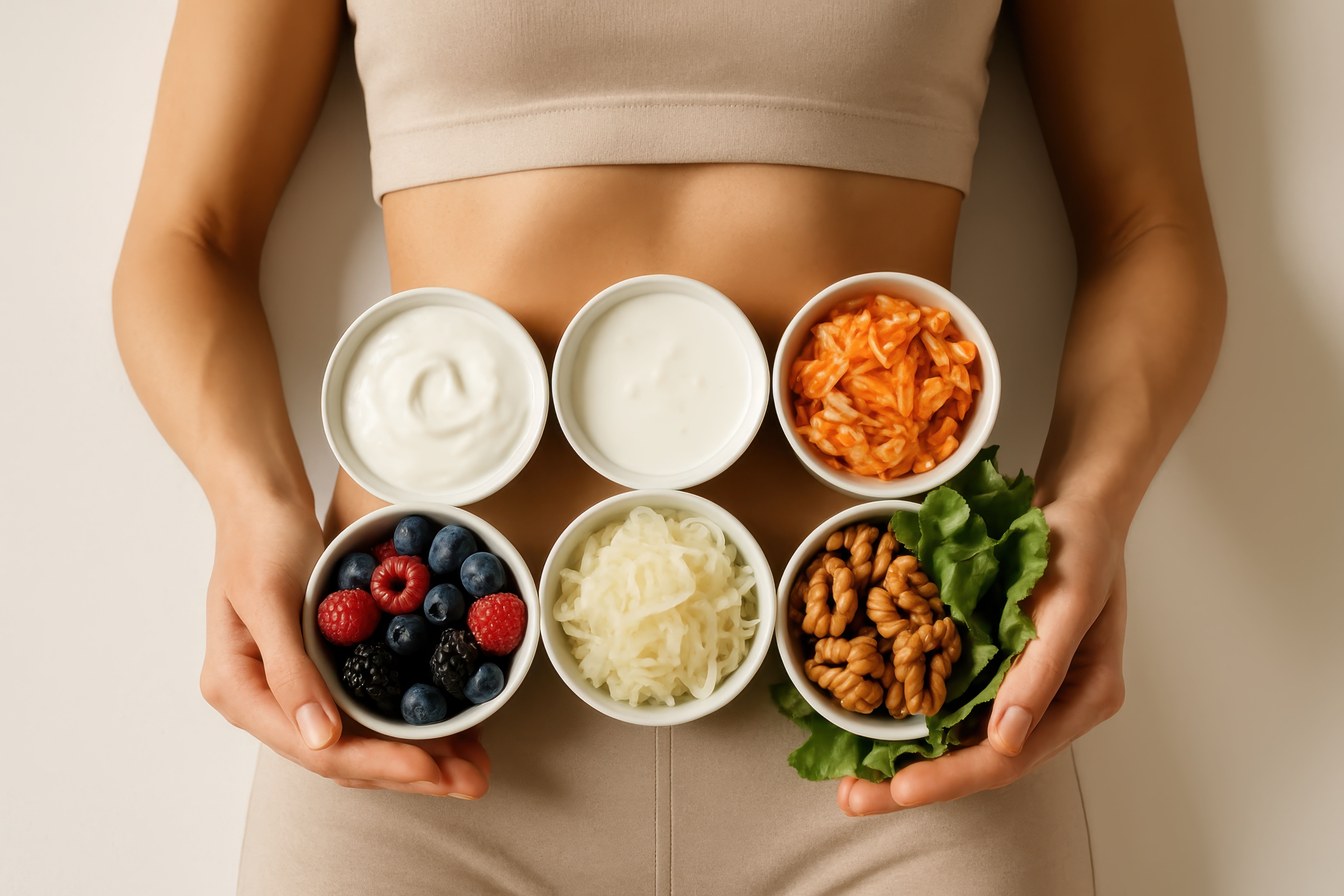
Your gut plays a central role in shaping your overall health. Modern medicine is increasingly confirming what traditional Indian practices like Ayurveda have known for centuries: food is medicine. Let’s delve into the specific, powerful compounds in seven common Indian ingredients that are revolutionising the way doctors view digestive wellness.
🔬 The Seven Gut-Healing Superstars
1. Dahi (Yoghurt/Curd) 🥛
The Core Probiotic and SCFA Generator.
-
Why It Raves (The Advanced Science): Dahi is a natural ferment containing beneficial bacteria like Lactobacillus acidophilus and Bifidobacterium. These probiotics help maintain the ecological balance of the gut microbiome and are crucial for the production of beneficial Short-Chain Fatty Acids (SCFAs) in the colon.
-
The Power Nuance: The traditional, room-temperature preparation of dahi often yields a wider, more robust, and resilient blend of native bacterial strains than many commercial yoghurts.
| 🦠 Dahi’s Microbial Advantage | |
| Probiotic Diversity | Contains various LAB strains critical for colon health. |
| Lactase Activity | The bacteria partially digest lactose, making it easier to tolerate than plain milk. |
| Butyrate Precursor | Contributes to the microbial environment necessary for SCFA production. |
2. Traditional Homemade Achaar (Pickles) 🏺
The Wild Fermentation Probiotic Bomb.
-
Why It Raves (The Science): Unlike industrial pickles preserved with vinegar, homemade achaar (fermented with salt, spices, and oil) undergoes spontaneous lactic acid fermentation (LAB). This natural process introduces highly diverse, resilient strains of bacteria like Lactobacillus plantarum. This diversity is key to modulating the immune system, 70% of which resides in the gut.
-
The Power Nuance: The salt, oil, and spices create a selective environment that favours the survival of certain hardy LAB strains, resulting in a unique, potent microbial profile superior to many single-strain commercial products.
| 🦠 Achaar’s Microbiome Magic | |
| Diverse LAB Strains | Provides varied microbial input for broader gut diversity. |
| Organic Acids | Lactic acid and acetic acid created during fermentation act as natural antimicrobials against pathogens. |
| Pre-Digestion | Fermentation breaks down plant matter, enhancing nutrient absorption. |
3. Idli/Dosa Batter 🍚
The Pre-Digested, Nutrient-Optimised Breakfast.
-
Why It Raves (The Science): The soaking and overnight fermentation of rice and urad dal (black gram) batter is a precise microbial process. The LAB growth not only adds probiotics but also increases the bioavailability of essential minerals. Specifically, it breaks down phytic acid (a mineral blocker), enhancing the absorption of Iron and Zinc that are often poorly absorbed from grains.
-
The Gut Benefit: The steamed Idli is incredibly light, easy-to-digest, non-acidic, and provides a gut-friendly carbohydrate source with a lower Glycemic Index (GI) compared to unfermented rice.
| 📈 Fermentation Perks | |
| Phytic Acid Reduction | Maximises mineral (Iron, Zinc) uptake. |
| Lower GI | Better blood sugar regulation, less stress on digestion. |
| Protein Upgrade | Fermentation converts complex proteins into simpler, more digestible amino acids. |
4. Lentils and Pulses (Dal, Rajma, Chana) 🍲
The High-Fibre, Prebiotic Powerhouse.
-
Why It Raves (The Science): While sometimes blamed for gas (due to oligosaccharides like raffinose), lentils are unparalleled sources of dietary fibre and resistant starch. This indigestible fibre bulk is crucial for promoting regular bowel movements and acts as a potent prebiotic feed for beneficial bacteria, significantly increasing SCFA production, especially butyrate.
-
The Non-Generic Nuance (The Power of Preparation): Traditional soaking, rinsing, and pressure-cooking—or even sprouting (ankurit)—are essential. This breaks down the oligosaccharides and lectins, vastly improving digestibility and reducing flatulence.
| 🌾 Lentils’ Prebiotic Power | |
| Resistant Starch | Feeds colon bacteria, maximising SCFA production. |
| Soluble Fiber | Helps stabilise blood sugar and softens stool. |
| Preparation Science | Soaking and sprouting break down gas-causing oligosaccharides. |
5. Ghee (Clarified Butter) ✨
The Colonocyte Fuel and Lipid Regulator.
Why It Raves (The Advanced Science): Ghee is exceptionally rich in Butyric Acid (SCFA) and Conjugated Linoleic Acid (CLA). Butyrate is the preferred energy source for your colonocytes (cells lining the colon). This direct fuel source is crucial for reinforcing the gut barrier function (preventing “leaky gut”) and maintaining the health of the intestinal mucosal layer.
The Traditional Wisdom: Ghee is used in detoxification procedures (Panchakarma), specifically for internal oleation (snehana), believed to gently lubricate the intestines and support the movement of toxins.
| 🔬 Ghee’s Gut Chemistry | |
| Butyrate | Fuels colonocytes, supports gut barrier integrity, and is anti-inflammatory. |
| CLA | May offer anti-carcinogenic properties in the gut. |
| Snehana | Traditional Ayurvedic use for lubricating and healing the GI tract. |
6. Kanji (Fermented Drink)
A seasonal, probiotic-rich, traditional beverage.
Why It Raves (The Science): Kanji is an anaerobic fermentation of black carrots (or beets), mustard seeds, salt, and water. Unlike commercial products, the spontaneous fermentation by naturally occurring lactic acid bacteria (LAB) produces a highly diverse and potent source of probiotics. The natural acids created (lactic acid) help preserve the gut-friendly bacteria and aid in nutrient digestion.
The Traditional Wisdom: This deep purple drink is traditionally made during the winter months when digestion is naturally stronger and is often consumed before meals as an appetiser to stimulate agni (digestive fire) and enhance overall digestive capacity.
| 🥕 Kanji’s Synergy | |
| Anthocyanins | Acts as a prebiotic and antioxidant. |
| Mustard Seeds | Antimicrobial and powerful Agni stimulant. |
| Lactic Acid | Primes the stomach for digestion, increasing nutrient absorption. |
7. Fenugreek Seeds (Methi Dana)
The powerhouse prebiotic fibre.
Why It Raves (The Science): These seeds are packed with soluble fibre, mainly a heteropolysaccharide called galactomannan. Galactomannan is a powerful prebiotic, meaning it is selectively fermented by beneficial colon bacteria (like Bifidobacteria), promoting their growth and further increasing SCFA production.
The Culinary Trick: The seeds’ bitterness is due to saponins. Soaking them overnight and discarding the water significantly reduces the bitterness while retaining the vital galactomannan fibre.
| 💧 Methi’s Protective Power | |
| Galactomannan | Potent prebiotic fibre, selectively feeding healthy bacteria. |
| Mucilage | Provides a soothing, protective layer for the irritated gut lining. |
| Blood Sugar Regulation | Slows glucose absorption, indirectly supporting a stable gut environment. |
🔑 Your Microbiome Mastery Toolkit
By understanding the ‘why’ behind these traditional ingredients, you can make more informed choices:
- Anti-Inflammatory Duo: Always combine Turmeric + Black Pepper + Ghee in your daily lentil or vegetable dishes.
- The Digestive Starter: Before heavy meals, try a small spoonful of crushed Ginger mixed with fresh lime and salt.
- The Restorative Meal: When your gut needs a break, rely on a bowl of thin Khichdi (rice + yellow moong dal) cooked lightly in Ghee—it’s scientifically gentle and nutrient-dense.
This isn’t just a trend; it’s a return to time-tested, science-backed wisdom about feeding your body’s inner ecosystem.
Yes exactly….These foods better than packing foods