

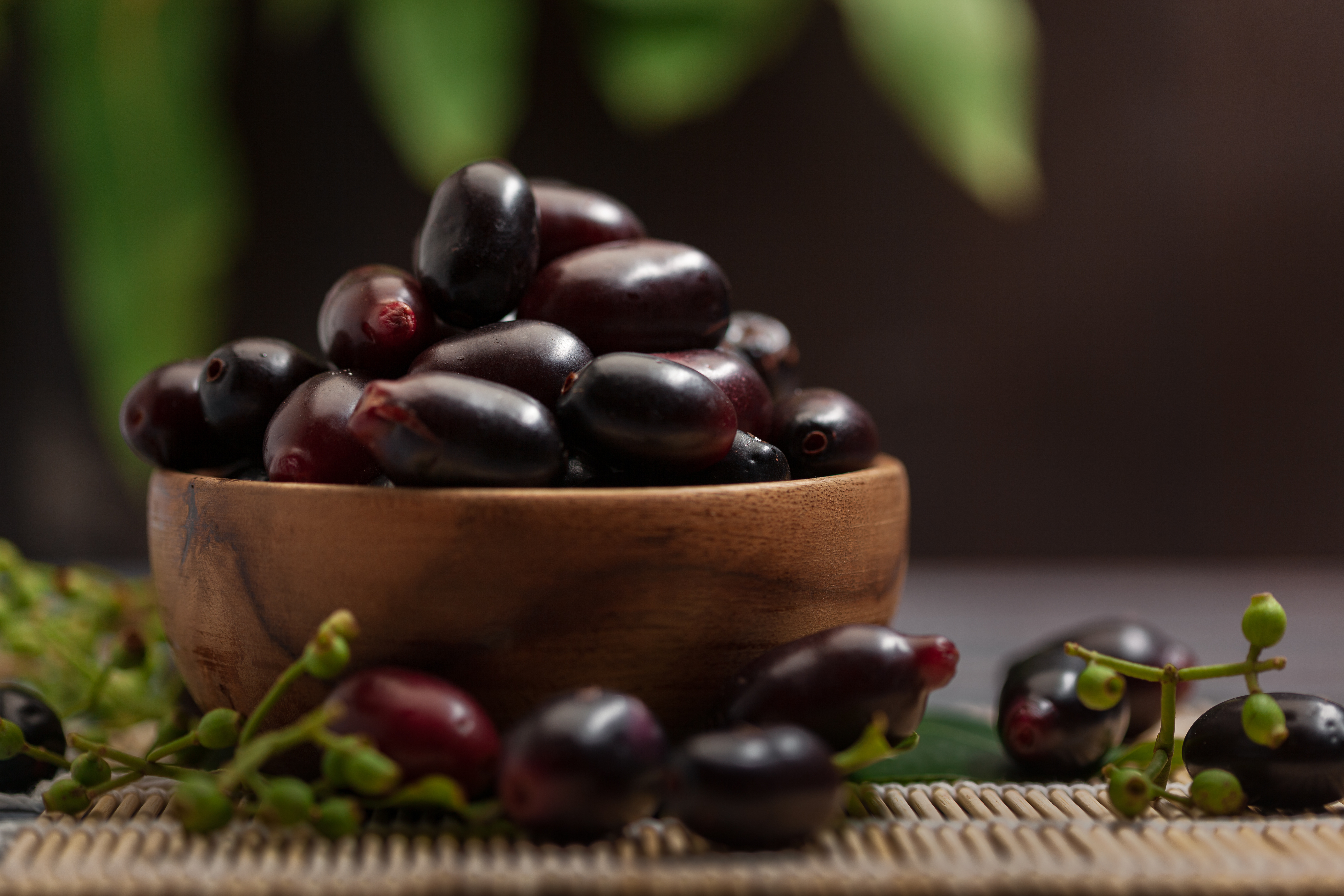
There are some fruits that come with seasons, and others that come with stories. Jamun, the deep purple monsoon berry, is one of the few that brings both. Its arrival on street carts and market baskets signals the heart of Indian rains—and for many of us, it carries the taste of childhood, wet school uniforms, stained tongues, and the joy of getting messy without a care.
But beyond the sweet-tart flavour and fun memories, Jamun (also called Indian blackberry or Java plum) has a fascinating history, a bundle of health benefits, and a special place in India’s cultural pantry.
Let’s take a juicy deep dive.
A Taste of Monsoon Childhood
Remember those paper cones filled with salt-and-spice-dusted Jamuns? Sold by street vendors who magically appeared near schools just after class got over? One handful would be never enough. The dark skins left purple streaks on your fingers and lips, and every bite came with a surprise—sometimes sweet, sometimes puckeringly sour.
For many, Jamun is the ultimate nostalgic fruit. It wasn’t part of the everyday fruit basket like apples or bananas. It was seasonal, fleeting, and found only during the rains. And that made it all the more special.
Jamun’s Indian Roots (and Wings)
Jamun trees are native to the Indian subcontinent and have been growing here for thousands of years. They’re mentioned in ancient Ayurvedic texts and are even believed to have been one of Lord Krishna’s favourite trees. In mythology and folk tales, Jamun trees were places of shade, shelter, and secrets.
Interestingly, the tree itself is a marvel—it grows tall and wide, provides dense shade, and lives for decades, often seen guarding old homes, temples, and village squares.
Did You Know?
- The purple pigment of Jamun stains easily—so much so that it was once used to make natural dyes and ink.
- The seed (stone) inside Jamun is valued in Ayurveda—it’s dried, powdered, and used in many traditional remedies, especially for diabetes.
- A single Jamun tree can live over 100 years, and some ancient ones still stand in Mughal gardens and palace grounds.
- The fruit has a low glycemic index, making it ideal for people watching their blood sugar.
A Health Boost in Every Bite
Jamun isn’t just a pretty face. It’s packed with nutrients:
- Vitamin C and iron for better immunity and energy.
- Antioxidants that help fight cell damage.
- Natural compounds that help regulate blood sugar levels.
- Digestive enzymes that aid in gut health.
During monsoon, when digestion is often sluggish, and immunity can dip, Jamun is actually one of the smartest fruits to eat.
From Tree to Table
Traditionally, Jamun was always eaten fresh—right from the tree, if you were lucky. But today, it’s being reinvented in creative forms: Jamun sherbets, vinaigrettes, jams, chutneys, sorbets, and even kombuchas are showing up in Indian kitchens.
And of course, Jamun vinegar and seed powder are popular in health circles.
If you’re buying Jamun online, look for ones that are:
- Deep purple and slightly soft to the touch (not squishy).
- Not leaking juice or showing signs of mould.
- With their green stems still attached, if possible—this indicates freshness.
Storage Tips
Fresh Jamuns are delicate and perishable. To keep them fresh longer:
- Store in the fridge in a breathable container.
- Don’t wash them until you’re ready to eat.
- If you want to freeze them, remove the seeds and pack in an airtight container.
A Short Season, A Long Legacy
Unlike mangoes, which get all the summer love, Jamun quietly makes its appearance mid-monsoon, stays for a few weeks, and then disappears until next year. Maybe that’s what makes it so irresistible—its limited-time presence, like a visiting friend who leaves behind stories and smiles.
In many Indian homes, the sight of Jamun on the table still sparks conversations: about childhood, school days, cousins on summer break, and trips to grandma’s house. In a world of imported fruits and year-round availability, Jamun remains refreshingly old-school.
Make the Most of Jamun Season
Whether you’re munching them raw, tossing them into a smoothie, or using their seed powder in your morning wellness routine, Jamuns are a rare monsoon treat—one that deserves to be celebrated.
So this season, stock up while they last. Let the juice stain your fingers. Smile at the sourness. And if you’re ordering online, don’t forget to check out our special monsoon fruit picks.
Because some things, like Jamun season, just can’t be missed.
Good, very nostalgic, full of old age memories.
দেশী কালো জাম