

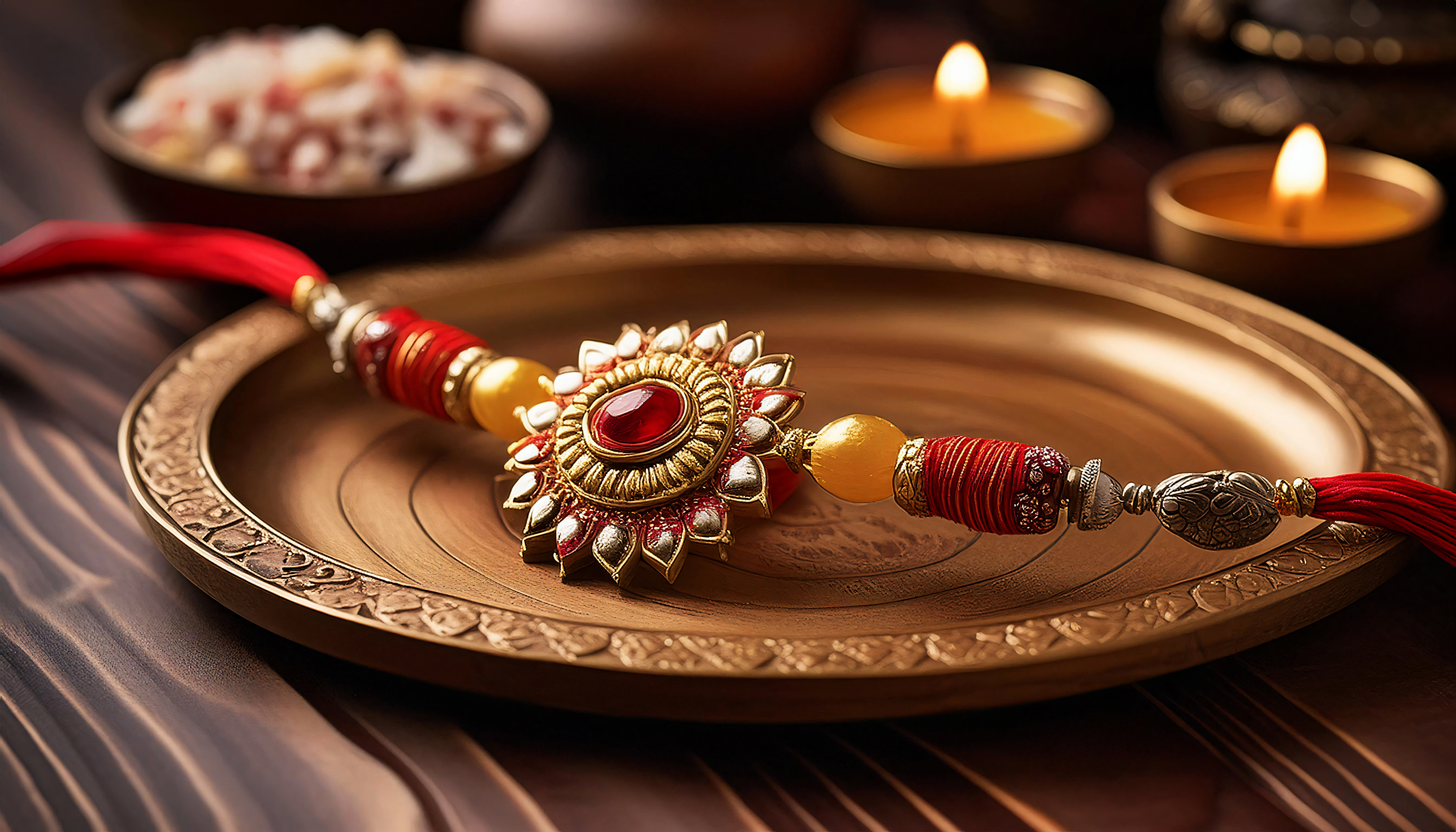
From scriptures and royal courts to modern apartments and video calls, Rakhi has grown with us. It is a reflection of how we express care—sometimes loudly, sometimes silently, but always deeply. This journey of Raksha Bandhan is one that connects gods, warriors, poets, and everyday families in one emotional narrative. Let us walk through the many lives Rakhi has touched, shaped, and protected.
Stories Etched in History: Rakhi Through the Ages

As time marched on, Raksha Bandhan stepped out of scriptures and into the pages of history—becoming a symbol not just of familial love, but of diplomacy, honour, and unity. The threads in these stories were tied not just to wrists, but to promises, power, and politics.
Rabindranath Tagore and the Rakhi of Unity
In 1905, when British colonists sought to divide Bengal along religious lines, Rabindranath Tagore envisioned Rakhi as a ribbon of resistance. He encouraged Hindus and Muslims to tie rakhis to one another, standing together in brotherhood. It was a festival of peace in a time of division, showing that Raksha Bandhan could also be a tool of social reform and collective strength.
Roxana and King Porus: A Queen’s Plea Across Cultures
When Alexander the Great prepared for battle against the Indian king Porus, his wife Roxana feared for his life. As legend has it, she sent a rakhi to King Porus, asking him to spare Alexander. Porus, respecting the gesture, held back his wrath in battle. This account—blending East and West, war and mercy—reveals how a simple thread could halt swords and awaken humanity.
Rani Karnavati and Humayun: The Last Rakhi of a Dying Queen
In a desperate hour, Rani Karnavati of Chittor, facing a siege from Bahadur Shah, sent a rakhi to the Mughal emperor Humayun. Though delayed, Humayun set out to help—but Chittor had fallen and the queen had committed jauhar. Still, he honoured her gesture by restoring her son to power. The rakhi here became a plea, a pact, and a symbol of bonds that rise above blood, religion, or rule.
Whispers from the Divine: Mythological Tales Behind Rakhi

Before rakhis became ornamental and festive, Raksha Bandhan was rooted in the sacred Vedic tradition of rakshasutra—a thread tied during yajnas to invoke divine protection. The term itself, meaning “bond of protection,” reflects its original spiritual purpose. Over time, this simple thread took on deeper meaning through rich mythological tales, evolving into a celebration of love, loyalty, and lifelong bonds.
Krishna and Draupadi: A Bond Beyond Words
In today’s world of fast lives and faraway loved ones, Raksha Bandhan has gracefully adapted. The thread now travels through screens, courier boxes, and video calls—yet its pulse is as strong as ever. Rakhi isn’t just about brothers anymore. Friends tie it to each other, children tie it to teachers, neighbours, mentors, or even soldiers. It has grown into a festival of voluntary bonds—chosen families, chosen protectors.
Modern e-commerce platforms offer curated rakhi hampers, e-rakhis, and personalised gifts, making it easier to celebrate across borders. But whether sent by drone or hand-delivered with sweets, each rakhi still carries the same emotion—“I care, I protect, I remember.”
Well I am truly impressed by BB team it’s choice of good choice of varieties innovative marketing some great items great ideas decent customer care
Only kindly remove old reviews only past two years ought to be enough