

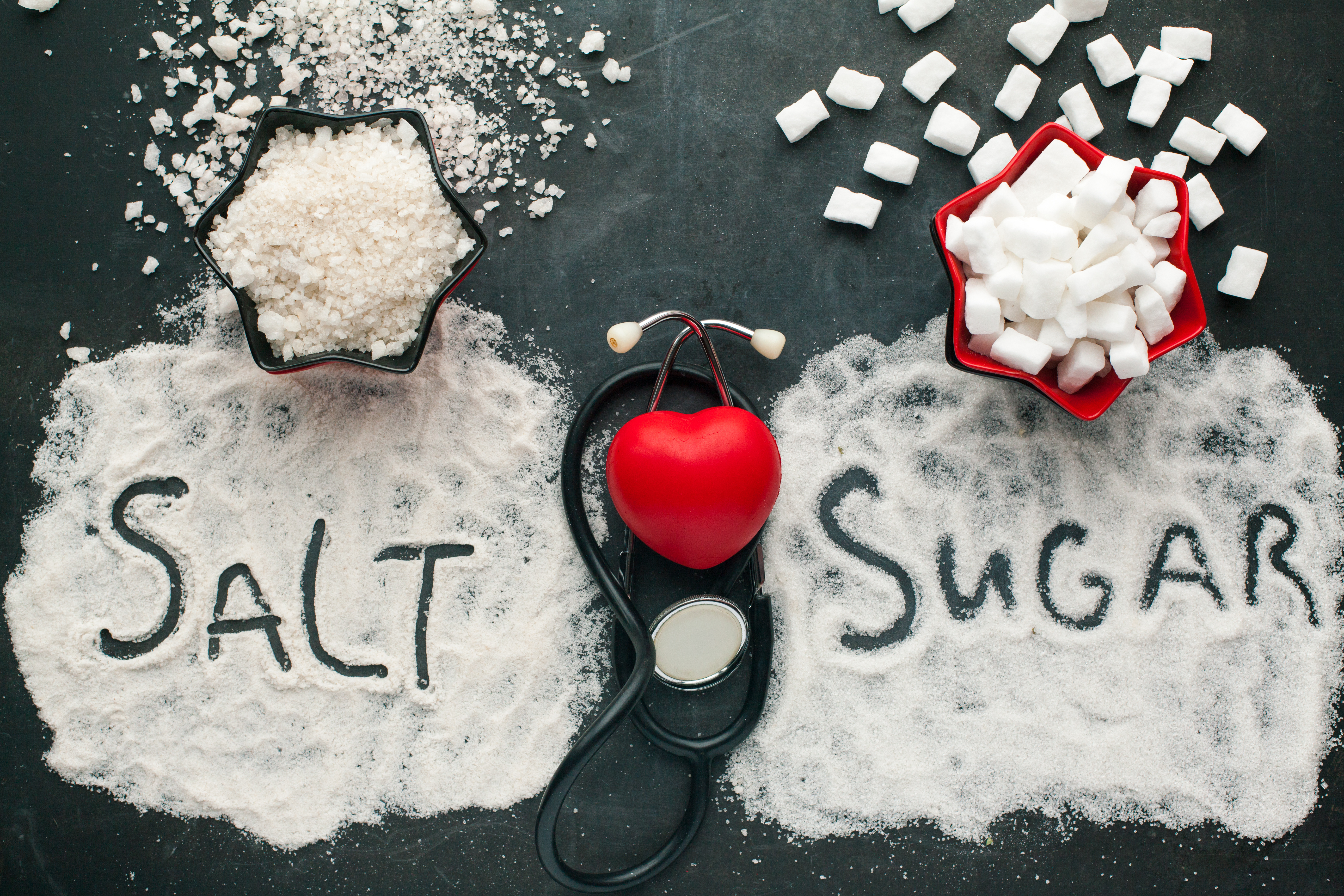
We’ve all heard the warnings—“cut down on salt,” “sugar is poison,” “avoid fat at all costs.” But are these kitchen villains really as bad as they’re made out to be? The truth is a lot less black and white. Salt, sugar, and fat aren’t just guilty pleasures; they’re essential nutrients when used wisely. The problem starts when moderation flies out the window. So let’s separate fact from fiction and understand how these three can still play a role in a balanced diet.
Salt’s Bad Rap—Deserved or Overdone? 🧂

Myth: Salt is bad for you—cut it out completely.
Truth: Salt isn’t the villain—it’s the overdose that’s the problem.
Your body actually needs sodium to regulate fluids, nerve impulses, and muscle contractions. The WHO recommends less than 5 grams of salt per day, but most of us unknowingly double that through processed foods and snacks. Instead of cutting salt altogether, the smarter move is switching to better options—like low-sodium salt or seasoning with fresh herbs and spices for flavour.
Types of Salt and Why We Prefer Them
White table salt is highly refined, bleached, and often mixed with anti-caking agents. In contrast, Himalayan pink salt, rock salt, and sea salt undergo far less processing and retain natural trace minerals like magnesium, calcium, and potassium. While these minerals don’t transform them into “superfoods,” they do make these salts cleaner and more natural options.
Smart Ways to Control Sodium Without Cutting It Out
- Use Himalayan pink salt or sea salt in small amounts.
- Season generously with garlic, herbs, chilli flakes, and lemon.
- Limit instant noodles, chips, canned soups, and ready-to-eat mixes.
💡 Did you know? One packet of instant noodles can contain more than 50% of your daily salt limit.
👉 Shop smarter: Explore healthier salt options without piling on extra sodium.
Sugar Rush or Sugar Crash? 🍭

Myth: All sugar is toxic—you should never eat it.
Truth: Not all sugars are equal, and your body actually runs on glucose.
Sugar becomes a problem only when we overshoot our daily limits. Natural sugars from fruits, milk, and honey are digested differently from added sugars found in packaged drinks, desserts, bakery items, and processed foods. Most people consume far more than they realise.
How Much Sugar Is Actually Okay?
Health guidelines are clearer than we think:
- Women: up to 6 teaspoons a day
- Men: up to 9 teaspoons a day
But with a single pastry, milkshake, or can of cola, it’s easy to hit those limits before lunch.
Where Jaggery Fits In
When people look for better sweeteners, jaggery naturally comes up. It’s not a magic replacement, but it is less processed than refined white sugar and retains some minerals from sugarcane. That’s why it feels fuller, earthier, and more comforting in everyday recipes—chai, payasam, porridge, even simple lemon water. It offers sweetness with a touch more nourishment, making it a gentler choice for routine use.
Better Ways to Sweeten Without Going Overboard
If you’re trying to cut down without giving up sweetness completely, small swaps go a long way:
- Date syrup or date powder for a deeper flavour
- Coconut sugar for milder sweetness
- Honey in warm drinks or baking
- Stevia for low-calorie choices
- Jaggery, when you want natural sweetness without harsh spikes
- None of these demands give up your favourites—they simply help keep your sugar intake in check while still enjoying what you love.
💡 Did you know? One can of soda can exceed your entire day’s sugar limit in a single go.
👉 Shop smarter: Discover better sugar alternatives right here.
Fat: Friend, Foe, or Fuel? 🧈

Myth: Eating fat makes you fat.
Truth: Healthy fats are your friend, not your enemy.
Our brains, hormones, and even vitamin absorption depend on fat. The key is choosing the right type: unsaturated fats from nuts, seeds, and oils like olive or mustard support heart health, while trans fats (found in deep-fried fast foods and margarine) increase risk of disease. Skipping fat entirely can leave you sluggish and nutrient-deficient. Balanced diets include about 20–35% of calories from fat.
Where the Best Fats Come From
Healthy fats don’t just make food taste better—they make your meals more satisfying and your body more balanced. Some of the most reliable sources are:
- Avocados
- Nuts and seeds like almonds, walnuts, chia, and flax
- Oils such as olive, mustard, and groundnut
- Fatty fish like salmon and mackerel
- Ghee in moderation
These support heart health, improve metabolism, and keep you fuller for longer.
How to Avoid the Bad Stuff
Unhealthy fats usually sneak in when food is deeply fried, overly processed, or made with hydrogenated oils. Cutting back doesn’t mean avoiding flavour—it simply means being mindful of what’s going into your plate.
Think about reducing:
- Deep-fried fast foods
- Bakery items made with margarine or shortening
- Packaged snacks that use partially hydrogenated oils
- Cheap, ready-to-eat fried mixes
- These tend to be loaded with trans fats—the kind linked to inflammation and heart disease.
Choosing Trans-Fat-Free Products
A quick label check can make all the difference. Look for:
- “0g Trans Fat”
- “No Hydrogenated Oils”
- “Cold-Pressed Oil”
- Short and simple ingredient lists
If you spot “partially hydrogenated” anywhere on the pack, that’s your cue to put it back.
💡 Did you know? Your brain is almost 60% fat—no wonder it needs healthy fats to function well.
👉 Shop smarter: Stock up on fresho! Avocados, bb Royal Almonds, or heart-friendly oils like Figaro Extra Virgin Olive Oil.
So, What’s the Takeaway?
Salt, sugar, and fat don’t need to be villains in your kitchen—they just need to be kept in check. It’s about mindful choices, portion control, and picking better sources. Cooking at home automatically gives you more control than eating out, and platforms like BigBasket make it easier to access healthier swaps and fresher alternatives.
Food should bring joy, not guilt. So next time you sprinkle salt on your salad, add jaggery to your chai, or drizzle olive oil over your pasta—know that you’re not breaking rules, you’re balancing them.
Make your plate colourful, flavorful, and balanced—and let bigbasket bring the best ingredients to your doorstep.
0 comments on “The Big 3 Explained: Salt, Sugar & Fat”