

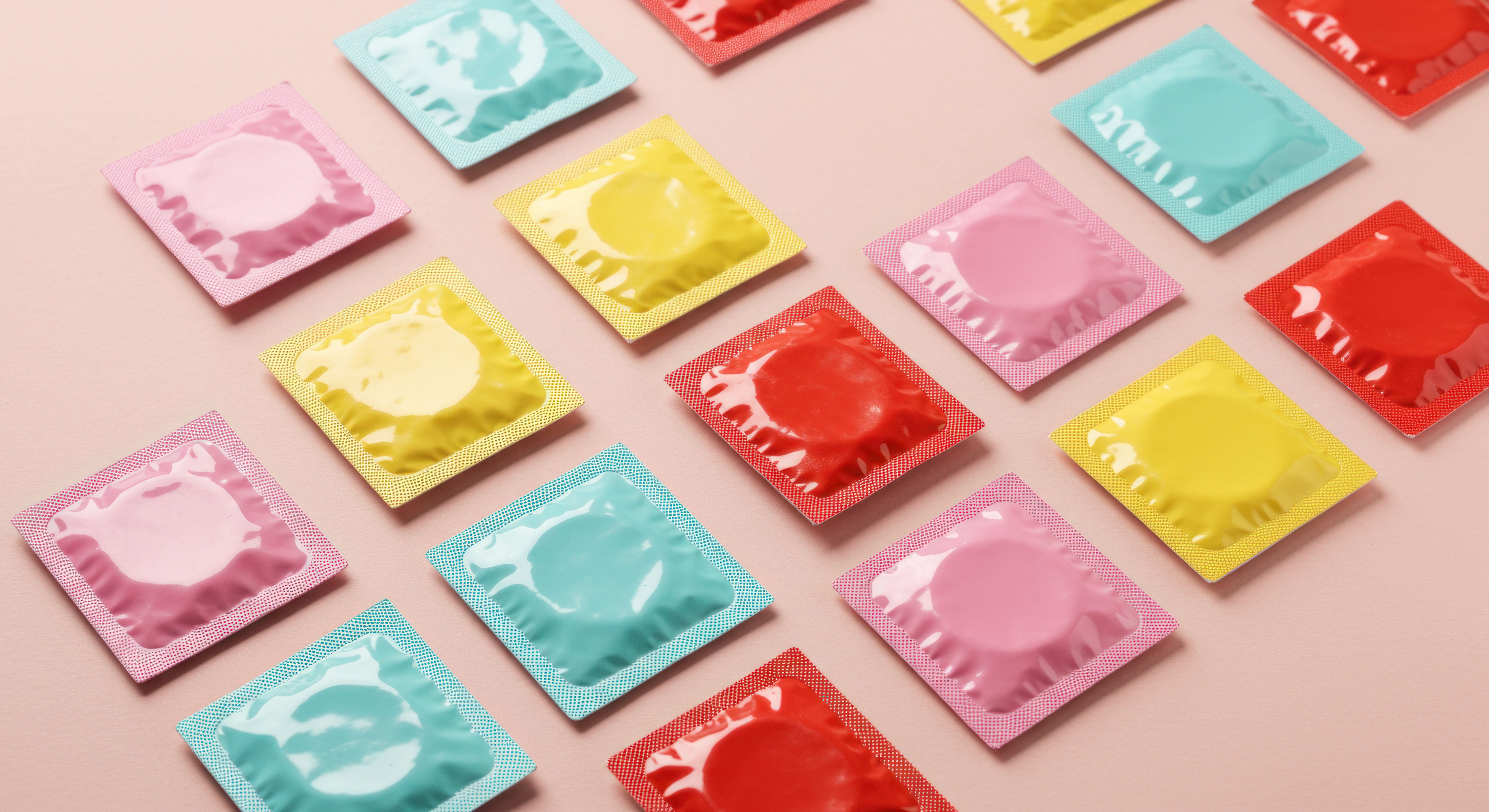
Condoms aren’t just a form of protection—they’re a gateway to safer, more enjoyable intimacy. Whether you’re focused on preventing sexually transmitted infections (STIs), avoiding pregnancy, or simply enhancing pleasure, picking the right condom matters. With so many options on the market, finding the perfect fit for comfort, safety, and satisfaction can feel overwhelming. This guide will walk you through everything you need to know to choose the right condom for you. To make an informed choice, it helps to understand the fundamental differences between the most common types.
Let’s understanding the condom landscape.
By Material: Protection & Allergies
The material determines durability, feel, and suitability for people with latex allergies.
1. Natural Rubber Latex:
Pros: The most common, affordable, and durable type. It offers excellent protection against STIs and pregnancy.
Cons: Cannot be used by individuals with a latex allergy. Requires water- or silicone-based lubricants (oil-based lubes can degrade the latex).
2. Polyurethane:
Pros: Safe for people with latex allergies. Thinner than latex, often allowing for greater heat transfer and sensitivity. Can be used with most lubricants.
Cons: Generally more expensive than latex. It is less elastic, which means it might feel slightly looser or slip more easily if the fit isn’t perfect.
3. Polyisoprene:
Pros: Safe for people with latex allergies. Softer and more elastic than polyurethane, offering a more “natural” feel that is closer to latex.
Cons: Generally more expensive than latex. Should not be paired with oil-based lubricants, just like latex condoms.
By Style: Sensitivity & Sensation
Beyond the material, condoms are engineered to enhance sensation for one or both partners.
-
Thin/Ultra-Thin: Designed to maximise skin-to-skin feeling and heat transfer. Excellent for those who feel latex creates too much of a barrier.
-
Ribbed/Textured: Features small raised textures, lines, or dots designed to increase friction and sensation for the receiving partner.
-
Contour/Anatomically Shaped: Shaped with a bell or flare near the tip and a slight squeeze point at the base to prevent slipping and enhance comfort.
-
Flavoured: Used primarily for oral sex. They are generally not recommended for penetrative sex, as the added sugar and flavouring can disrupt vaginal pH balance.
-
Spermicidally Lubricated: Condoms pre-coated with a spermicide (usually Nonoxynol-9) to kill sperm. While they offer added pregnancy protection, they do not offer extra STI protection and can sometimes irritate sensitive skin.
The Most Crucial Factor: Finding the Right Fit
The number one reason for condom breakage or slippage is incorrect sizing. A condom that is too tight can break, and one that is too loose can slip off—both negate the protection it’s meant to provide.
How to Measure for a Proper Fit
Condom sizing is primarily determined by the width, not the length. Most standard condoms are 7–8 inches long, which is usually sufficient. The key measurement is the girth (circumference) or nominal width (half the circumference).
-
Measure the Girth: While erect, use a flexible tape measure or a piece of string and wrap it around the thickest part of the shaft.
-
Calculate the Nominal Width: Divide your girth measurement by two.
-
Example: If your girth is 5 inches (127 mm), your nominal width is 2.5 inches (63.5 mm).
-
-
Compare: Match this nominal width to the size listed on condom packaging (usually in millimetres).
-
Snug/Smaller Condoms: Typically 49-54 mm nominal width.
-
Standard/Regular Condoms: Typically 52-56 mm nominal width.
-
Large/Magnum Condoms: Typically 56-60+ mm nominal width.
💡 Remember: The condom should feel snug enough to stay in place but not so tight that it feels restrictive or uncomfortable. When in doubt, start with a standard size and adjust to a smaller or larger size based on your real-world experience.
Enhancing Comfort, Safety, and Pleasure
Choosing the right condom is only half the battle; how you use it is just as important.
1. Prioritise Lubrication
-
Never rely solely on the lubricant pre-applied to the condom. Adding a few drops of personal lubricant—especially inside the tip before rolling it on or on the outside once it’s on—can vastly increase comfort and sensation.
-
Match your lube to your condom: Use water- or silicone-based lubricants with all latex and polyisoprene condoms. Avoid oil-based lubes (like coconut oil or Vaseline) with these materials, as they can cause the condom to break.
2. Check the Expiration Date
Condoms degrade over time. Always check the expiration date on the wrapper and the box. An expired or damaged condom is a compromised condom.
3. Practice Makes Perfect
The moment isn’t the best time to figure out the wrapper or the rolling process. Practice unwrapping and rolling a condom onto an object (like a banana) when you are relaxed. This builds muscle memory, ensuring a smooth, interruption-free experience when it counts.
4. Communicate with Your Partner
A Final Word on Confidence
Choosing the right condom moves the experience from a necessary safety precaution to a comfortable, pleasurable part of intimacy. By understanding the materials, finding your perfect fit, and liberal use of the right lubricant, you empower yourself to be safe, comfortable, and confident every time. The right condom isn’t a barrier; it’s a foundation for greater enjoyment.
0 comments on “How to Choose the Right Condom for You”