

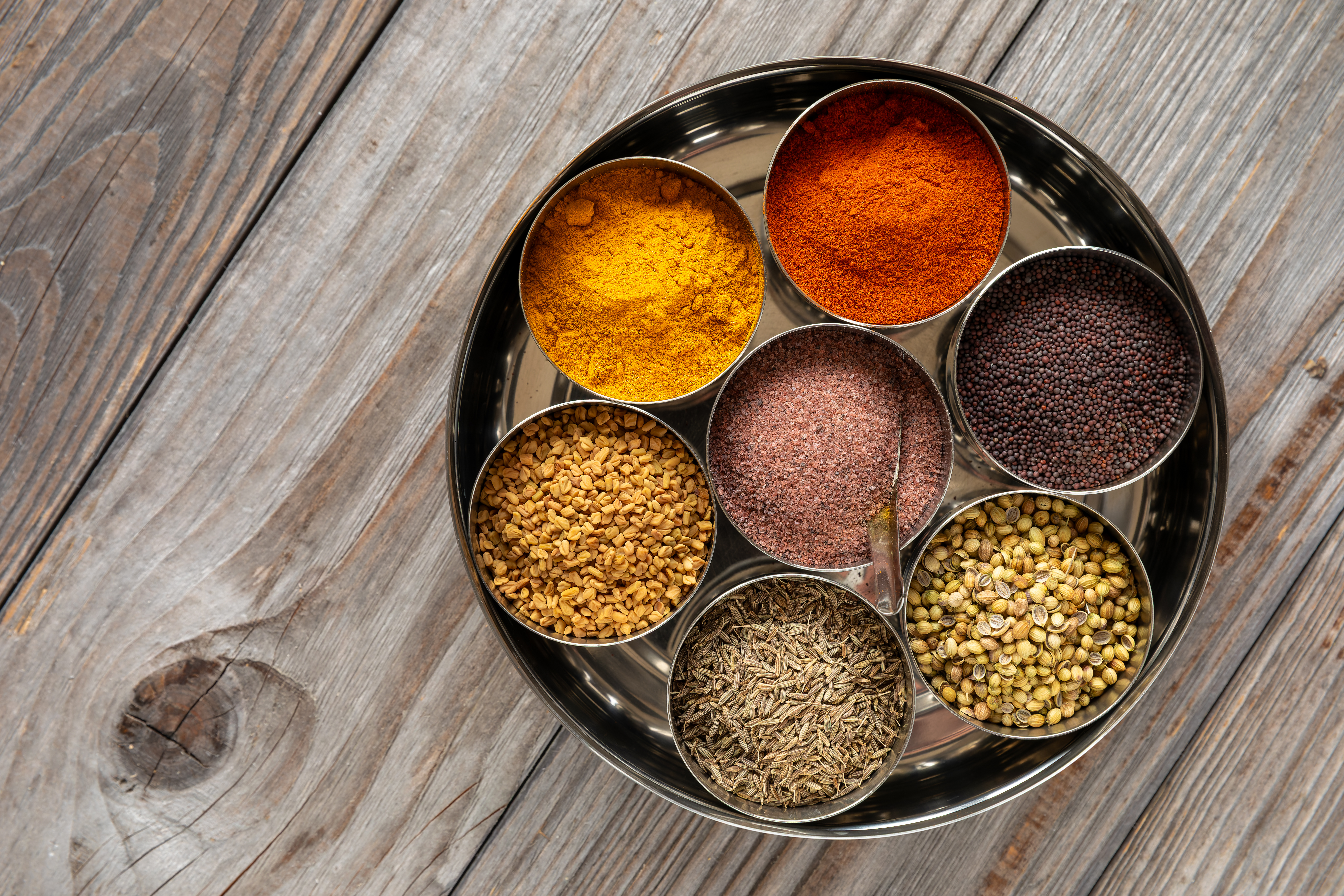
That humble, round steel box sitting quietly in your kitchen—your masala dabba—is more than just a container of colourful powders and fragrant seeds. It’s a treasure chest of age-old wisdom, a daily dose of wellness disguised as culinary magic. Generations before us didn’t just toss spices into food for taste—they understood the healing power behind each pinch, stir, and sprinkle. From boosting immunity to calming your mind, your spice box might just be your most powerful wellness toolkit.
The Ancient Alchemy in Your Kitchen
Before modern supplements and superfoods made headlines, Indian households already had their own pharmacy—right inside the kitchen. Ayurveda, India’s ancient system of medicine, describes spices as natural healers that balance the body’s doshas (Vata, Pitta, Kapha). Every spice in your dabba has a role: to detox, strengthen, soothe, or stimulate. In other words, every time you cook, you’re practising centuries-old wellness rituals without even realising it.
Meet the healers in your masala dabba!
1. Turmeric – The Golden Guardian

Let’s start with the queen of the spice box. Turmeric’s bright yellow hue isn’t just for show—it’s rich in curcumin, known for its powerful anti-inflammatory and antioxidant properties. Whether it’s mixed into warm milk or sprinkled into curries, turmeric supports joint health, immunity, and even skin radiance. No wonder ancient warriors and grandmothers alike swore by a daily dose of haldi doodh!
 Did you know? Did you know?
Turmeric wasn’t always just a kitchen staple—it was once used as a natural dye for fabrics and as a beauty paste for brides, symbolising purity and radiance. |
2. Cumin – The Digestive Dynamo

Those tiny cumin seeds (jeera) are small but mighty. They ignite your digestive fire (agni), relieve bloating, and help absorb nutrients better. A glass of jeera water in the morning is an Ayurvedic detox classic—simple, grounding, and surprisingly effective.
Wellness Tip: Toast cumin lightly before adding it to your dishes. The aroma signals your brain to prepare for digestion!
3. Coriander – The Cooling Companion

Coriander seeds balance out the fiery nature of other spices. They cool the body, ease acidity, and help regulate blood sugar levels. The fresh leaves add zest to your food, but it’s the seeds that carry centuries of medicinal wisdom.
Fun Fact: Ancient Egyptians buried coriander seeds in tombs as symbols of eternal happiness and health.
4. Mustard Seeds – The Circulation Boosters

When mustard seeds pop in hot oil, they don’t just announce the start of cooking—they signal your metabolism to wake up! These seeds improve circulation and are rich in selenium, which reduces inflammation. Plus, their pungent flavour adds depth to curries and pickles alike.
Wellness Tip: Massage mustard oil (warmed with a pinch of turmeric) to relieve muscle tension—an old remedy still used in Indian households.
5. Fenugreek – The Hormone Harmoniser

Kasuri methi or fenugreek seeds may smell strong, but their benefits are stronger. They balance hormones, regulate blood sugar, and aid in lactation for new mothers. Soaking fenugreek seeds overnight and drinking the water is a simple wellness ritual passed down through generations.
Trivia: In ancient Rome, fenugreek was considered a sacred plant believed to bring strength and fertility.
6. Black Pepper – The Nutrient Multiplier

Ever wondered why black pepper is paired with turmeric? Because it makes curcumin more bioavailable—meaning your body absorbs it better. Beyond that, pepper aids digestion, clears sinuses, and adds that irresistible punch to your meals.
| Did you know?
Black pepper was once so valuable that it was used as currency during the spice trade era. |
7. Cardamom – The Mood Enhancer

The queen of fragrance, cardamom, isn’t just for desserts and chai. Its sweet aroma calms the nerves, refreshes breath, and aids digestion after heavy meals. A pinch of your morning tea can instantly uplift your mood and soothe your senses.
Fun Fact: Ancient royals chewed cardamom to maintain fresh breath and were often gifted it as a token of luxury.
More Than Flavour—It’s Daily Therapy
Your masala dabba is a reminder that wellness doesn’t have to be complicated. Every time you cook, you’re balancing your body’s energies, supporting your organs, and even improving your emotional well-being. Spices stimulate appetite, boost metabolism, and promote mental clarity. They’re not just ingredients—they’re mood shifters, healers, and storytellers of our cultural wisdom.
How to Turn Your Spice Box into a Wellness Ritual
-
Start small: Try one wellness spice each week—like haldi doodh or jeera water.
-
Pair mindfully: Combine spices that balance each other—pepper with turmeric, cumin with coriander.
-
Use all senses: Inhale the aroma as you cook; it triggers relaxation and mindfulness.
-
Store smartly: Keep your dabba away from moisture and sunlight to preserve its healing potency.
Closing Thoughts
So, is your masala dabba a wellness box? Absolutely. It’s a legacy of mindful eating, an aromatic pharmacy that has stood the test of time. Every clink of a spice spoon is a nod to generations of wisdom, proving that wellness doesn’t always come in capsules or bottles—sometimes, it’s right there in the palm of your hand, waiting to be sprinkled on your next meal.
✨ Your next wellness trend? It’s been sitting in your kitchen all along.
0 comments on “Spice Wisdom: Is Your Masala Dabba a Hidden Wellness Box?”