

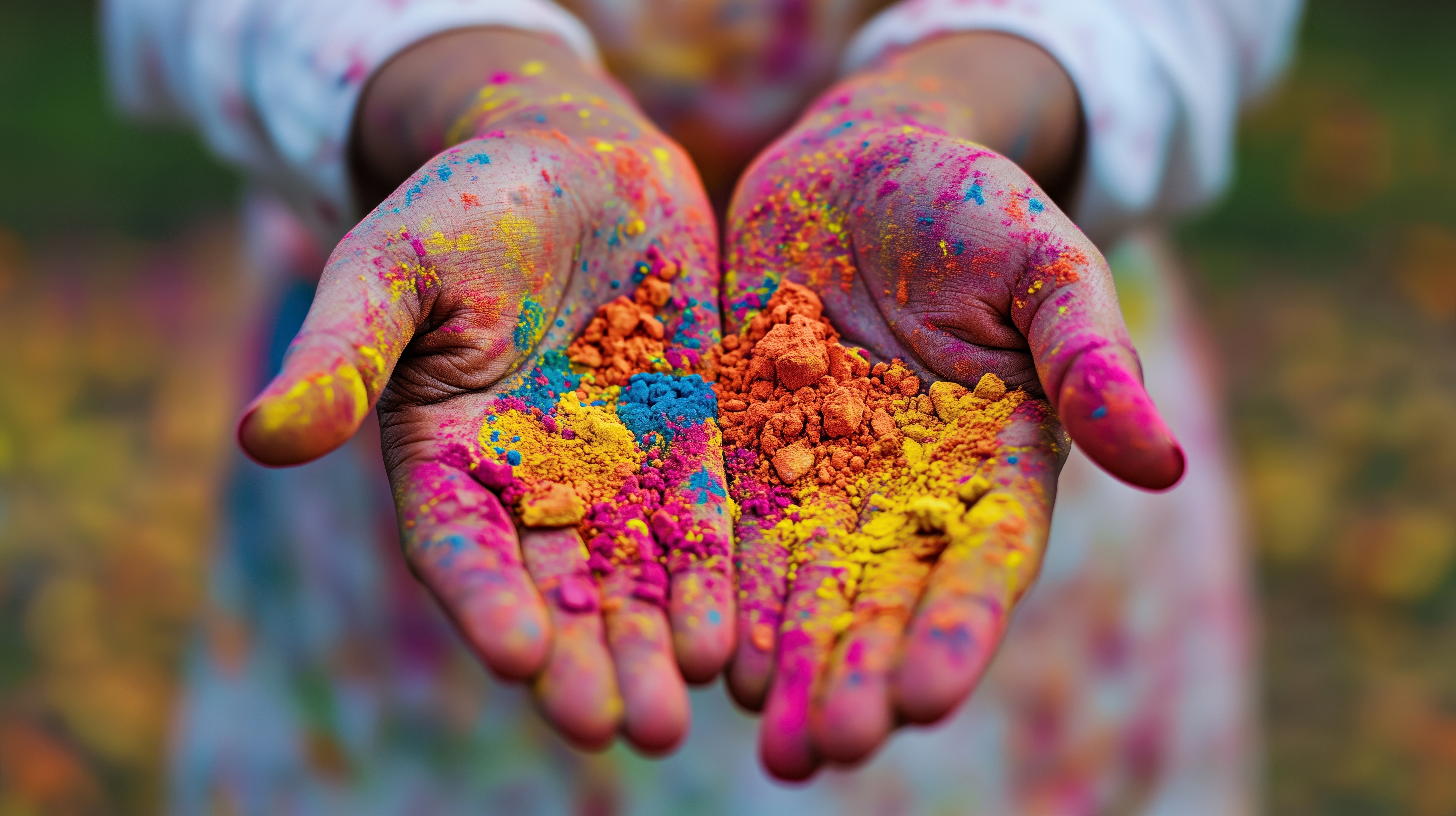
Holi is one of the most joyful festivals in the world, but the brightly coloured powders sold in markets often contain lead oxide, industrial dyes, copper sulphate, and toxic alkalis. These chemicals cause skin rashes, eye irritation, and allergic reactions, and are especially harmful to young children and pets.
Making your own natural Holi colours at home is easier than you think, and every ingredient you need is probably already in your kitchen or garden.
Why Natural Colours Are the Safer Choice
Commercial Holi colours use synthetic pigments and heavy metals to achieve their vivid shades. Prolonged skin contact with these chemicals can cause burns, redness, and in some cases, long-term dermatological damage. Natural colours made from food-grade ingredients are non-toxic, rinse off easily with water, and are safe if accidentally swallowed by a toddler or licked by your dog.
Before You Begin: A Few Basics
To achieve a professional-grade finish, keep these three rules in mind:
-
The Base: For dry colours, use rice flour, besan or arrowroot powder. Sift the final mixture through a fine sieve or muslin cloth at least twice to ensure a silky, store-bought texture. For wet colours, always let the mixture cool completely before use. Strain well to remove plant residue.
-
The Barrier Method: Apply coconut or almond oil to skin and hair before playing. This prevents natural pigments (like turmeric or indigo) from leaving a temporary tint on the skin.
-
Safety Check: If anyone in your family has highly sensitive skin, perform a small patch test on the inner arm 24 hours before the festival.
🟡 Yellow: Turmeric & Besan

This is the easiest natural colour to make and the most beloved.
DIY Powder: If you have fresh turmeric roots, wash them thoroughly, slice thinly, and sun-dry for 3-4 days until completely brittle, then grind into fine powder. Alternatively, slice and dry in an oven at 50-60°C for 6-8 hours, checking regularly to prevent burning.
Dry Gulal: Mix two parts besan with one part turmeric powder and sift thoroughly for a smooth texture.
Wet Colour: Dissolve four tablespoons of turmeric in two litres of warm water and let it steep for an hour. Adding a pinch of sandalwood powder softens the shade and gives it a pleasant, cooling scent.
Short on time? Buy ready-made turmeric powder here.
🔴 Pink & Red: Beetroot Powder and Rose Petals

Beetroot is nature’s most generous source of deep pink and red pigment.
DIY Powder: To make beetroot powder at home, wash and peel fresh beetroots, slice them very thinly, and sun-dry for 5-7 days until completely crisp with no moisture. For faster results, arrange slices on a baking tray and dry in an oven at 60-70°C for 8-10 hours, flipping once halfway through. Once fully dried, grind into a fine powder using a mixer grinder.
For rose petal powder, collect fresh rose petals, spread them on a clean cloth in direct sunlight, and dry for 2-3 days until they crumble easily. Alternatively, dry in an oven at 40-50°C for 3-4 hours. Grind the dried petals into fine powder.
Dry Gulal: Combine two parts beetroot powder with one part dried, ground rose petals and three parts rice flour, then sift until smooth.
Wet Colour: Boil three to four fresh beetroots in three litres of water until the liquid turns deep red, then cool completely. A spoon of dried hibiscus powder will intensify the shade toward richer red, while a few drops of lemon juice in wet colour will make the pink brighter and more vibrant.
Short on time? Buy ready-made beetroot powder and dried rose petal powder here.
🟢 Green: Spinach

Green is one of the easiest natural shades to create.
DIY Powder: To make spinach powder, thoroughly wash fresh spinach leaves and remove thick stems. Spread leaves on a clean cloth in direct sunlight and dry for 3-4 days until completely crisp and crumbly. For quicker drying, arrange leaves on a baking tray and dry in an oven at 50-60°C for 4-6 hours, checking frequently. Once fully dried, grind into a fine powder using a mixer grinder.
Dry Gulal: Mix one part dried spinach powder with two parts rice flour for a fresh, earthy green.
Wet Colour: Blend a generous handful of fresh spinach leaves with two litres of water and strain well before use. The colour washes off easily and leaves no stains, making it perfect for worry-free Holi fun.
Short on time? Buy ready-made spinach powder here.
🟠 Orange: Marigold Flower Petals

Marigolds are a Holi garden staple for good reason.
DIY Powder: To prepare marigold powder, collect fresh marigold flowers (preferably a deep orange variety) and separate the petals from the centre. Spread petals on a clean cloth or tray in direct sunlight and dry for 4-5 days until they become papery and crumble easily. For faster drying, place petals in an oven at 40-50°C for 3-4 hours, stirring occasionally. Once completely dry, grind into a fine powder using a mixer grinder or mortar and pestle.
Dry Gulal: Mix one part marigold petal powder with two parts cornstarch or rice flour for a silky yellow-orange colour.
Wet Colour: Simmer two large handfuls of fresh marigold petals in two litres of water for twenty minutes, then strain and cool. Adding a small pinch of turmeric pushes the shade toward a deeper amber-orange.
Buy fresh marigold flowers here.
🔵 Blue: Butterfly Pea Flowers

Blue is tough to make naturally, but butterfly pea flowers (aparajita) create a beautiful, safe blue colour.
DIY Powder: Collect fresh blue butterfly pea flowers and spread them on a clean cloth. Sun-dry for 2-3 days until completely dry and papery. For faster drying, place in an oven at 40-50°C for 2-3 hours. Once fully dried, store the flowers whole or grind them into fine powder using a mixer grinder.
Dry Gulal: Mix one part butterfly pea flower powder with four parts rice flour. Sift well for a smooth texture.
Wet Colour: Soak two handfuls of dried butterfly pea flowers in two litres of warm water for two hours. Strain for a gentle blue liquid that rinses off easily and is completely skin-safe.
Short on time? Buy ready-made blue holi colour here.
🟣 Purple: Sevanthi Flowers or Blackberry Powder

Purple is one of the less common natural Holi shades.
DIY Powder: For sevanthi (chrysanthemum) option, collect deep purple chrysanthemum petals and sun-dry them for 3-4 days until completely dry. For quicker results, dry in an oven at 40-50°C for 3-4 hours. Grind dried petals into fine powder.
For jamun (Indian blackberry) powder, collect ripe jamun berries, remove seeds, and sun-dry the fruit for 7-10 or 10-15 days until completely dehydrated and hard. For faster drying, use an oven at 60°C for 10-12 hours, 12-15 hours, checking regularly. Grind dried jamun into fine powder. Black grapes can be prepared the same way.
Wet Colour: Use fresh ingredients, soak fresh purple sevanthi petals overnight in water, then boil for 10 minutes and strain. Alternatively, crush fresh jamun berries or black grapes and mix the juice with water for instant purple.
Dry Gulal: Mix one part dried fruit powder with three parts rice flour. All options wash off easily and are skin-friendly.
Short on time? Buy ready-made purple holi colour here.
Tips for Fixing and Intensifying Colour
Moisture is the enemy: Always sun-dry flower petals and herbs completely before grinding, as even slight moisture causes dry colours to clump and spoil quickly. Boil wet colour ingredients longer to deepen the pigment concentration, and always strain thoroughly for a smooth liquid.
Storage: Store dry colours in airtight glass jars away from humidity. In dry conditions, they generally stay fresh for 1–2 weeks. Discard if you notice clumping, odour, or mould.
A Note on Safety for Children and Pets
Natural colours made from kitchen ingredients contain zero synthetic chemicals. They significantly reduce the risk of chemical burns and toxic reactions. However, mild irritation is still possible in highly sensitive individuals, so avoid direct contact with eyes and supervise young children during play.
The colours rinse off easily with plain water and are completely biodegradable, so they are also a kinder choice for your garden and local water sources.
This Holi, the most vibrant colours you can throw are the ones that come straight from nature.
You may also like:
0 comments on “A Complete Guide to Safe DIY Homemade Holi Colours”