

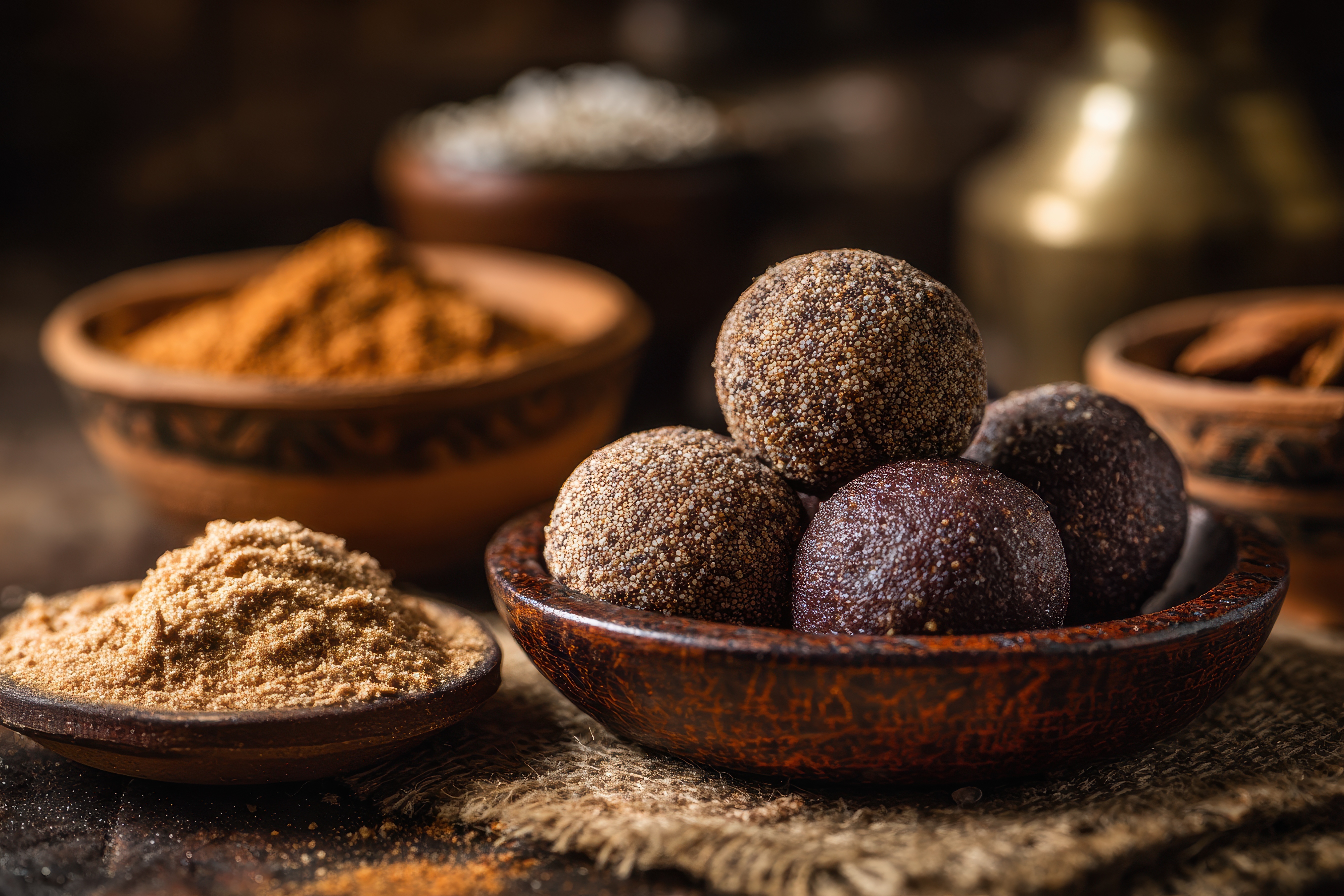
You have probably bought millets once or twice, brought them home, and pushed them to the back of the cabinet. The easiest way to bring them into your daily meals? Swap them for what you already cook with — rice, maida, sooji, wheat flour, even your dosa batter.
No new recipes. No kitchen overhaul. Just the right grain, the right ratio.

Why Swap at All?
Refined grains like white rice, maida, and sooji lose their bran and germ during processing. What remains is mostly starch — quick to spike blood sugar and quick to leave you hungry again.
Millets, on the other hand, are whole grains. Naturally high in fibre, rich in minerals like iron, magnesium, and calcium, and low to medium on the glycaemic index.
You are not discovering something new. You are simply coming back to a grain that has always worked.
Here’s your Master Swap Guide!

1. Swaps for Rice
Think your biryani needs white rice? Little millet thinks otherwise. Its grains stay light and separate, absorb spices beautifully, and deliver the same satisfying bite — with fewer carbs and a lower glycaemic load. The same swap works across everyday rice dishes too — Kodo for dal-chawal, Barnyard or Kodo for khichdi, and Foxtail for pulao or mango rice.
Good for: Diabetics, digestive sensitivities, weight management.
Go easy if: You have a history of kidney stones.
Quick Tips:
- Swap 1 cup of rice with 1 cup of millet.
- Kodo and Foxtail need 2.5 cups of water; Little Millet needs 2 cups.
- Soak 20–30 minutes before cooking (Foxtail about 1 hour).
Find the recipes below 👇
 Barnyard Millet Khichdi Barnyard Millet Khichdi |

 Kodo Millet Pulao Kodo Millet Pulao |
 Foxtail Millet Mango Rice Foxtail Millet Mango Rice |
2. Swaps for Dosa Rice
Your dosa does not need parboiled rice to turn crisp and golden. Swap it with jowar or foxtail millet, and you get a dosa that’s just as crunchy, with better fibre, antioxidants, and plant protein — and none of the refined carb load.
Good for: Gluten intolerance, diabetics, and high cholesterol.
Go easy if: You are new to millet batters.
Quick Tips:
- Swap 1:1 with dosa rice.
- Soak jowar 6–8 hours, foxtail at least 1 hour.
- Use 2 cups of water for a thin batter and ferment overnight.
- New to millet batters? Start with a 50:50 mix first.
Find the recipes below 👇
 Sorghum Dosa Sorghum Dosa |
 Kodo Millet Adai Kodo Millet Adai |
3. Swaps for Maida
Maida is refined and stripped of most nutrients. Swap it with bajra or jowar flour to bring back iron, magnesium, zinc, and fibre — in everything from rotis to baked treats and Indian sweets. Jowar lends a gentle nuttiness to pedas, proso millet adds a pleasant bite to burfi, and multi-millet flour works beautifully in rich, fudgy bakes.
Good for: Anaemia, high cholesterol, sustained energy.
Go easy if: You have a thyroid condition — bajra contains goitrogens. Best limited in summer too.
Quick Tips:
- Swap 1:1 — no soaking needed — use directly as flour.
- For rotis: Rest the dough 10 minutes, roll on a wet surface, and eat fresh with ghee.
- For baking: 70% bajra + 30% jowar for better binding.
- For chakli: Half bajra + half rice flour for crispness.
Find the recipes below 👇
 Baked Ragi Chakli Baked Ragi Chakli |
 Multi Millet Chocolate Cake Multi Millet Chocolate Cake |
 Proso Millet Burfi Proso Millet Burfi |
 Sorghum Peda Sorghum Peda |
4. Swaps for Wheat Flour
Wheat flour is the most used flour in Indian kitchens — and one of the easiest to swap without losing much in texture or taste. Millet flours are naturally gluten-free, lower on the glycaemic index, and far more nutrient-dense.
They work beautifully in rotis, cakes, laddus, and baked goods. Ragi’s earthy depth pairs naturally with jaggery, ghee, and cardamom, making it just as good in mithai as in everyday cooking.
Good for: Gluten intolerance, diabetes management, bone health, growing children
Go easy if: You have a thyroid condition or are cooking through summer — limit bajra-heavy blends.
Quick Tips:
- Swap 1:1 — no soaking needed.
- For rotis: 70% jowar + 30% ragi.
- For parathas: 60% bajra + 40% jowar.
- For baking: ragi works 1:1.
- For bhakri: 100% jowar, wet your palms while shaping.
Find the recipes below 👇
 Pearl Millet Roti Pearl Millet Roti |
 Sorghum Vegetable Tawa Roti Sorghum Vegetable Tawa Roti |
 Finger Millet Laddoo Finger Millet Laddoo |
 Finger Millet Cake Finger Millet Cake |
5. Swaps for Sooji
Sooji is refined and high in carbs — and one of the easiest swaps you can make. Barnyard and proso millet match it closely in texture and cooking behaviour, with far better fibre and nutrition. The same swap works beautifully in upma, halwa, idli, and even kheer. Use barnyard or proso just as you would sooji — same ghee, same jaggery, same tadka.
Good for: Diabetics, weight management, digestive health.
Go easy if: You tend toward constipation — drink plenty of water alongside.
Quick Tips:
- Swap 1:1 with sooji.
- Use 2.5 cups of water per cup of millet.
- Soak 15–20 minutes before cooking.
- For upma: dry roast 3–4 minutes until golden before adding tadka.
- For idlis: no dry roasting needed.
Find the recipes below 👇
 Pearl Millet Upma Pearl Millet Upma |

 Pearl Millet Halwa Pearl Millet Halwa |
 Finger Millet Vermicelli Kheer
Three Rules Before You Start
- Soak first. Always soak whole millets before cooking — 20–30 minutes for most, at least 1 hour for foxtail. It improves digestibility and reduces cooking time.
- Start with one swap. Don’t overhaul everything at once. Try Millet Mondays or a 50/50 mix and let your gut adjust.
- Drink more water. Millets are fibre-dense. Increase intake without increasing water, and you’ll feel bloated.

The Bottom Line
You don’t need a new kitchen or a new routine. Just the right ratio and one recipe to start.
Once kodo millet feels as natural as white rice and barnyard upma becomes your Sunday default — the swap stops feeling like a swap at all.
Pick one grain. Try one recipe this week.
Ready to try your first swap? Explore our millet range
Still curious? Read more.
Great guide! I love the idea of swapping maida for millets while still keeping meals flavorful. The practical tips make it much easier to try these healthier alternatives.