

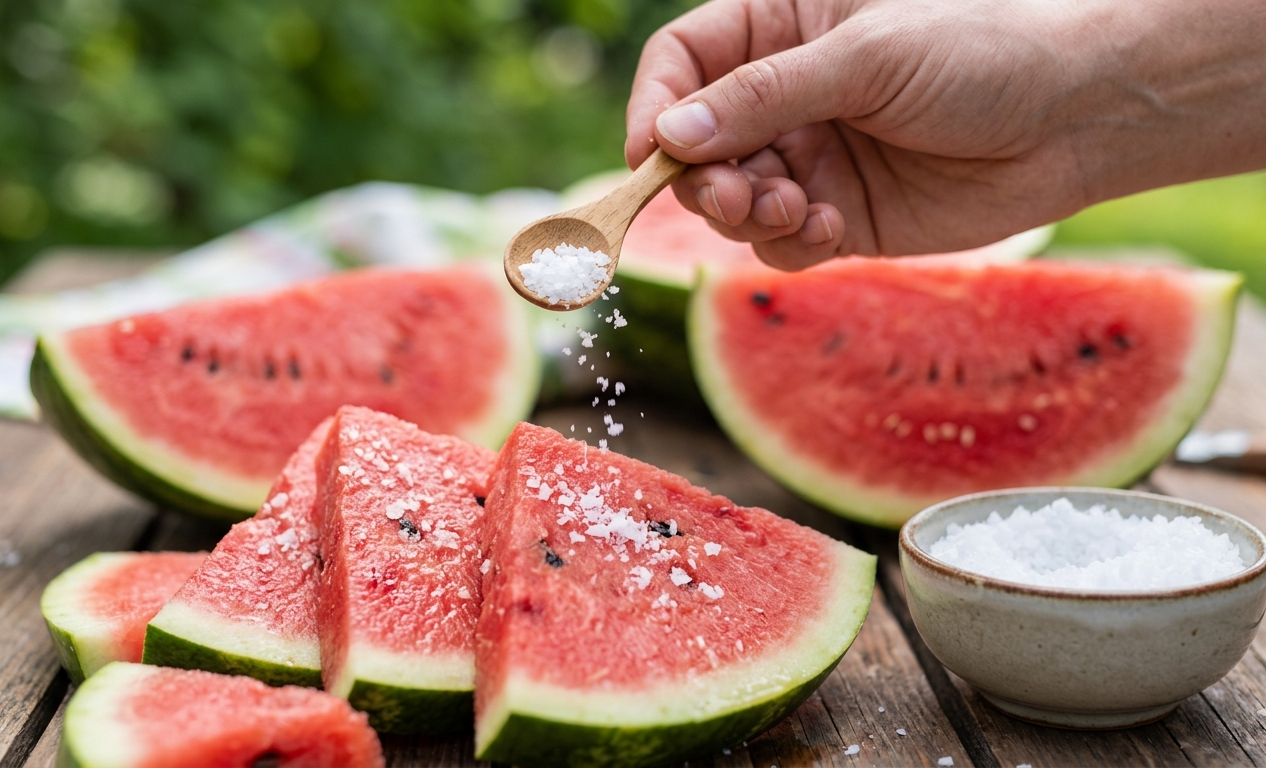
On a hot afternoon, a chilled slice of watermelon is summer comfort in its simplest form. But while adding salt might seem like ruining a good thing, it actually makes the fruit taste even sweeter.
There’s real science behind this age-old habit—here is why it works and why your taste buds will thank you for it.
The Scientific Secrets Behind the Sprinkle
It sounds counterintuitive, but humans have been salting melons for centuries. It isn’t just a quirky tradition; there are several biological “hacks” happening the moment that salt hits your tongue:
1. The Ultimate Sweetness Magnifier
Salt acts like a “volume knob” for your taste buds. It suppresses subtle bitter compounds naturally present in the fruit, allowing the sugars to stand out. On a biological level, sodium activates a transporter protein called SGLT1 on the tongue, which enhances how intensely sweetness is perceived. The fruit doesn’t become sweeter chemically—your brain simply experiences it as sweeter.
2. Nature’s Own Sports Drink (Electrolyte Balance)
During hot weather, the body loses sodium through sweat. Since watermelon is 92% water, adding a pinch of salt turns it into a natural electrolyte snack. This combination helps maintain hydration and supports fluid balance better than eating plain fruit alone. In simple terms, salted watermelon works like a light, natural refresher during intense summer heat.
3. A High-Speed Digestive Aid
Salt stimulates saliva production and activates digestive enzymes before food even reaches your stomach. This early activation helps your body begin breaking down food efficiently, making water-rich snacks feel lighter and easier to eat. While it doesn’t dramatically change digestion medically, it improves mouthfeel and the initial digestive response.
4. Aroma & Moisture Activation
Salt helps release volatile aromatic compounds from the fruit’s surface, making watermelon smell fresher and more inviting. It also draws a tiny amount of moisture to the surface through osmosis, creating a slightly juicier first bite. Rather than increasing sweetness itself, this process enhances aroma, and aroma strongly influences how flavour is perceived.
5. Restoring Flavour in Cold Foods
We usually eat watermelon ice-cold, but cold temperatures dull taste receptors. A small pinch of salt helps stimulate those receptors so flavours feel brighter and clearer instead of muted. This is why chilled fruits sometimes taste bland until seasoning subtly “wakes up” the palate.
6. The Contrast Effect
Human taste depends heavily on contrast. When sweetness meets a hint of saltiness, the brain detects a sharper flavour difference, making the experience more exciting. This flavour layering is the same reason salted caramel or chocolate-covered pretzels feel so satisfying. The effect isn’t about adding more sweetness — it’s about creating balance.
Is Salted Watermelon Healthy?
In moderation, yes. A tiny pinch of salt adds electrolytes without significantly increasing sodium intake for most people. Combined with watermelon’s high water content, vitamin C, and antioxidants, it becomes a refreshing summer snack that supports hydration.
However, people on low-sodium diets should keep portions minimal or skip the salt entirely.
How Much Salt Is “Too Much”?
When it comes to salting fruit, less is more. You aren’t trying to make it taste like a potato chip. A light dusting of fine sea salt or a tiny pinch of Himalayan pink salt per slice is the sweet spot. The goal is to enhance the fruit, not overpower it.
Why People Love This Trick
Salt triggers salivary glands, making every bite feel juicier and more refreshing. That combination of salt, sugar, and water creates a lively “zing” that plain fruit often lacks. This explains the long-standing popularity of salted fruit across many warm-weather cultures.
Beyond the Sprinkle: Delicious Ways to Use Salted Watermelon
Once you understand the science behind salted fruit, experimenting becomes even more fun. Here are a few easy inspirations:
|
|
|
 A refreshing mix of sweet watermelon, creamy feta, fresh herbs, and a gentle salty contrast — perfect for summer lunches.
 Blend chilled watermelon with mint, lime, and a tiny pinch of salt for a naturally hydrating cooler.
Ready to Test the Theory?
You don’t need a lab coat to prove the science—just a cold melon and a salt shaker. Whether you’re hosting a BBQ or just looking for a healthy afternoon snack, it’s time to give this “weird” combo a try.
The next time someone asks about the science behind salted fruit, you’ll know exactly why this simple sprinkle works so well.
Pro Tip: For the best results, make sure your watermelon is ice-cold. The temperature contrast makes the flavour even crisper.
Need the perfect melon? Don’t lug a heavy fruit home from the store. Get farm-fresh, juicy, and perfectly ripe fruit delivered to your doorstep from bigbasket.
👉 Buy watermelon here and get snacking!
It’s a wonderful information