

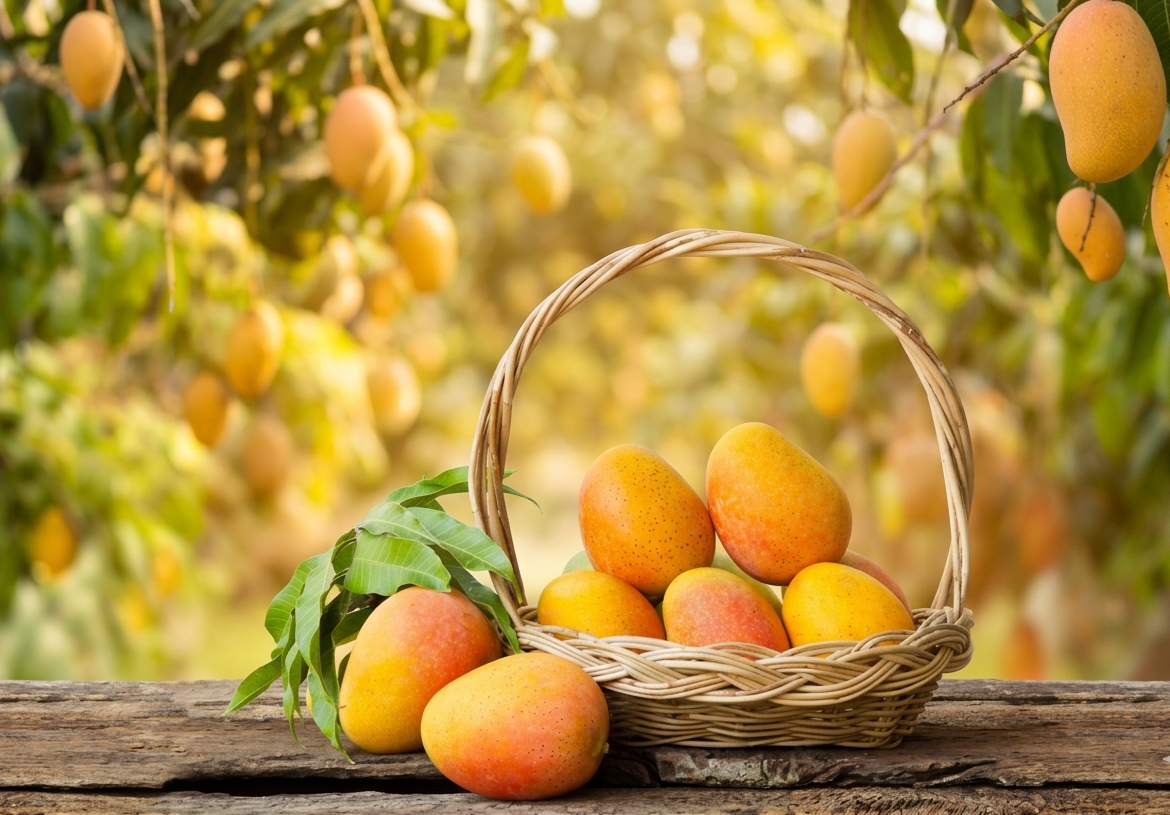
Mango season is here! And with it comes the most important question every Indian family debates at the fruit stall — “Is this naturally ripened?” The vendor smiles. You squint. You press the mango gently. And then you just… Hope for the best.
Sound familiar? You’re not alone. Every summer, millions of us buy mangoes without really knowing whether they ripened on the tree or inside a chemical chamber. Let’s fix that — in the most fun way possible.
Why Does It Even Matter?
Naturally ripened mangoes develop their sweetness gradually on the tree or while resting in straw or hay. Mangoes ripened using banned chemicals like calcium carbide may mature quickly and look attractive on the outside, but often lack proper flavour development and may pose health risks.
Health note: Calcium carbide — still illegally used in some places despite being banned by FSSAI — releases acetylene gas, which may cause irritation, headaches, or dizziness when exposure levels are high. Approved ripening methods, however, are very different.
The 5-Second Mango Test (No Lab Needed)
These signs help you choose better mangoes — though remember, no home method can guarantee how a mango was ripened.
The smell test
A naturally ripened mango smells sweet and fruity near the stem. Artificially ripened ones may have little aroma or a slightly sharp smell.
The colour check
Natural mangoes often ripen unevenly, showing a mix of green and yellow patches. Extremely uniform colour can sometimes indicate artificial ripening, though some varieties naturally ripen evenly.
The press test
A ripe mango should yield slightly when pressed, similar to a ripe avocado. Mangoes that look ripe but feel hard may not be fully matured inside.
The peel peek
Naturally ripened mangoes may show slight wrinkling near the stem as sugars develop. Overly tight, glossy skin can sometimes indicate faster ripening methods.
Pro tip:
Wash before you slice. Always wash mangoes thoroughly under running water before eating — and peel them! Most chemical residues sit on the skin, not the pulp. A 2-minute rinse goes a long way.
Natural vs Chemical: A Quick Cheat Sheet
Still unsure? Here’s a quick side-by-side guide to help you spot the difference at a glance.
Natural Ripening
- Slightly uneven colour
- Strong sweet aroma
- Slightly sticky near the stem
- Soft when gently pressed
- Deep, rich flavour
Chemical Ripening (Carbide-based)
- Very uniform bright colour
- Little to no smell
- Skin looks almost spray-painted
- Hard inside despite ripe appearance
- Taste may feel flat or watery
Mango Recipes to Try This Season
Now that you know how to pick the right mango, here is the best way to use it — straight from the kitchen.
|
|
|
 Crispy layers with creamy mango filling — rich, sweet, and irresistibly indulgent.
 Smooth, creamy mango pudding packed with pure fruity flavour.
What About Ethylene Ripening? Is It Safer?
Yes — and this is important. Ethylene gas is a naturally occurring plant hormone that mangoes produce to ripen. Controlled ethylene treatment, as approved by FSSAI, mimics this process safely. Many large-scale suppliers use this method. It is very different from calcium carbide.
Good to know: Mangoes from supermarkets or certified suppliers are more likely to have been ethylene-ripened (safe) than from unregulated street-side carts, where chemical use is harder to monitor.
The Best Mangoes Are Still the Patient Ones
Suppose you can buy slightly unripe mangoes and let them ripen naturally at home. Wrap them in newspaper or bury them in rice or wheat for 2 to 3 days. Your patience will be rewarded with that real, deep mango flavour that no chemical shortcut can replicate.
This mango season, be a little more curious at the fruit stall. Smell it, press it, look at the skin. Your mango will tell you its story — you just have to listen.
Hi I love mango