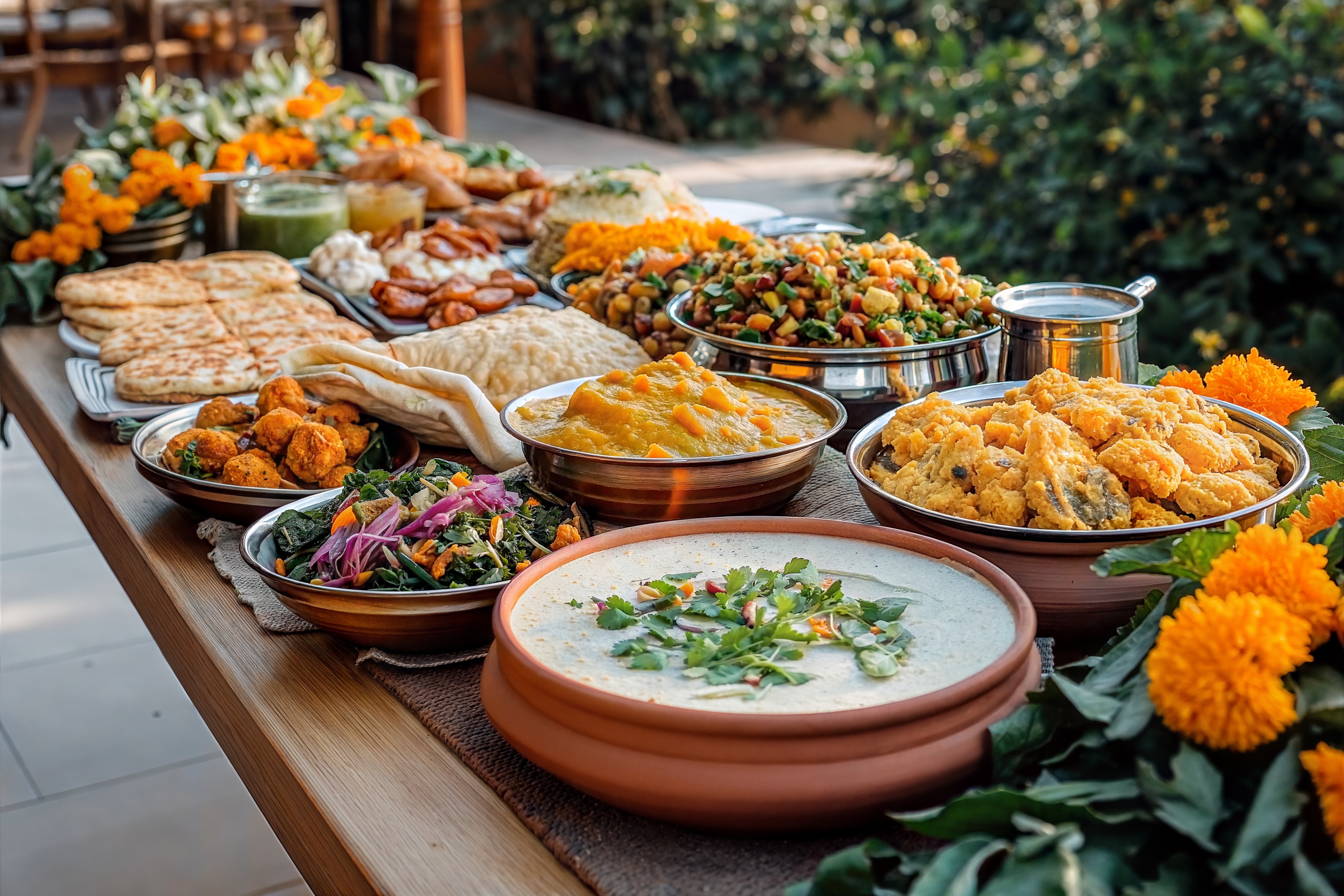
April in India arrives with new beginnings. Across regions, the harvest season turns into a celebration of gratitude, renewal and food rooted in the land. From north to south, each New Year reflects what’s just been harvested. The ingredients are local, the flavours seasonal, and the meals deeply symbolic. As the harvest moves across the country, so do the celebrations. Each region brings its own traditions to the table, shaped by its soil, climate and culture.
Baisakhi — Harvest in Full Bloom
Date: 14 April 2026
Baisakhi marks the Punjabi New Year and the wheat harvest, opening India’s season of New Year celebrations with gratitude and abundance. Yellow-hued dishes mirror golden fields, while lentils and yoghurt-based curries use freshly harvested gram.
Celebrate the spirit of Baisakhi with these recipes:
|
Dal Makhani
 Slow-simmered black urad and rajma cooked with butter, tomato and warming spices for a rich Punjabi classic. Slow-simmered black urad and rajma cooked with butter, tomato and warming spices for a rich Punjabi classic.
|
|
Kadhi Pakora
 A comforting yoghurt and gram flour curry with crispy fritters, balancing tangy and savoury flavours. A comforting yoghurt and gram flour curry with crispy fritters, balancing tangy and savoury flavours.
|
Bohag Bihu — Spring’s New Beginning
Date: 14–15 April 2026
Bohag Bihu welcomes the Assamese New Year with the freshness of spring, celebrating renewal, community, and the rhythms of nature. Celebrated with rhythmic Bihu dances, traditional melodies, and heartfelt gatherings, homes come alive with seasonal preparations and cherished dishes like river fish curries, traditional khar, and til-gud treats that add warmth and sweetness to the festivities.
Celebrate the freshness of Bohag Bihu with these recipes:
|
Masor Tenga
 A light Assamese river fish curry in a tangy tomato broth, refreshing and delicately spiced. A light Assamese river fish curry in a tangy tomato broth, refreshing and delicately spiced.
|
|
Pork with Bamboo Shoot
 Tender pork slow-cooked with bamboo shoot, ginger and chillies for a bold, earthy Assamese favourite. Tender pork slow-cooked with bamboo shoot, ginger and chillies for a bold, earthy Assamese favourite.
|
Poila Boishakh — A Fresh Start
Date: 14–15 April 2026
Poila Boishakh begins the Bengali New Year, blending harvest traditions with cultural rituals. Hilsa symbolises prosperity, while bitter dishes like Shukto balance the meal and mark new beginnings.
Celebrate Poila Boishakh with these recipes:
|
Shorshe Ilish
 Hilsa gently steamed in pungent mustard paste, showcasing Bengal’s most iconic flavours. Hilsa gently steamed in pungent mustard paste, showcasing Bengal’s most iconic flavours.
|
|
Muri Ghonto
 Fragrant rice cooked with fried fish head and spices, creating a deeply traditional Bengali delicacy. Fragrant rice cooked with fried fish head and spices, creating a deeply traditional Bengali delicacy.
|
Puthandu — The New Year Table
Date: 14 April 2026
Puthandu marks the Tamil New Year, centred on balance and seasonal abundance. Neem flowers and raw mango define the table, bringing together all six tastes in one meal.
Celebrate Puthandu with these recipes:
|
Veppampoo Sadam
 Rice tossed with roasted neem flowers and spices, symbolising balance at the Tamil New Year table. Rice tossed with roasted neem flowers and spices, symbolising balance at the Tamil New Year table.
|
|
Poondu Kuzhambu
 Garlic simmered in a tangy tamarind gravy with sesame oil for a bold, comforting Tamil curry. Garlic simmered in a tangy tamarind gravy with sesame oil for a bold, comforting Tamil curry.
|
Vishu — A Season of Prosperity
Date: 14 April 2026
Vishu marks the Malayalam New Year, closing this season of harvest celebrations with rituals of prosperity. The feast focuses on seasonal produce, especially mango and mixed vegetables.
Celebrate Vishu with these recipes:
|
Avial
 Seasonal vegetables cooked in a coconut-cumin base, simple, wholesome and distinctly Kerala. Seasonal vegetables cooked in a coconut-cumin base, simple, wholesome and distinctly Kerala.
|
|
Mambazha Pulissery
 Ripe mango simmered in a tangy coconut-yoghurt curry that perfectly balances sweet and sour. Ripe mango simmered in a tangy coconut-yoghurt curry that perfectly balances sweet and sour.
|
Different regions, different traditions, but the same idea at heart. A moment to pause, give thanks, and begin again. This New Year, bring that spirit home. Cook with what’s in season, keep it simple, and savour the joy of starting fresh.
You may also like:
India’s Spring Harvest Festivals: A New Year Rooted in the Soil
If you like this post, a share would be epic!
Like this:
Like Loading...


nicely explained the different dishes from various part of India. where can we buy these dishes ?
Good