

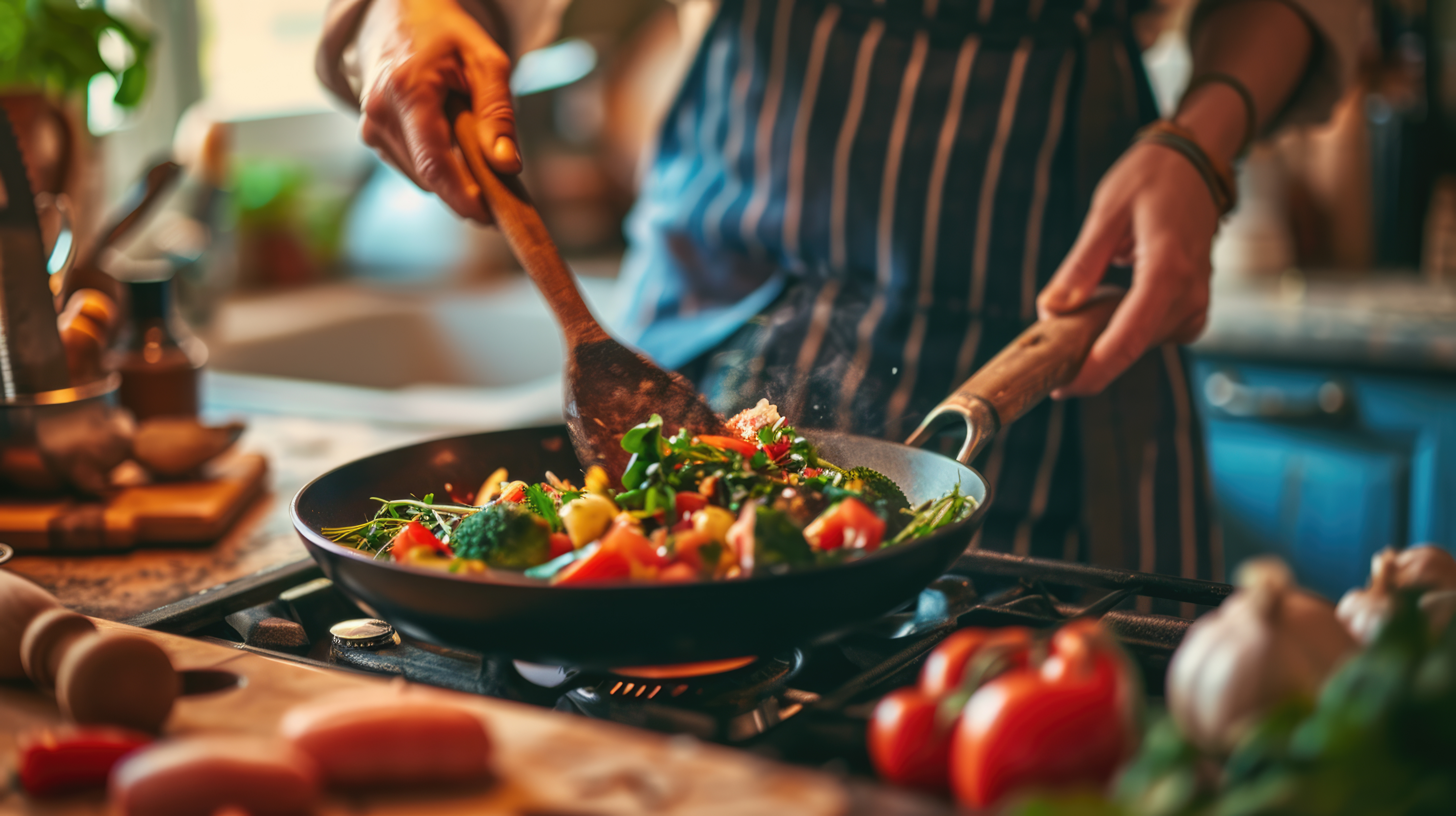
You don’t need oil to make food taste good.
You just need better techniques.
If you’ve been trying to cut down on oil, you’ve probably wondered, ” Will everything taste bland? Fair question. But Indian cooking has always had ways to build flavour without relying on oil. You’re not changing the food, just how you cook it.
Let’s start with the methods that make the biggest difference.
1. Water + Broth Sautéing — Everyday Cooking, Smarter

This is how you keep comfort food on the menu.
For those who enjoy a heartier base, a slow-simmered chicken or mutton broth brings in a deeper umami and richness, without the need for extra oil.
For everyday sabzis, keep it even simpler. Use a splash of water, vegetable broth, or even coconut water to get things going. Add your aromatics first, let them soften, then build in your vegetables and spices gradually. Stir and add small amounts of liquid as needed to prevent sticking.
It’s a practical, everyday method that keeps your cooking light, while still delivering full flavour across any dish.
2. Grilling with Marinades — Smoky, Oil-Free Flavour

This is where oil-free cooking stops feeling like a compromise.
Grilling gives you that smoky, slightly charred flavour that usually comes from oil-heavy cooking. The trick is in the marinade. Use yoghurt, lemon juice, spices, or soy-based mixes to coat vegetables, paneer, chicken, or even mutton and pork.
Let it rest before cooking. The marinade locks in moisture and builds flavour as it grills. You get depth, colour, and that restaurant-style finish, without oil.
Click here to buy grilling cookware
3. Rich Gravies, Without the Grease

This is where most people think oil is irreplaceable. It’s not.
Blend cooked potatoes, cauliflower, or soaked cashews to create a creamy base for gravies and sauces.
For curries, coconut milk or yoghurt works beautifully. They bring a smooth texture while keeping things light. Even chickpea water, known as aquafaba, can help bind, thicken, or add structure.
Pro tip: Aquafaba can double up as a plant-based alternative to egg whites. Whisk it at high speed, ideally chilled, and add a pinch of cream of tartar for stability. It transforms into soft peaks that can be used like whipped cream, or turned into light foams, mousses, and airy toppings, all without oil or eggs.
Beyond that, it quietly works behind the scenes, too. Use it as a binding agent in cutlets and tikkis, a thickener in gravies, or even as a base for light baking. It adds structure, hold, and a delicate texture, making dishes feel complete without relying on traditional fats or eggs.
4. Nut Butters for Natural Richness

Nut butters like peanut or almond add body and richness without the need for cream or excess oil. They blend effortlessly into dishes, creating a smooth, full texture while bringing in a subtle nuttiness that enhances overall flavour.
They work beautifully in dressings, dips, or spreads, and can even be stirred into gravies or sauces to give them more depth and structure. A small spoonful goes a long way, making everyday dishes feel more satisfying and layered, without tipping into heaviness.
Click here to buy your favourite nut butters
5. Banana Leaf Cooking — Natural, Flavourful, Oil-Free

Start with the banana leaf. It changes everything.
Wrapping vegetables, paneer, fish, or even chicken in banana leaves protects them from direct heat and prevents sticking. You can steam, pan-fry, or even deep-fry these parcels. The leaf acts as a natural barrier, so the oil stays outside and doesn’t seep into the food.
The result is food that cooks in its own moisture, stays juicy, and absorbs a subtle earthy aroma from the leaf. Fish works especially well here, but this method is just as effective for chicken, paneer, tofu, or vegetables like brinjal.
6. Steaming — Light, Clean, and Versatile

Steaming is one of the simplest ways to cook without oil, but it doesn’t have to be boring.
Steam vegetables for chaats, make dumplings, or cook lentil-based dishes. You can also use a dum-style method, where food cooks in its own steam, building flavour naturally. Finish strong. Add lemon, chaat masala, fresh herbs, or a light yoghurt dressing after steaming. That’s what brings the dish to life.
7. Baking + Air Frying — Crispy Without Oil

Cravings for crispy food don’t go away. You just cook smarter.
Baking and air frying use hot air to create that crisp outer layer. Coat your food lightly with yoghurt, marinade, or even a splash of water before cooking.
Aloo tikki, cutlets, paneer bites, and roasted chickpeas all come out crisp and satisfying. Season well before cooking. That’s where the flavour builds. You still get the crunch. Just without the heaviness.
Click here to buy air fryers and baking essentials
8. Fermentation — Depth Without Effort

If you want to explore beyond traditional methods, fermentation is worth trying.
Foods like kimchi, sauerkraut, and pickled vegetables add natural tang and depth. You’ll also find fermented tofu, often used in Asian cooking for its strong, savoury flavour, and fermented fish, used in pastes and sauces to bring intense umami to dishes. Even a small amount can completely elevate a meal.
They also bring gut-friendly benefits, making your food not just tastier, but smarter.
9. Dry Roasting — Flavour That Builds Itself

Dry roasting is one of the simplest ways to unlock flavour.
Heat a pan and roast spices, nuts, seeds, or grains without oil. As they heat, their natural oils release, making them more aromatic and flavourful.
Roast jeera, dhania, and mustard seeds to deepen your base. Roast nuts and seeds for snacks or toppings. Even grains like oats or quinoa develop a nuttier taste when dry roasted.
Quick tip: Just like street vendors roast peanuts and popcorn in sand, you can use a bed of salt to dry-roast nuts at home. The salt spreads heat evenly, helping the nuts roast uniformly, deepen in flavour, and turn perfectly crisp, without any oil. If you’re watching your salt intake, you can lightly sprinkle salt water over the nuts instead. Let them cool after roasting; this is when they firm up and turn perfectly crunchy.
Click here to buy essential spices
10. Cast Iron + Cooking Order — Make It Work Daily

This is where everything comes together.
A well-seasoned cast-iron pan can help you cook without oil while still getting great texture. Over time, it develops a natural coating that makes it effectively non-stick, making it a healthier, long-term option.
Cooking order matters. Start with harder ingredients like potatoes or carrots, then add medium ones like paneer or mushrooms, and finish with softer ones like spinach or tomatoes.
A simple rule: hard first, soft last.
Pro Tip: Avoid cooking highly acidic foods like tomato-based curries too often, as they can strip the seasoning over time. Once you get the heat and timing right, cast iron makes oil-free cooking feel effortless.
Click here to buy quality cast iron cookware
11. Pan-Searing Without Added Oil

It works especially well for high-heat cooking like pan-searing, where technique does most of the work. The key is to let the ingredient release its own natural fats instead of adding any.
Place the chicken with skin in a cold pan, skin-side down. As the heat gradually rises to medium or medium-low, the fat renders out slowly, helping the skin turn crisp and golden on its own. Once it releases from the pan easily, flip and cook the other side until done. Let it rest for a few minutes so the juices get absorbed.
This method gives you that perfect sear and texture, and works just as well with fish, delivering a clean, crisp finish without the heaviness.
But Will It Actually Taste Good?
Yes, because oil was never the only source of flavour.
Spices, herbs, acidity, and technique do most of the work. Jeera, hing, garlic, lemon, and tamarind all of these build layers that make food satisfying.
Once you start cooking this way, you’ll notice the difference. The food feels lighter, but still tastes complete.
Start Small. Stay Consistent.
You don’t have to change everything overnight.
Start with one meal. Notice how your body responds. Lighter digestion, better energy, fewer crashes.
Oil-free cooking isn’t about restriction.
It’s about understanding how flavour really works.
And once you get the hang of it, you won’t feel like you’re missing anything at all.
You may also like:
The content is highly informative