

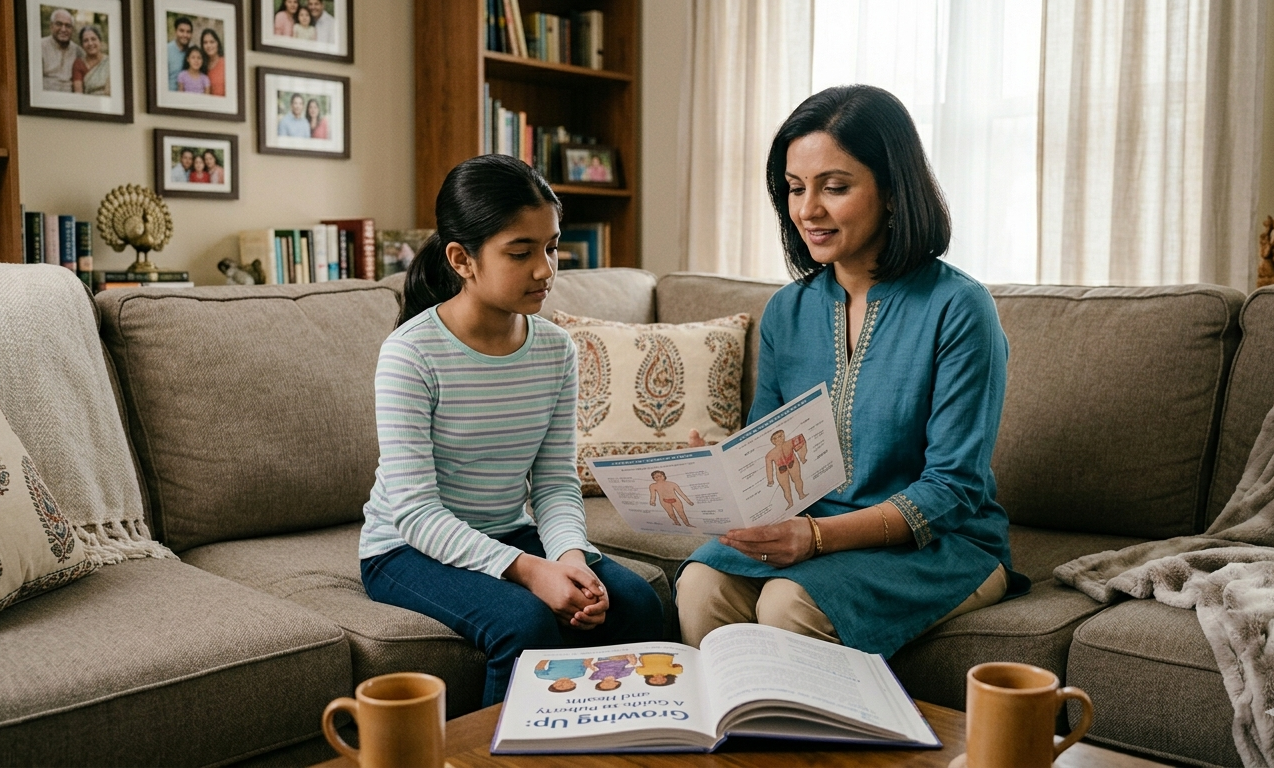
Talking about sex with your child can feel uncomfortable. In many Indian homes, this topic is still avoided. But silence does not protect children. Awareness does.
Today, kids are exposed to information early through school, friends, and the internet. So the real question is simple. Will they learn from you or from somewhere else?
This guide helps you start that conversation in a way that feels natural, respectful, and practical for Indian families.
Introducing Sex Education Without Awkwardness
Start early. Keep it simple. Build over time. You don’t need one big talk, just many small, comfortable conversations.
Begin by helping your child understand that certain areas of their body — those covered by innerwear — are private and belong only to them. No one is allowed to touch them without a valid reason. Use clear, calm language and avoid making it feel shameful.
You can say: Your body belongs to you. Some parts are private. No one should touch them without a good reason, and you should always tell a trusted adult if something feels wrong.
Use the language spoken at home if that makes your child more comfortable.
If they ask where babies come from, keep it simple and age-appropriate. “A baby grows inside the mother’s body.“ Let their questions guide you. Give only as much information as they ask for, building gradually as they grow.
Preparing for Puberty
As your child enters their pre-teen years, prepare them for the changes ahead. Explain mood shifts, body changes, and the fact that everyone experiences these at a different pace. Reassure them that everything they are going through is completely normal.
Talk about emotions too. Teenagers may feel irritated, overwhelmed, or confused without knowing why. Encourage simple habits like taking a pause, going for a walk, or talking to someone they trust.
Age-appropriate books, puberty guides, menstrual hygiene products, and educational resources can also help children understand and manage these changes with greater confidence.
Relationships, Attraction, and Consent
As they grow older, talk about emotions and attraction. Let them know that liking someone is normal, but it should never come with pressure or discomfort.
Explain that healthy relationships are built on respect, boundaries, and consent. Teach them that real consent means:
- Freely given — no pressure, guilt, or manipulation
- Reversible — anyone can change their mind, at any point
- Ongoing — it applies every time, not just once
- Never assumed — silence is not agreement
Also explain digital consent. Sharing someone’s private photos or messages without permission is a serious violation, and a punishable offence under Indian law.
For Older Teens and Young Adults
This is the section many parents skip. Don’t.
As your child moves into their late teens and early adulthood, conversations need to grow with them. This is not about encouraging physical relationships. It is about making sure that if and when they happen, your child is informed, safe, and respected.
Emotional readiness matters as much as physical readiness. Help them understand that rushing into something out of curiosity or peer pressure rarely feels right afterward. A trustworthy partner will always respect a “not yet” or a “no.”
Physical safety is a shared responsibility. Without shame or alarm, explain that protection exists for a reason — it guards against both unintended pregnancy and infections. Many infections show no visible signs, which is why honest communication between partners matters.
Recognising red flags. A healthy relationship never involves pressure, threats, or guilt for saying no. If a partner makes them feel unsafe or disrespects their boundaries, that is not love — that is control.
If something feels wrong, make it clear they can come to you. No judgment, no scolding.
Making Conversations Easier
Use everyday moments. A TV ad, a movie scene, or a news story can become a natural starting point. Instead of lecturing, ask “What do you think?” or “Have you heard about this?” Then listen without judging.
Age-appropriate books or videos can also help. Watch or read together, then talk about it openly afterward.
Avoid common mistakes. Do not label the topic as dirty or shameful. Do not avoid questions. And do not limit these conversations to girls — boys equally need to understand respect, consent, and emotions.
Final Thoughts
This is not one conversation. It is a journey.
You are not just explaining how the body works. You are helping your child understand emotions, relationships, and their own self-worth — while unlearning shame, fear, and guilt.
Start small. Stay consistent. Stay calm. Because your child does not need perfect answers. They need a parent who is open and approachable. At the end of the day, they should always feel — “I can talk to my parents about this.”
You may also like this:
Fatherhood & Mental Health: The Overlooked Crisis New Dads Face
0 comments on “Birds & Bees Talk: A Parent’s Guide to Introducing Sex Education”