

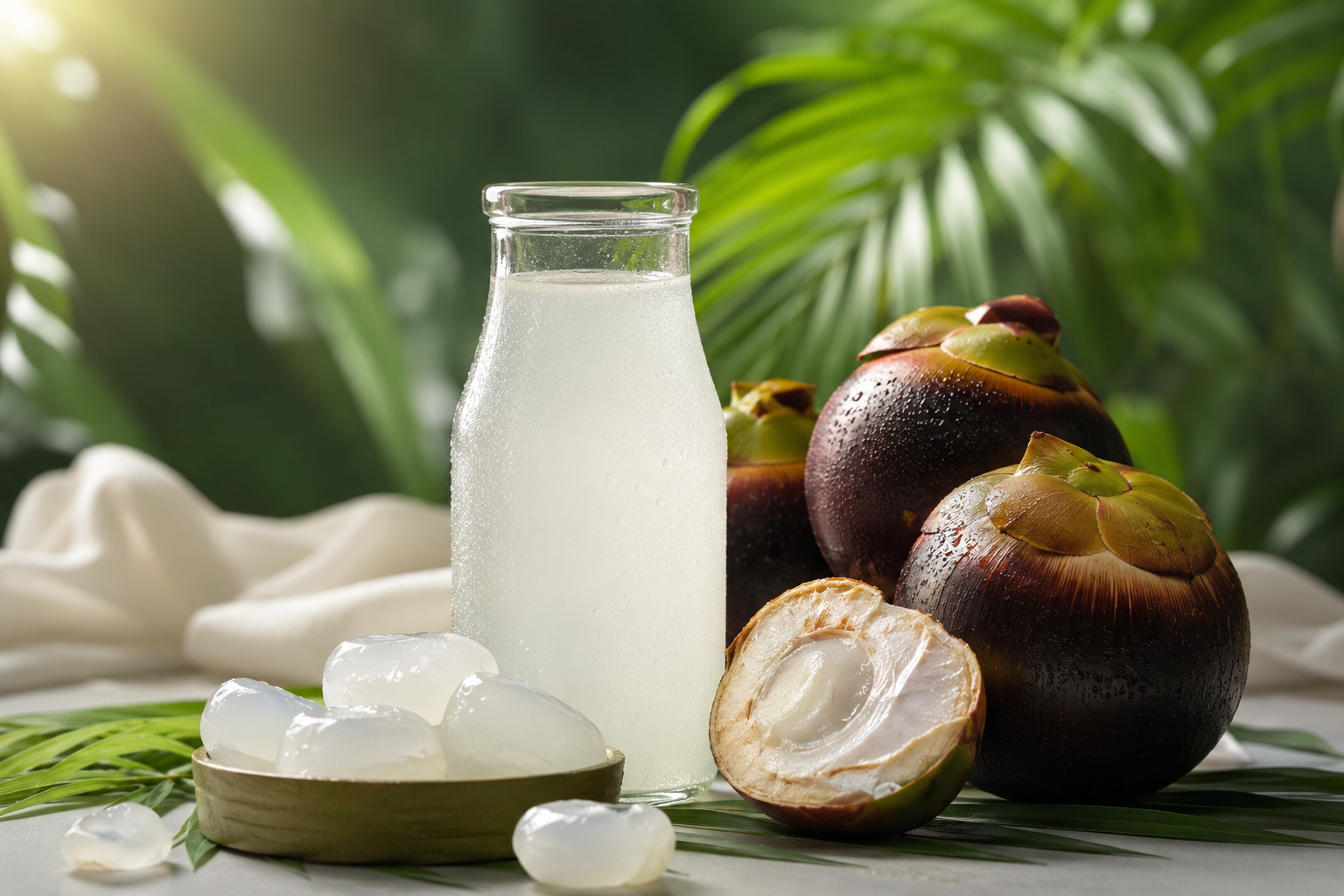
The moment you crack open an ice apple, the summer heat suddenly feels manageable. That soft, jelly-like flesh. That gentle sweetness. That instant wave of coolness that follows.
This isn’t just another seasonal fruit. Known as nungu in Tamil, tadgola in Maharashtra, and taati munjalu in Andhra Pradesh, ice apple has long been valued in traditional food practices and Ayurveda for its cooling nature.
And during peak Indian summer, that reputation makes perfect sense.
What Exactly Is an Ice Apple?
Ice apple is the tender fruit of the palmyra palm — a tall tropical tree commonly found across parts of India and South Asia. A tree so hardy it thrives where others won’t.
The fruit is harvested in the scorching summer months, almost as if nature timed it perfectly. Inside the dark outer shell sits a translucent, tender kernel. It looks like a thick piece of glass. Eat it chilled, and it feels instantly soothing.
Ice apple also contains high water content, natural sugars, potassium, and small amounts of minerals that help support hydration during extreme heat.
 Did you know? Did you know?
The palmyra palm can live for over 100 years, and a single tree has traditionally provided everything from fruit and jaggery to leaves used for writing ancient manuscripts in parts of India. |
Pitta Season Is Real
In Ayurveda, summer is the Pitta season. The body’s internal fire rises. You feel it as irritability. Skin flare-ups. Excessive thirst. Restless sleep. A general sense of being overheated from within.
Ice apple is considered a natural Pitta pacifier. In Ayurveda, it’s believed to cool the body beyond immediate thirst relief — something many sugary cold drinks fail to do.
What Ayurveda Says About It
In Ayurvedic practices, palmyra fruit has long been valued for its cooling nature. Traditionally, it’s considered gentle on digestion and especially helpful during exhausting summer heat.
Think of it as nature’s own rehydration solution — minus the artificial flavours and sugar overload.
Why Cold Drinks Don’t Cut It
Here’s the irony. Many packaged cold drinks may feel refreshing at first, but excess sugar and caffeine can sometimes leave the body feeling more dehydrated later. The sugar spikes. The caffeine dehydrates. The carbonation bloats.
Ice apple does the opposite. It hydrates. It soothes. It refreshes without leaving you feeling heavy afterwards. That’s the Ayurvedic difference.
How Indians Have Always Eaten It
Across Karnataka, Tamil Nadu, Andhra Pradesh, Maharashtra, and West Bengal — street vendors line up with fresh ice apples every summer.
No recipe needed. No elaborate preparation required. You simply eat it as it is. That simplicity is the wisdom. The less you do to it, the more it does for you.
A Few Ways to Enjoy It
- Straight from the shell — the most traditional and effective way.
- Chilled with a pinch of rock salt — helps with electrolyte balance.
- Blended into a light summer drink — mix with coconut water for a double cooling effect.
- With a squeeze of lime — adds brightness without killing the cooling property.
Who Should Eat It
Anyone stepping out in the May–June heat. Anyone with a sensitive stomach. Anyone prone to acidity. Anyone who sweats excessively.
Which, honestly, includes most of us during an Indian summer.
The Bigger Lesson
Ice apple isn’t trendy. It doesn’t have fancy packaging. It won’t show up with a wellness label. But it has outlasted every summer fad.
Generations of Indians reached for it instinctively. Because the body knows. And Ayurveda simply named what the body already understood.
This summer, when the heat gets personal — reach for the ice apple. Nature already packed the remedy. You just have to peel it open.
0 comments on “Ice Apple: Nature’s Fire Extinguisher”