

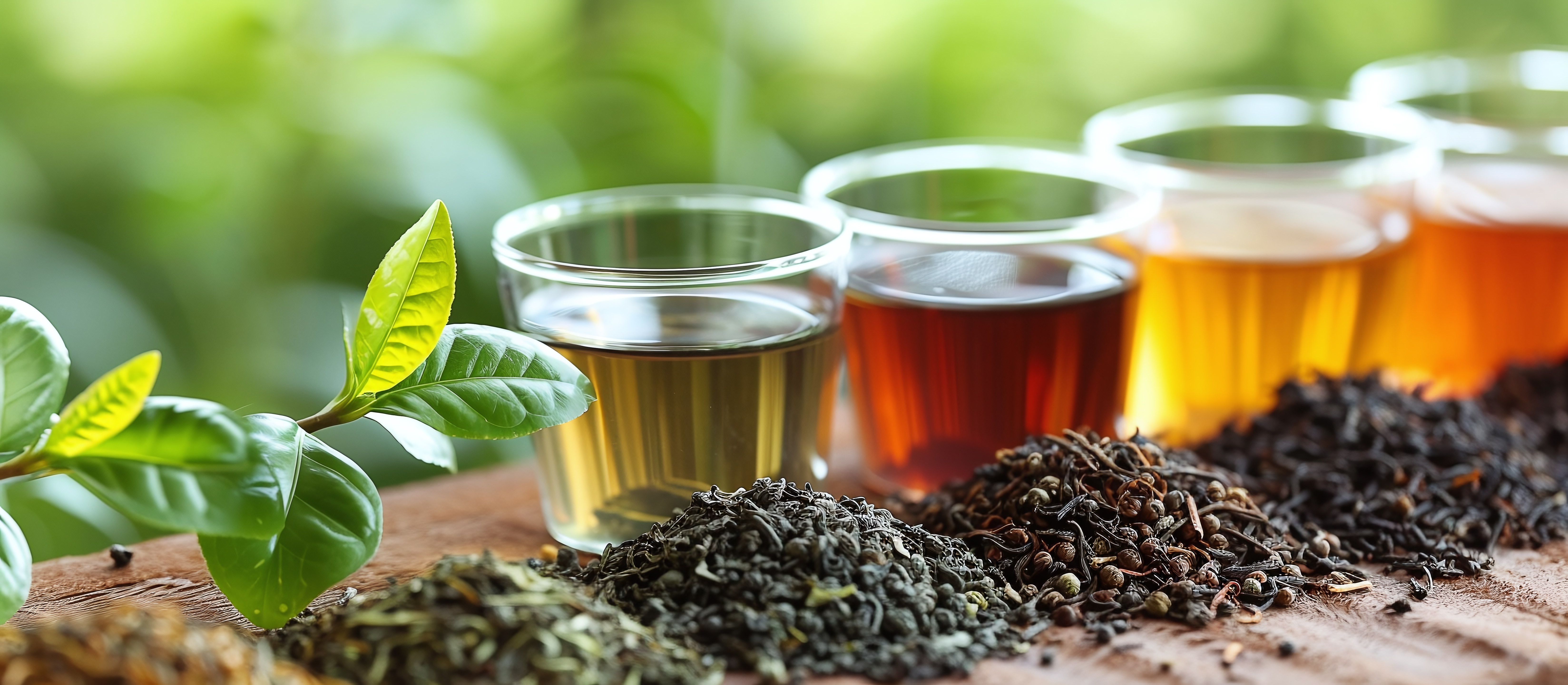
It all comes down to one thing: oxidation.
Oxidation is the natural process that happens when tea leaves are exposed to air after being picked. The more the leaves oxidise, the darker and bolder the tea becomes.
White tea is the least processed. The young leaves are simply picked and gently dried, helping them retain their delicate flavour and natural plant compounds.
Green tea is quickly heated after harvesting to stop oxidation early. This helps preserve its fresh taste and high antioxidant content.
Black tea is fully oxidised, which gives it its deep colour, robust flavour, and distinctive aroma.
Processing doesn’t remove the benefits — it simply changes them. Each tea develops its own flavour profile, caffeine level, and unique qualities depending on how it’s made.
Green Tea: The Antioxidant Powerhouse

Green tea is one of the most researched teas in the world — and for good reason.
It’s rich in EGCG (epigallocatechin gallate), a powerful antioxidant linked to reduced inflammation, improved brain function, and better overall wellness. Many studies also associate green tea with heart health and healthy ageing.
Another reason people love green tea? It contains L-Theanine — an amino acid known for promoting calm focus without the jittery feeling often associated with coffee.
Caffeine level: 20–45 mg per cup (moderate)
Best for: Focus, metabolism support, healthy ageing, heart health
Who should drink it: Anyone looking for a gentle daily health boost
Explore green tea collection here
Black Tea: The Bold One With Gut Benefits

Black tea often gets dismissed as “just a caffeine drink” — but there’s far more to it than a strong morning kick.
During oxidation, black tea develops unique antioxidants called theaflavins and thearubigins. These compounds are linked to gut health and may help support the growth of beneficial bacteria in the digestive system.
Research also suggests that black tea may support heart health and help manage LDL (bad) cholesterol levels when consumed as part of a balanced lifestyle. While it contains less EGCG than green tea, black tea brings its own unique qualities along with a bold flavour and rich aroma that many tea drinkers love.
Caffeine level: 40–70 mg per cup (highest of the three)
Best for: Gut health, energy, cholesterol management
Who should drink it: Those who need a stronger caffeine kick but want more than coffee offers.
Explore black tea collection here
White Tea: The Gentle Giant

White tea may not be as popular as green or black tea, but it quietly stands out for its minimal processing and subtle flavour profile.
Since the leaves are simply picked and dried, white tea retains a high concentration of natural catechins — antioxidants associated with overall wellness and healthy ageing. Some studies also suggest it may offer promising antibacterial properties.
What makes white tea especially appealing is its light, smooth flavour. It’s subtle, refreshing, and ideal for those who find stronger teas too intense or bitter.
Caffeine level: 15–30 mg per cup (lowest)
Best for: Skin health, immunity, sensitive stomachs, low caffeine needs
Who should drink it: Those new to tea, or anyone wanting a gentle, antioxidant-rich option.
Explore white tea collection here
Choose Your Perfect Cup
Green Tea
Antioxidants: Very High | Caffeine: Moderate | Best For: Focus & metabolism | Flavour: Grassy & fresh
Black Tea
Antioxidants: High | Caffeine: High | Best For: Energy & gut health | Flavour: Bold & robust
White Tea
Antioxidants: Naturally Rich | Caffeine: Low | Best For: Skin & immunity | Flavour: Light & floral
Your Perfect Cup Is Waiting
We indians are accustomed to enjoy black tea. And accordingly we do get health benefits from black tea. So I give thumb up for black tea