

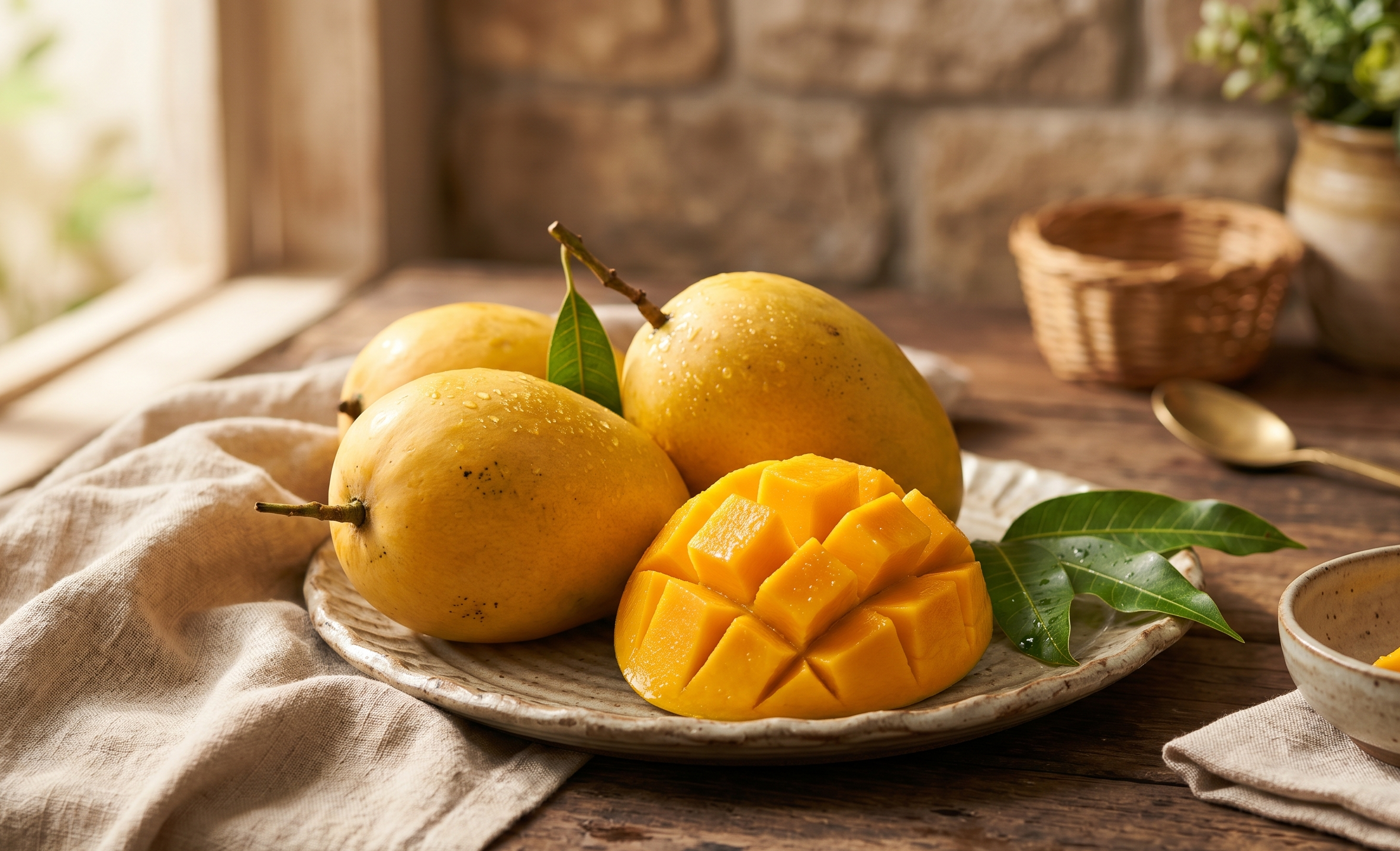
Every summer, India divides itself into mango camps.
Alphonso lovers. Kesar fans. Dasheri devotees. But tucked in the red soil of northern Karnataka, there grows a mango so good, so creamy, so impossibly sweet — that people simply call it the Alphonso of the South.
Meet the Badami mango. And once you taste it, you’ll understand why.
What Is Badami Mango?
Badami is a premium mango variety grown mainly in the Bagalkot, Vijayapura, and Dharwad districts of Karnataka. The name comes from the town of Badami — a place famous for its ancient cave temples and, now increasingly, its golden mangoes.
It is also called Alphonso of Karnataka by locals, traders, and food lovers alike.
That’s a big claim. But it holds up.
Why the Alphonso Comparison?
Alphonso from Ratnagiri is India’s most celebrated mango. Rich. Aromatic. Buttery. Expensive.
Badami ticks every single one of those boxes.
The texture is smooth and fibre-free. The colour is a deep saffron-yellow inside. The taste is sweet with a mild tang. Its deep saffron flesh and balanced sweetness make it instantly memorable.
Side by side, many mango lovers genuinely struggle to tell them apart.
This is not just local pride talking. Badami regularly competes with Alphonso in taste, texture, and aroma — often at a friendlier price point.
The Look, The Smell, The Taste
Let’s talk about what makes Badami special.
- The skin is thin and smooth. It turns a beautiful yellow-orange when ripe. No ugly spots. No rough patches.
- The flesh is thick, deep orange, and melts in your mouth. There is almost no fibre. This is important — nobody wants mango strings stuck in their teeth.
- The seed is flat and small. That means more fruit per mango. Always a win.
- The smell is where Badami truly shines. It has a rich, sweet fragrance that feels festive. Like summer should smell.
- The taste is the final proof. Sweet, with just enough tang to keep things interesting. Not one-note. Not overpowering. Balanced and elegant.
The Season Is Short — That’s Part of the Magic
Badami mangoes arrive in April and stay through June.
That’s roughly eight to ten weeks.
No more.
This short window is part of why people go a little crazy for them every year. There’s urgency. You know it won’t last. So you buy in bulk. You make aamras. You eat it plain with a spoon standing over the kitchen sink. No judgement.
The fleeting season is what makes summer fruit culture so emotional for Indian families.
From Karnataka to the World
Badami isn’t just a local secret anymore.
It is now exported to the UAE, UK, USA, and several European countries. Indian diaspora communities abroad specifically look for Badami because it reminds them of home summers.
Farmers in the Bagalkot belt have been growing these mangoes for generations. Many orchards are decades old. The trees are tended with real care — because the families know what they have is special.
The Geographical Indication (GI) tag associated with Karnataka mangoes has helped put Badami on the national and global map, protecting its identity and origin.
How People Eat Badami Mango
There is no wrong way to eat a Badami. Most people start simple — chilled, cut into cubes, or sucked straight from the seed over the kitchen sink. Then comes aamras, blended pulp with a pinch of cardamom, served with hot puris. Mango milkshakes, thick mango rice, and sharp raw mango pickle all have their loyal fans, too. Every Karnataka household has its own summer mango ritual. Most involve eating far more than originally planned.
Recipes worth trying:
 Rich & Soothing Mango Lassi Rich & Soothing Mango Lassi |

Should You Try Badami This Summer?
Yes. Absolutely yes.
If you have only ever eaten Alphonso, Badami will feel like meeting a cousin you never knew existed — familiar, but with its own personality.
If you are from Karnataka, you already know. You’ve probably been defending Badami in mango arguments for years. You’re right, by the way.
The Alphonso gets the headlines. Badami gets the loyalty.
And in summer fruit culture, loyalty means everything.
Buy them here before the season ends. You won’t regret it
You may also like:
0 comments on “Why Is the Badami Mango Called ‘Karnataka’s Alphonso’?”