

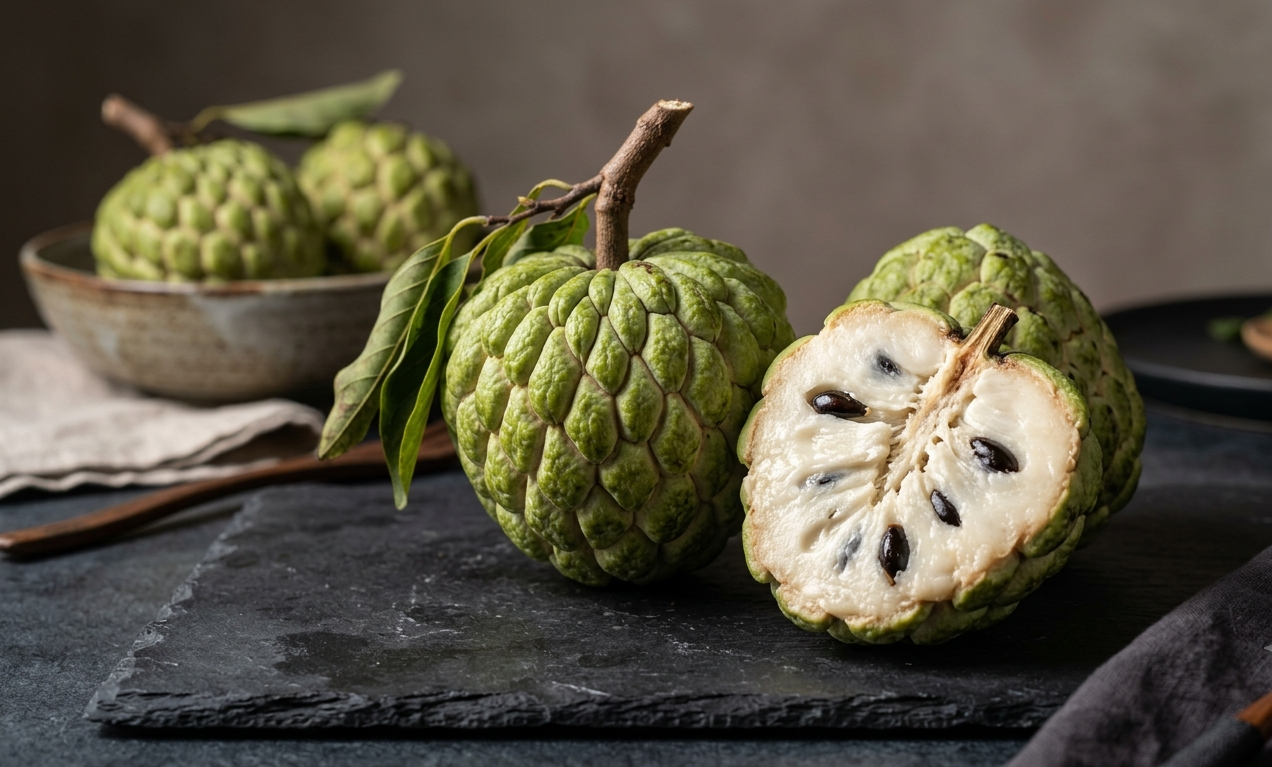
You pick up a beautiful custard apple, only to find dark patches creeping across its skin a day or two later. Naturally, the first thought is: has it gone bad?
Not necessarily.
Custard apples are among the most delicate fruits you’ll bring home. Their sweet, creamy flesh comes with a short shelf life, and the fruit can change appearance surprisingly fast. Understanding why custard apples turn black can help you enjoy them at their best and reduce unnecessary food waste.
1. The Most Common Reason: Natural Ripening
Unlike many fruits that stay firm for days, custard apples continue to ripen rapidly after harvest. As they soften, enzymes inside the fruit break down cell walls and convert starches into sugars. During this process, the skin may develop brown or black patches.
If the fruit feels slightly soft and smells sweet, these dark spots are often just a sign that it has reached peak ripeness. In many cases, the flesh inside remains perfectly edible.
2. Bruising Happens Easily
Custard apples have a thin, segmented skin and soft flesh. A minor bump during transport, stacking, or handling can damage the cells beneath the surface. Once damaged, these cells oxidize, causing dark or black areas to appear.
This is similar to what happens when an apple turns brown after being cut. The difference is that bruising in custard apples often becomes visible only after a day or two.
3. Could It Be a Disease?
Sometimes, black spots aren’t from handling at all—they are caused by a fungal disease called anthracnose. Unlike the gradual, flat darkening that comes with natural ripening, anthracnose often appears as distinct, sunken black lesions that can spread rapidly over the fruit’s surface.
This infection thrives in warm, humid conditions and can worsen quickly after harvest. If the fruit shows large, rapidly expanding black patches, mold growth, or signs of decay beneath the skin, it’s best to play it safe and discard it.
4. Temperature Can Speed Up Blackening
Many people store custard apples in the refrigerator as soon as they bring them home. While refrigeration can help slow ripening, placing an unripe custard apple in very cold conditions may cause chilling injury.
This can lead to uneven ripening, skin discolouration, and black patches. The better approach is to let firm fruits ripen at room temperature first. Once they soften, refrigerate them and consume them within a couple of days.
How to Prevent Custard Apples from Turning Black Too Quickly
A little bit of strategy goes a long way in preserving this delicate fruit:
-
Pick Smart: Choose fruits that are firm but light green or yellowish between the segments. Avoid squeezing them aggressively to check for ripeness; a gentle press with your palm is enough.
-
Give Them Space: Store unripe fruits at room temperature, away from direct sunlight. Keep them in a single layer rather than piling them on top of one another to prevent pressure bruising.
-
Time the Chill: Only refrigerate your custard apples after they have softened to the touch. Once chilled, try to consume them within a couple of days for the best flavor and texture.
A Final Note
Black spots on custard apples don’t always mean the fruit is spoiled. More often, they’re the result of natural ripening, bruising, or storage conditions. A quick check of the texture, aroma, and flesh inside will usually tell you whether the fruit is still good to eat.
If you’re looking for fresh, carefully handled custard apples delivered to your doorstep, explore our collection here. Starting with high-quality fruit is one of the easiest ways to enjoy every spoonful of that rich, creamy sweetness before nature takes its course.
Looking for premium-quality custard apples? Explore here and enjoy the fruit before it reaches peak ripeness.
You may also like:
0 comments on “Why Your Custard Apple is Turning Black (And How to Prevent It)”