

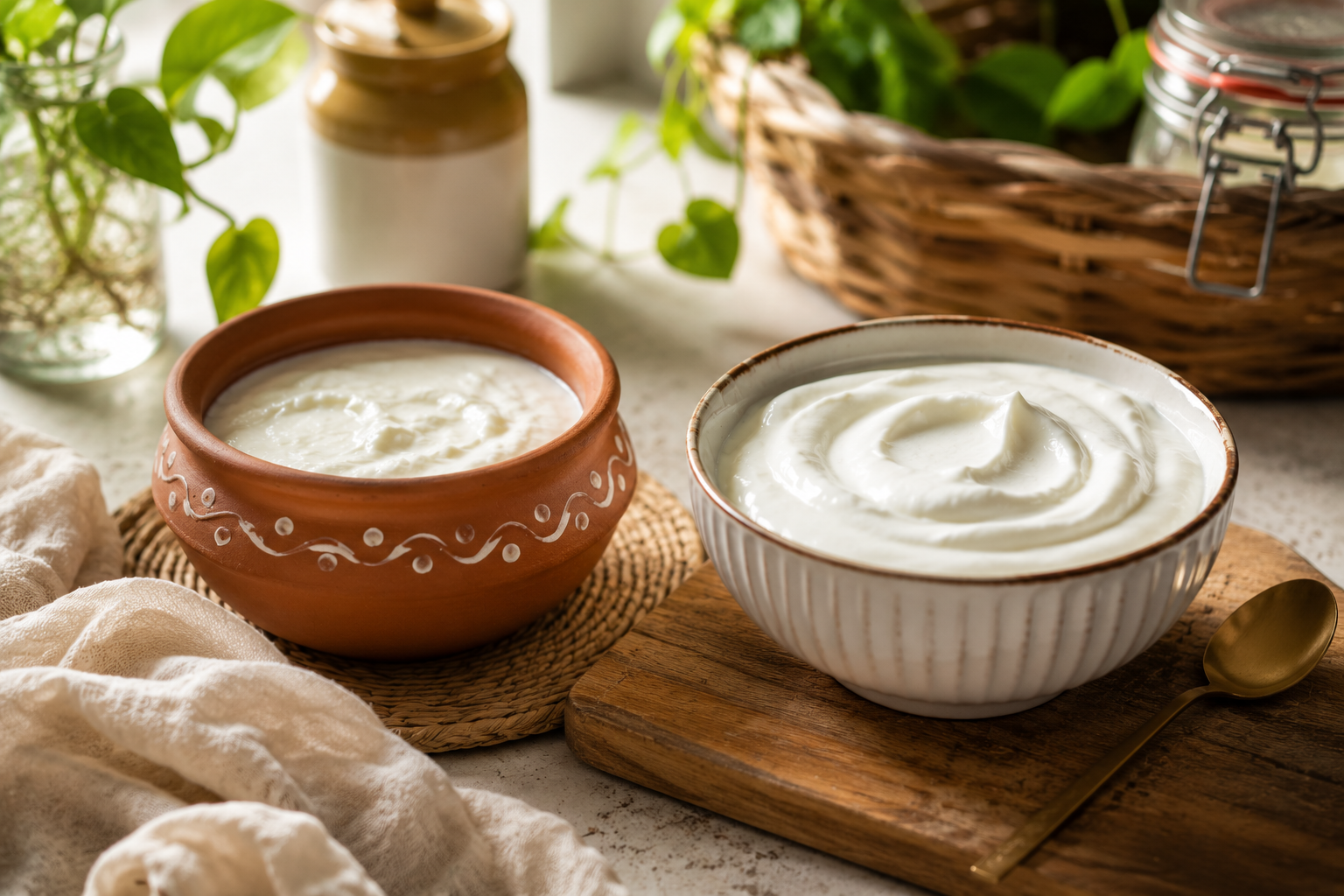
There’s a silent face-off happening in modern Indian kitchens.
On one side, a familiar steel katori of homemade dahi (curd), set overnight with care, slightly tangy, a little whey floating on top.
On the other hand, a perfectly packaged tub of Greek yoghurt is thick, glossy, and proudly high in protein.
Both begin with milk and fermentation, but dahi (curd) is set with a simple home starter, while yoghurt is made using lab-selected cultures (Lactobacillus bulgaricus and Streptococcus thermophilus), and Greek yoghurt is simply a strained version, thicker, creamier, and lower in whey.
What Makes Fermented Foods So Powerful?
Fermentation is where the magic happens. Bacteria break down lactose, multiply, and transform milk into something your gut can actually benefit from.
Your gut microbiome thrives on diversity. Regularly eating fermented foods as part of a balanced diet may help support a healthy and diverse gut microbiome, which plays an important role in digestion, immunity, and overall well-being.
Both dahi and Greek yoghurt bring this to the table. The difference lies in how they get there.
The Quiet Strength of Homemade Dahi
Homemade dahi (curd) isn’t just food, it’s a living tradition. Each batch carries forward a culture that adapts to your kitchen, milk, and climate, which is why no two batches taste the same.
It ferments naturally, without additives, staying fresh and active. For a simple upgrade, set it in a clay pot (matka); it improves texture, absorbs excess water, and enhances flavour.
The Structured Appeal of Greek Yoghurt
Greek yoghurt is simply yoghurt, refined. Strained to remove whey, it becomes thicker, creamier, and higher in protein, with a more consistent texture.
But you don’t need to buy it. Hung curd (chakka) does the same job, just tie dahi in a muslin cloth, let it drain, and you get a rich, creamy version at home.
So, What’s Better for Your Microbiome?
Because homemade dahi is prepared using traditional starter cultures, it may contain a more diverse mix of microorganisms than commercially standardised yoghurt. However, the exact microbial profile varies from one batch to another.
Greek yoghurt, on the other hand, brings consistency and a strong protein boost.
The simple takeaway?
- Dahi supports the diversity of beneficial bacteria.
- Greek yoghurt supports the density of protein per serving.
Simple Ways to Get More Out of Both
Have dahi earlier in the day for better digestion, and let it set fully before refrigerating for proper fermentation.
Greek yoghurt, on the other hand, can be enjoyed any time of the day. Its higher protein content makes it a satisfying option for breakfast, snacks, or post-workout meals.
Pair them with prebiotic foods like banana or amla, and if choosing Greek yoghurt, stick to plain versions to avoid added sugar.
What Matters Most
Dahi has long supported gut health in simple, natural ways, while Greek yoghurt brings convenience and a protein boost. There’s no need to choose one over the other.
The real win is consistency; what you eat regularly matters more than occasional health switches.
So, what’s in your fridge right now, homemade dahi or Greek yoghurt?
Shop fresh milk and dairy essentials here
You may also like:
0 comments on “Homemade Dahi vs. Greek Yogurt: Which Feeds Your Microbiome Better?”