

Walk into any grocery store today, and you’ll most likely find the same familiar yellow bananas neatly stacked on the shelves. They look identical, taste similar, and have become so common that it’s easy to assume bananas have always been this way.
The truth tells a very different story.
Long before the supermarket banana became a global favourite, hundreds of unique banana varieties thrived in farms, forests, and home gardens. Some were sweeter than dessert, others carried hints of vanilla or apple, while a few were even cooked like vegetables. Across regions, bananas weren’t just a fruit—they were part of local identity, woven into daily diets and traditions.
So where did all that diversity go?
When Bananas Came in Every Shape, Colour and Flavour

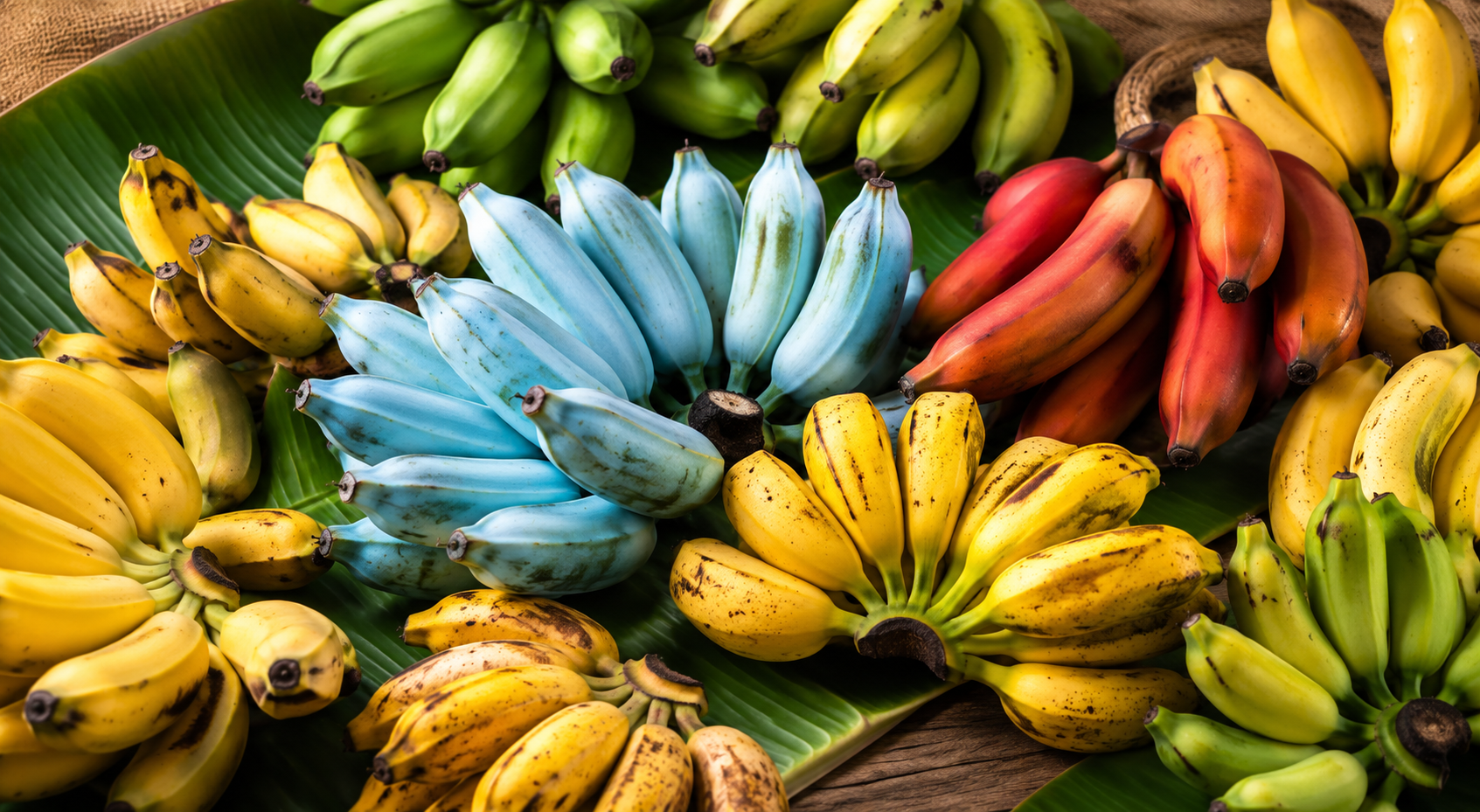
Before commercial farming narrowed its focus, bananas existed in striking variety. Across Asia, Africa, and the Pacific Islands, communities cultivated types shaped by climate, soil, and culinary use.
Some notable varieties included:
Blue Java: Nicknamed the “ice cream banana” for its creamy texture and gentle vanilla notes.
Red Dacca: Recognisable by its deep reddish-purple peel and rich sweetness.
Lady Finger: Smaller, slender, and significantly sweeter than the Cavendish.
Fe’i Banana: Bright orange inside, traditionally cooked in many Pacific Island cuisines.
While some of these still exist in limited cultivation, they rarely appear in local supermarket or online grocery platforms today.
The Banana That Once Conquered the World

If you had eaten a banana before the 1960s, it was likely not the one familiar today.
The Gros Michel, or “Big Mike,” once dominated global markets. It was prized for its intense flavour, thick peel, and ability to withstand long-distance transport.
That dominance ended abruptly.
A fungal disease known as Panama disease swept through plantations, devastating Gros Michel crops across continents. With plantations relying on genetically identical plants, the disease spread with alarming speed.
To sustain global supply, producers turned to the Cavendish variety—hardier against that specific strain and better suited to industrial cultivation. It soon became the new global standard, filling modern retail shelves worldwide.
Why Banana Diversity Declined
The shift wasn’t sudden—it unfolded gradually through the logic of scale and efficiency.
Some of the biggest reasons include:
- Large-scale cultivation favoured varieties that could withstand transport and extended storage.
- Urbanisation and evolving agricultural patterns reduced space for traditional cultivars.
- Global retail systems increasingly prioritised uniformity to streamline distribution across supermarkets and modern retail channels.
Over time, many regional varieties receded into small-scale farming systems or conservation collections.
Why It Still Matters
Banana diversity is more than agricultural heritage—it is resilience.
Genetic variation allows crops to adapt to changing conditions, from shifting weather patterns to emerging diseases. When diversity narrows, so does the ability of agriculture to respond.
Today, scientists, growers, and conservation networks are working to preserve rare banana varieties through seed banks, botanical collections, and community farming systems. These efforts are not about nostalgia alone—they are about safeguarding a crop that feeds millions.
Where These Bananas Still Exist

They haven’t vanished entirely—they’ve simply moved out of mainstream visibility.
Specialty growers, local food markets, botanical gardens, and tropical farms still cultivate heritage varieties. In regions where banana diversity remains strong, some traditional types continue to circulate outside commercial export systems.
For most people, discovering them is less about convenience and more about curiosity—an encounter with what banana once meant before standardisation.
The Bottom Line
0 comments on “Types of Banana: Exploring a World of Lost Varieties”