

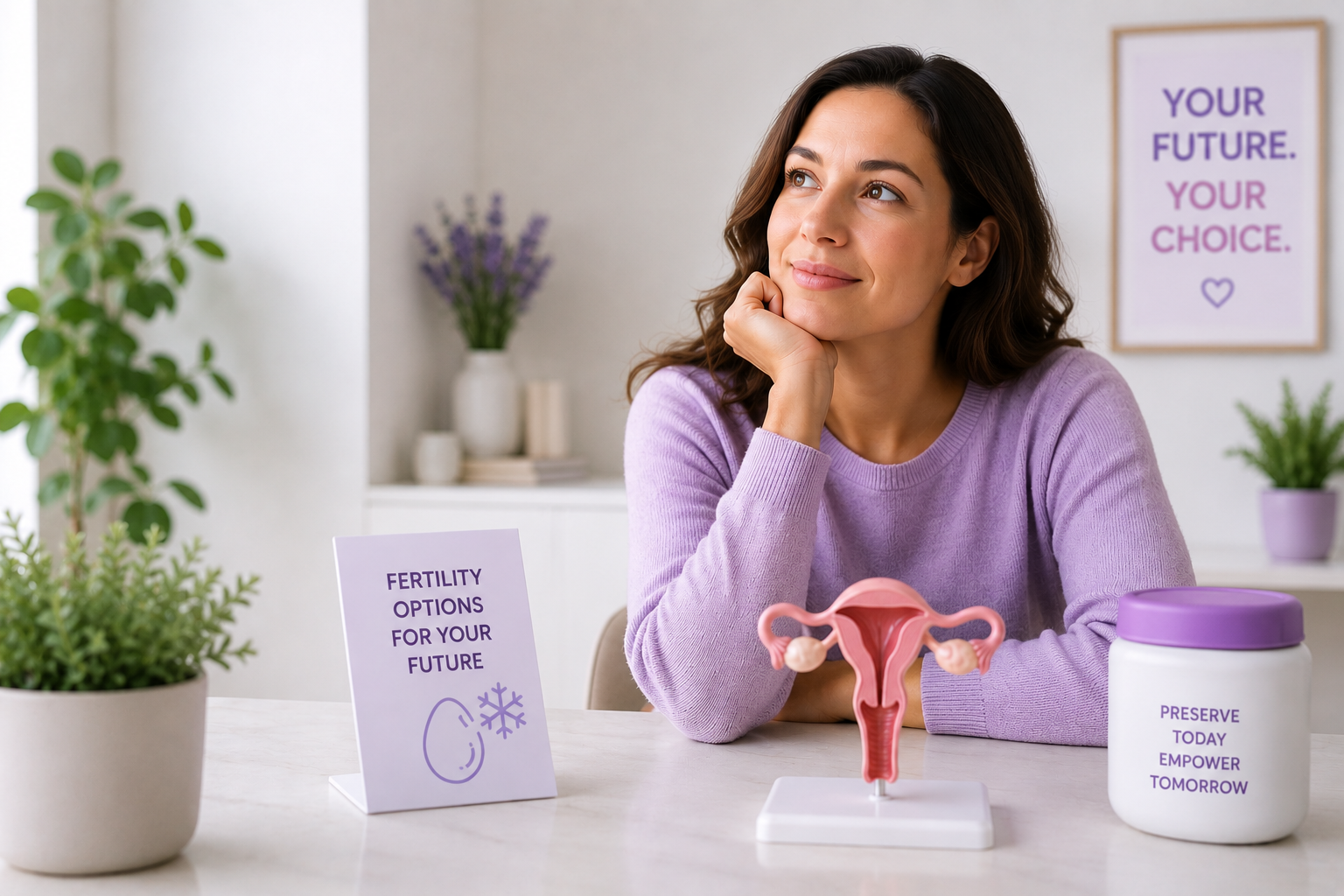
For generations, the phrase “biological clock” has carried a sense of urgency, making many women feel they have to choose between building a career, pursuing personal goals, and starting a family. Thankfully, advances in reproductive medicine have changed that conversation.
Elective egg freezing, also known as oocyte cryopreservation, gives women the opportunity to preserve their eggs while they’re younger, offering greater flexibility when planning for the future. While it isn’t a guarantee of pregnancy, it can help keep your options open and reduce some of the pressure around timing.
If you’re considering egg freezing, here’s what you should know before making your decision.
⏳ The Biology of Time: Why Age Matters for Egg Freezing
When it comes to egg freezing, age is the single biggest factor influencing its success.
Every woman starts life with a limited ovarian reserve. As they age, both the number and quality of those eggs naturally decline. Freezing eggs earlier helps preserve them before this decline becomes more noticeable.
The Ideal Time to Freeze Your Eggs
From a biological perspective, fertility specialists generally consider the late 20s to early 30s the optimal time for egg freezing. During these years, ovarian reserve is typically higher, and egg quality is at its best, making it easier to preserve a greater number of healthy eggs.
Is It Too Late After 35?
Not at all.
Many women successfully freeze their eggs between 35 and 37 years of age. However, because egg quantity and quality naturally decrease with age, your doctor may recommend freezing more eggs or completing more than one stimulation cycle to improve your chances later on.
Before making any decisions, it’s helpful to understand your ovarian reserve. A fertility test kit can provide valuable insights into your egg reserve, helping you have a more informed conversation with your fertility specialist.
🩺 What Does the Egg Freezing Process Involve?

The egg-freezing process typically takes around two to three weeks and is carefully timed around your menstrual cycle.
The process begins with daily hormone injections for approximately 10–12 days. These medications stimulate your ovaries to mature multiple eggs instead of the single egg that normally develops during a cycle.
Throughout the treatment, your fertility specialist monitors how your ovaries are responding through regular blood tests and ultrasound scans. Once the follicles reach the right size, you’ll receive a final “trigger shot.” Around 36 hours later, the eggs are retrieved through a minimally invasive procedure performed under light sedation.
The procedure generally takes 20 to 30 minutes, and most women are able to return home the same day.
The retrieved mature eggs are then rapidly frozen using an advanced technique called vitrification, which helps reduce ice crystal formation and improves their chances of surviving the thawing process years later.
🥚 Not Every Frozen Egg Becomes a Baby
One of the most common misconceptions about egg freezing is that every frozen egg will eventually lead to a pregnancy. In reality, the journey involves several steps, and some loss naturally occurs along the way.
Along the way:
- Not every retrieved egg is mature.
- Not every frozen egg survives thawing.
- Not every egg fertilises successfully.
- Not every embryo develops into a healthy pregnancy.
This natural drop-off is known as attrition, and it’s a normal part of fertility treatment.
While attrition can’t be completely prevented, fertility specialists often encourage women to focus on their overall health before starting treatment. Eating a balanced diet, staying physically active, and following your doctor’s advice can help prepare your body for the process. Depending on your individual needs, your doctor may also recommend supplements such as CoQ10 or prenatal vitamins.
💡 Is Egg Freezing a Guarantee?

No—and it’s important to understand why.
Egg freezing can improve your chances of using younger eggs in the future, but it cannot guarantee pregnancy. Success depends on several factors, including your age when the eggs were frozen, the number of eggs stored, embryo development, and your overall reproductive health when you’re ready to use them.
The good news is that frozen eggs can usually be stored safely for many years without losing quality, thanks to modern freezing techniques. This gives many women the flexibility to pursue personal or professional goals without feeling pressured by their fertility timeline.
❄️ Take Control of Your Timeline
Egg freezing is about preserving possibilities—not making promises.
By preserving younger eggs today, you may have greater flexibility if you decide to start a family later. While there’s no guarantee of pregnancy, many women find reassurance in knowing they’ve taken a proactive step to keep their options open.
💜 Final Thoughts
Every fertility journey is unique, and the right decision depends on your personal goals, age, and reproductive health. If you’re considering egg freezing, speaking with a fertility specialist can help you understand your options and make a choice that’s right for you.
You may also like:
The Bedroom Wellness Shift: How Couples Are Moving Past Taboos
This is a very informative and thoughtful article. It explains egg freezing in a clear way and highlights the importance of understanding the process, benefits, and considerations before making such a personal decision. Great insights for anyone looking to learn more about fertility options.