

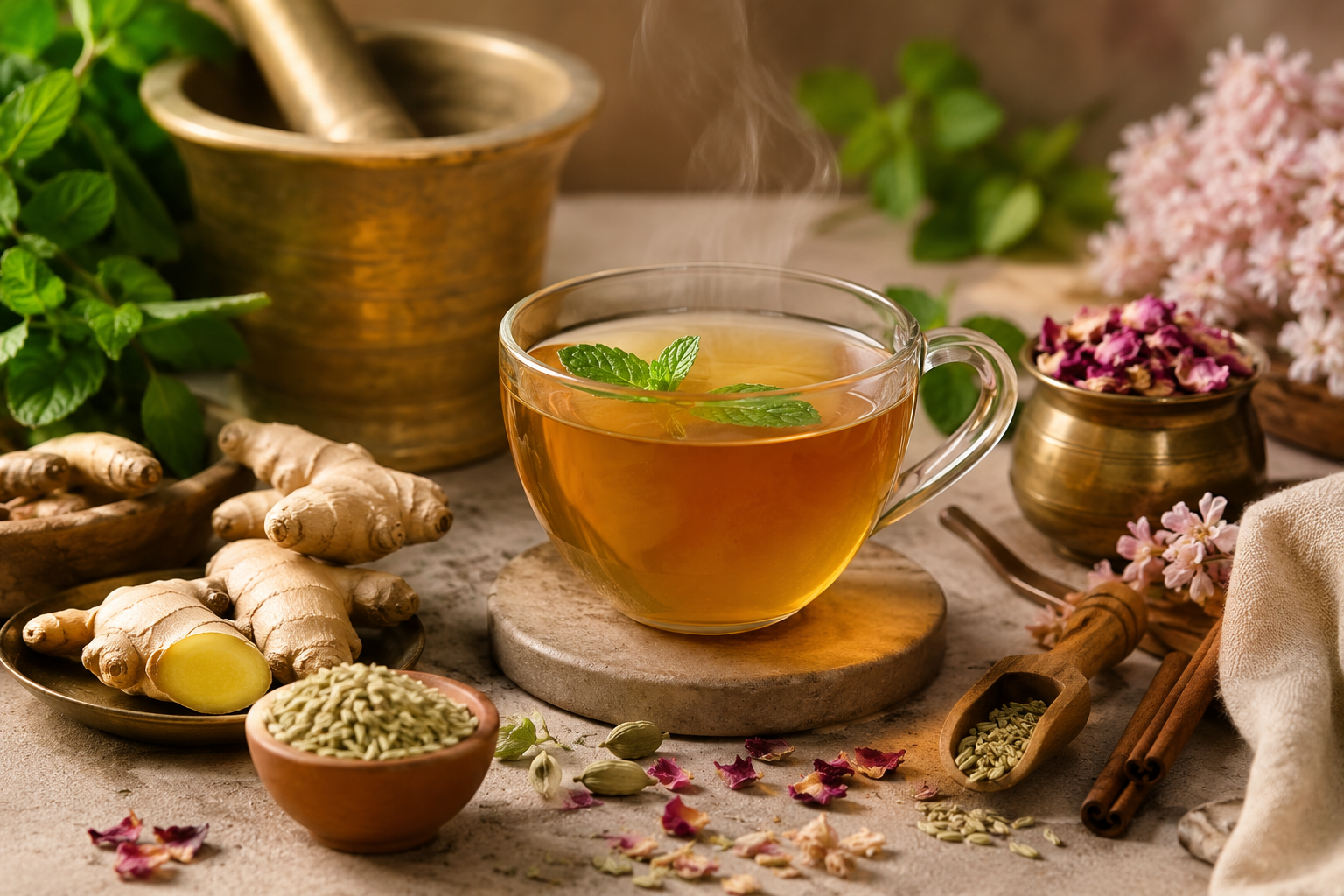
We all love a steaming cup of tea to kickstart the morning or shake off a 4 p.m. slump. But what if your daily brew could do more than simply wake you up?
In Ayurveda, herbal infusions—traditionally known as kwaths (decoctions) or phanta (hot infusions)—are thoughtful preparations that work with your body’s natural rhythms. Rather than sticking to a single beverage all day, matching your herbs to your shifting needs helps balance the three doshas, supporting steady energy, sharp focus, and restful sleep.
Here’s how to match your herbal tea to the changing rhythm of your day.
Morning: Awaken Your Digestive Fire

The hours between sunrise and mid-morning are ruled by Kapha, the dosha of earth and water. It’s why we often wake up feeling heavy, slightly congested, or slow to move.
Instead of jolting your system with caffeine, gently kindle your Agni (digestive fire). A warming morning blend prepares your gut for the day ahead, leaving you feeling naturally refreshed.
The Blend: Fresh ginger, a pinch of black pepper and a squeeze of fresh lemon (Get the ingredients here).
Why it works: Ginger is Ayurveda’s best-known warming herb; it stimulates metabolism and disperses morning sluggishness. Black pepper enhances nutrient absorption, while lemon adds a bright, cleansing lift.
Midday: Stay Cool and Balanced

As the sun peaks, Pitta energy takes centre stage. While your digestion is strongest now, this high-heat window is also when stress, irritability, and mental fatigue creep in. Choose cooling, soothing herbs to keep your focus sharp and your temper cool.
The Blend: Liquorice root, fennel seeds and dried rose petals (Get the ingredients here).
Why it works: Fennel relaxes the stomach after lunch, while rose and liquorice act as natural coolants to soothe a racing, overstimulated mind.
Afternoon: Ease Post-Meal Heaviness

As the afternoon unfolds and Vata begins to rise, some people notice bloating, restlessness or an energy dip after lunch. A digestive herbal infusion can help you transition through the day feeling lighter and more comfortable.
The Blend: Fennel, cumin, coriander and a little fresh ginger (Get the ingredients here).
Why it works: This time-tested combination supports the body’s natural digestive process, eases post-meal discomfort and helps you feel lighter. A warm cup around 20 to 30 minutes after eating is often more beneficial than drinking large amounts of cold water immediately after a meal.
Evening: Quiet a Racing Mind

As daylight fades, Vata’s movement-oriented energy can manifest as racing thoughts and restlessness. Your evening cup should serve as a sensory cue that it is safe to unwind.
The Blend: Ashwagandha, chamomile and a touch of cardamom (Get the ingredients here).
Why it works: Ashwagandha is a renowned adaptogenic herb traditionally used to help the body adapt to everyday stress. Chamomile encourages physical relaxation, and sweet cardamom gently supports overnight digestion.
Herbal Tea Recipes to Try Next
Ready to put these Ayurvedic principles into practice? Start with these comforting herbal tea recipes.
 Herbal Tulsi & Mint Tea Herbal Tulsi & Mint Tea |

 Mint Ginger Elaichi Chai Mint Ginger Elaichi Chai |

Align Your Cup with Your Rhythm
Wellness doesn’t require complicated, time-consuming routines. Sometimes, it is as simple as choosing the right cup at the right hour. By aligning your teas with your body’s natural clock, you transform a daily habit into an intentional act of self-care.
Ready to make every cup count? Explore our range of Ayurvedic herbal teas.
Disclaimer: Ayurvedic herbs may not be suitable for everyone. If you’re pregnant, breastfeeding, taking medication or managing a medical condition, consult your healthcare provider before regularly consuming herbal infusions.
You may also like:
0 comments on “Herbal Teas in Ayurveda: What to Drink and When”