

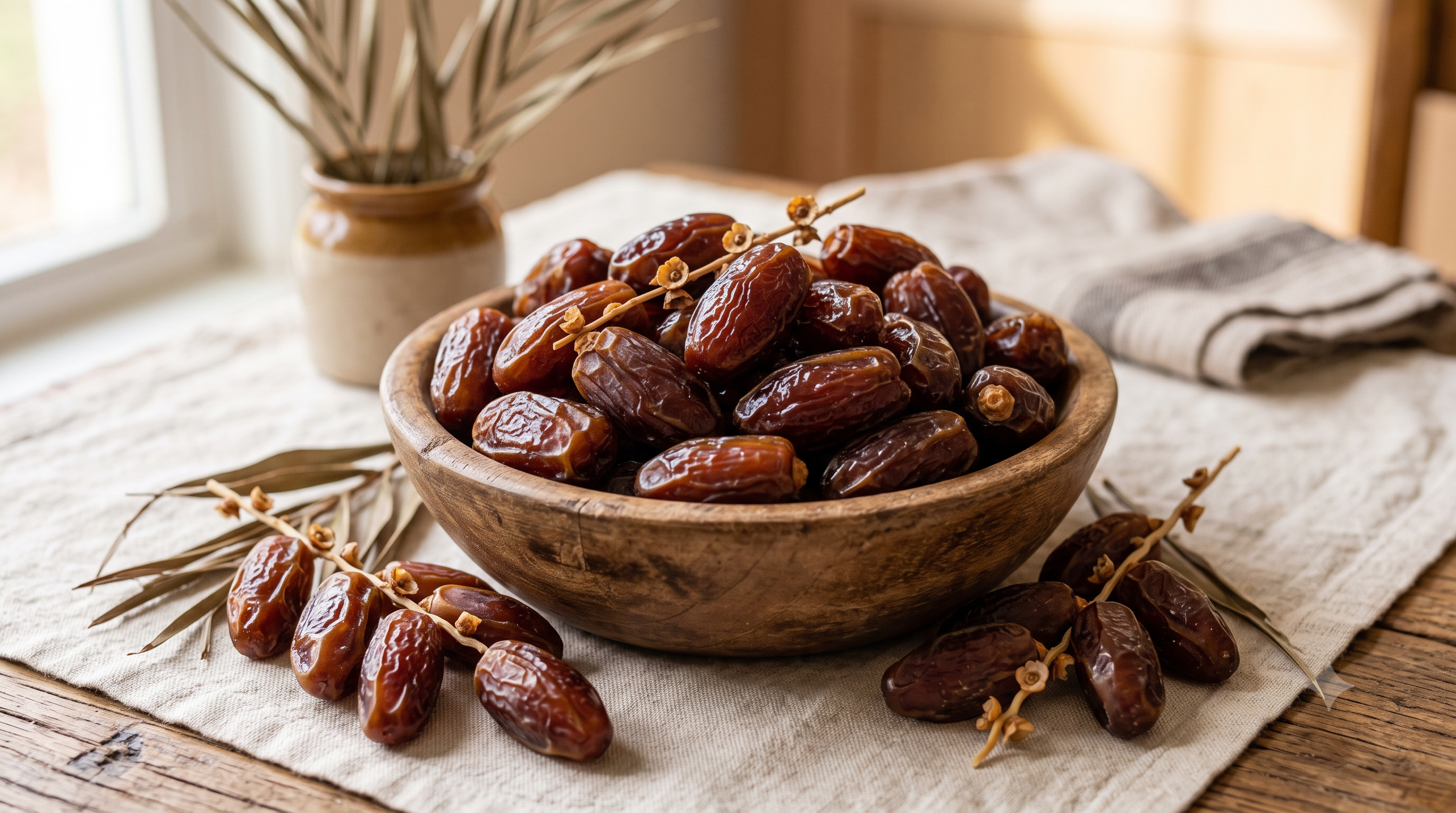
Constipation can leave you feeling heavy, uncomfortable and frustrated. Your daily diet can make a difference, and dates are one fruit worth knowing about. Naturally sweet and a source of dietary fibre, dates may help support regular bowel movements. But how exactly do they help, and how many should you eat? Let’s find out.
Why Are Dates Good for Constipation?
Fibre is one of the key nutrients to look for when dealing with constipation. Dates provide dietary fibre that can help add bulk to stool and support smoother bowel movements.
They also contain naturally occurring sugars and sugar alcohols such as sorbitol, which may have a mild laxative effect for some people.
However, dates work best as part of a fibre-rich diet rather than as a standalone solution.

 Did you know? Did you know?
Dates contain both soluble and insoluble fibre. While soluble fibre helps retain water, insoluble fibre adds bulk to stool—giving your digestive system the benefits of two different types of fibre in one fruit. |
How Does Fibre in Dates Help?
Think of fibre as your digestive system’s helper. Insoluble fibre adds bulk to stool, while soluble fibre absorbs water and forms a softer substance in the digestive tract.
Adding fibre-rich foods to your meals regularly can therefore support healthier bowel movements.
But there’s one important catch: fibre works best when you’re also getting enough fluids.
Dates and Hydration: Why Both Matter
Eating dates alone won’t necessarily fix constipation. Your hydration habits matter too.
Adequate fluid intake can help keep stool softer and support the normal movement of fibre through the digestive system. So, if you’re adding more dates or other high-fibre foods to your diet, remember to drink enough fluids throughout the day.
A simple combination to remember is:
- Dates + fibre = added dietary fibre
- Water + fibre = better support for normal bowel movements
- Movement + fibre + hydration = a more regular, constipation-friendly routine
Fresh Dates vs Dried Dates: Which Is Better?
Fresh and dried dates can both be nutritious, but they aren’t identical.
Fresh dates contain considerably more water, while dried dates have had much of their water removed. This makes dried dates more concentrated in calories, natural sugars and nutrients by weight.
If you prefer fresh dates, they can be a convenient way to add fruit and fibre to your diet. Dried dates are also nutritious, but because they are more concentrated, it’s worth being mindful of portion size.

How Many Dates Should You Eat?
You don’t need an elaborate recipe to enjoy dates. Chop them into oatmeal, blend them into smoothies or add them to yogurt. You can also pair dates with nuts for a simple snack.
For breakfast, try adding chopped dates to overnight oats with fruit and seeds for an easy, fibre-rich start to the day.
Looking to try these combinations? Get the ingredients here.
Remember, the goal is to make fibre-rich foods a regular part of your diet rather than relying on a single food when constipation strikes.

What Other Fruits Help With Constipation?
Dates aren’t the only fruit that can support a fibre-rich diet. Variety is important because different fruits provide different types and amounts of fibre, along with water and other nutrients.
Some fruits commonly included in a constipation-friendly diet are:
- Apples: A good source of fibre, especially when eaten with the skin.
- Pears: Naturally high in fibre and contain plenty of water.
- Kiwi: Provides fibre and may support healthy bowel movements.
- Oranges: Offer fibre and water when eaten whole.
- Prunes: Contain fibre and sorbitol, which can help support bowel regularity.
- Guava: A fibre-rich fruit that can contribute to daily fibre intake.
- Papaya: Provides fibre and water and can be a refreshing addition to the diet.
Including a variety of fruits and vegetables throughout the day can help you meet your daily fibre needs. Shop fresh fruits here.

When Should You Be Concerned About Constipation?
Occasional constipation is common, but persistent or severe constipation shouldn’t simply be ignored.
If constipation continues despite dietary and lifestyle changes, or if it comes with severe abdominal pain, vomiting, blood in the stool or unexplained weight loss, speak with a healthcare professional.
Food can support digestive health, but it isn’t a substitute for medical care when symptoms are persistent or concerning.
The Bottom Line
So, are dates good for constipation? They can be a useful addition to a fibre-rich diet. Their fibre content and naturally occurring sorbitol may support bowel regularity, but dates aren’t a quick fix or a substitute for an overall balanced diet.
Stay hydrated, eat a variety of fibre-rich foods and stay physically active. If constipation is persistent or accompanied by concerning symptoms, speak with a healthcare professional.
Explore our range of dates and pick your favourite variety today
0 comments on “Are Dates Good for Constipation? What You Need to Know”