

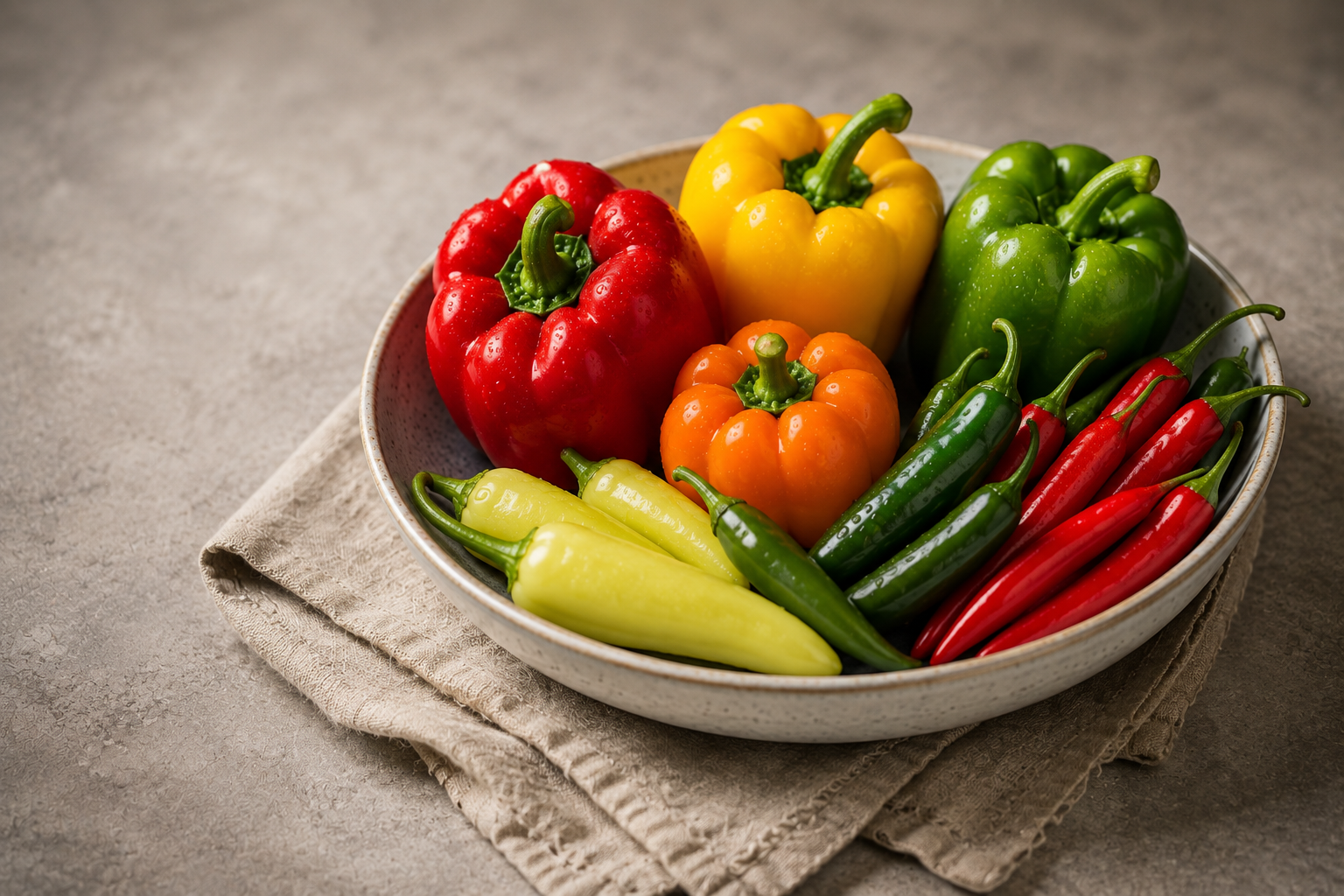
Think all peppers are about bringing the heat? Think again.
From crisp capsicums that add colour and crunch to fiery chillies that can make your eyes water, peppers come in an impressive range of flavours, colours and heat levels. Some are sweet and juicy, some are smoky and earthy, while others are so fiery that a tiny piece can transform an entire dish.
Whether you’re wondering which pepper to use for cooking or simply want to discover different types of peppers, this guide takes you from mild to wild—one pepper at a time.
🫑 First Things First: What Exactly Is a Pepper?
First, let’s clear up a common confusion.
Capsicums, bell peppers and chillies all belong to the Capsicum family, but different varieties can vary greatly in flavour, texture and heat.
Capsicums and bell peppers are generally mild, offering crunch and natural sweetness without the fiery kick. Chilli varieties contain varying amounts of capsaicin, the compound responsible for their characteristic heat.
And here’s a fun botanical fact: peppers are technically fruits because they develop from the flower of the plant and contain seeds.
So yes, that colourful capsicum in your kitchen is technically a fruit!
🌈 Meet the Mild Side of the Pepper Family
Not every pepper is here to set your taste buds on fire.
🫑 Green Capsicum

Crisp, slightly grassy and savoury, green capsicum is a familiar favourite for everyday cooking.
Add it to fried rice, pulao, noodles, pizza, sandwiches, omelettes or stir-fries. Its firm texture also means it stays pleasantly crunchy when lightly cooked.
❤️ Red Capsicum

Red capsicum is generally sweeter and more mellow than its green counterpart.
Its bright colour makes salads, stir-fries and roasted vegetable dishes instantly more appealing. If you prefer a naturally sweeter pepper, red capsicum is an easy choice.
🟡 Yellow & 🟠 Orange Capsicum

Yellow and orange capsicums bring mild sweetness, vibrant colour and plenty of crunch.
Enjoy them raw in salads and wraps, or roast them to bring out even more of their natural sweetness. They’re also an easy way to add colour to everyday meals without adding chilli heat.
🌶️ Now, Turn Up the Heat
This is where the pepper family gets exciting.
Indian cuisine has a wide range of chillies, each bringing its own balance of heat, colour and flavour.
🌶️ Green Chilli

Small but mighty, green chilli is a staple in Indian kitchens.
Depending on the variety, it can range from relatively mild to seriously hot. Add it to chutneys, dals, curries, stir-fries and snacks for a fresh, sharp kick.
Just remember: size doesn’t always reveal the heat.
❤️ Kashmiri Chilli

Kashmiri chilli is loved for its vibrant red colour and comparatively mild heat.
It’s especially useful when you want to give gravies, marinades and masalas a rich red appearance without overwhelming the dish with spice.
🌶️ Byadgi Chilli

A Karnataka favourite, Byadgi chilli is known for its deep colour and relatively gentle heat.
It’s commonly used in masalas and regional preparations where colour and flavour need to work together.
🔥 Guntur Chilli

Associated with Andhra Pradesh, Guntur is one of India’s best-known chilli-growing regions.
Guntur chillies are valued for their stronger heat and are widely used in spice preparations. If you’re looking for a chilli with a more pronounced kick, this is one to know.
🔥 Bhut Jolokia

Ready for serious heat?
Bhut Jolokia, or ghost pepper, is associated with Northeast India and is famous for its extreme spiciness.
This isn’t an everyday chilli for most kitchens. Even a small amount can dramatically increase the heat of a dish.
🧠 Why Can Two Peppers Taste So Different?
Even peppers of the same type aren’t always identical.
Variety, maturity and growing conditions can influence their colour, flavour, texture and heat.
For example, some capsicums become sweeter as they mature and change from green to red, yellow or orange. Chilli heat can also vary considerably, even within the same variety.
So, when choosing fresh peppers, don’t judge them by appearance alone.
🔥 What Makes Chilli Hot?
The answer is capsaicin.
This naturally occurring compound triggers the burning sensation we associate with spicy chillies. Different varieties contain different amounts, which is why one chilli may provide a gentle kick while another feels intensely hot.
 Did you know? Did you know?
Birds don’t experience chilli heat the way humans do. Capsaicin affects mammals, while birds are largely insensitive to it. This allows birds to eat chilli fruits and spread their seeds without being put off by the heat. So, what makes us reach for water can be just another snack for a bird! |
🍳 Which Pepper Should You Pick?
- For crunch without heat: Green, red, yellow or orange capsicum.
- For sweetness and colour: Red, yellow or orange capsicum.
- For a fresh spicy kick: Green chilli.
- For rich colour with milder heat: Kashmiri or Byadgi chilli.
- For a stronger punch: Guntur chilli.
- For extreme heat: Bhut Jolokia.
The best pepper isn’t necessarily the hottest one. It’s the one that gives your dish the right balance of flavour, colour, texture and heat.
🛒 Discover More Fresh Flavours
From crunchy capsicums to fiery chillies, peppers can completely change the character of a dish.
So the next time you’re exploring the fruits & vegetables section, look beyond the colour and think about what your recipe needs. Whether you’re making a quick stir-fry, a comforting curry or a fresh salad, the right pepper can make all the difference.
You may also like:
0 comments on “The Ultimate Pepper Guide: Hot, Mild & Everything in Between”