

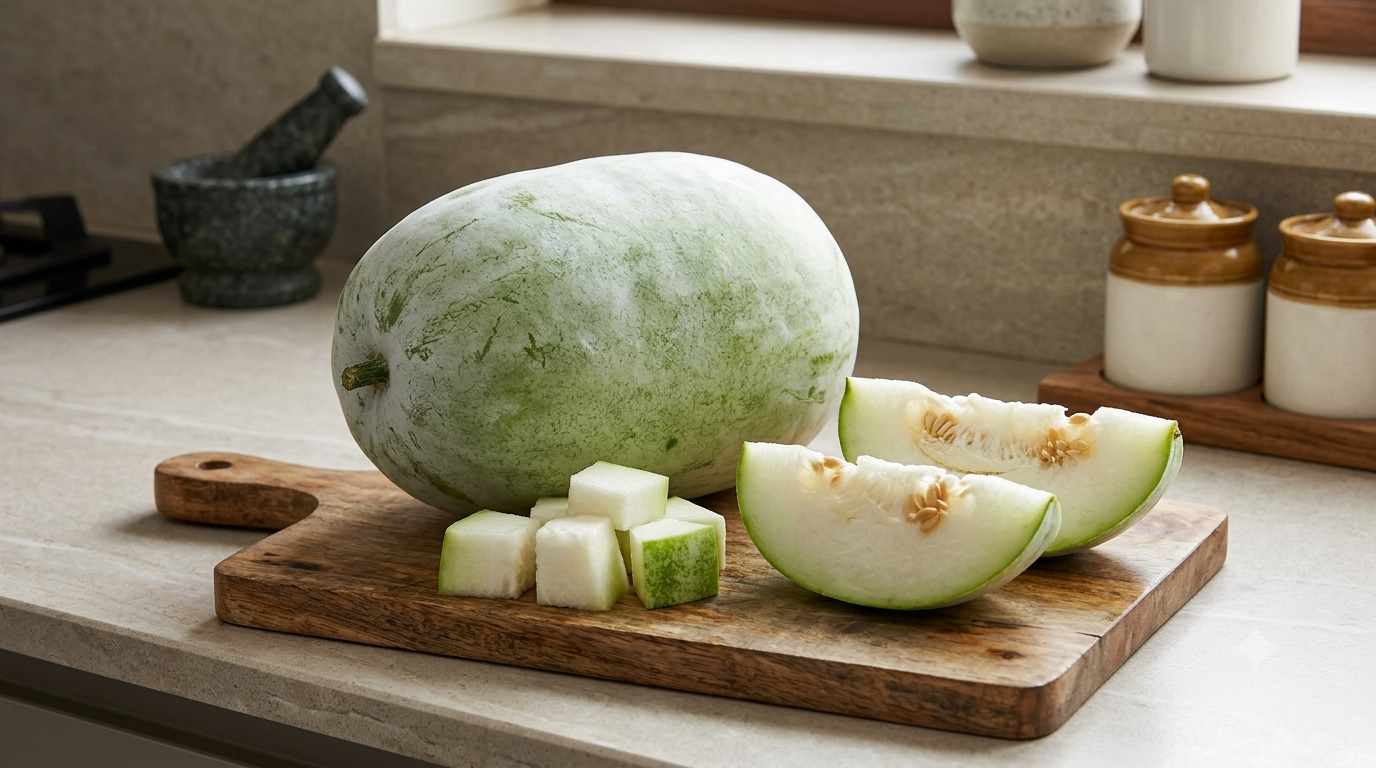
Walk past the vegetable aisle and you’ll probably notice the bright tomatoes, leafy greens and colourful bell peppers first. Ash gourd, with its pale green skin and oversized shape, tends to sit quietly in the background.
But don’t let its understated appearance fool you. Also known as winter melon or white pumpkin, this traditional vegetable has a mild flavour that makes it surprisingly adaptable in the kitchen.
From comforting curries and dals to refreshing drinks and traditional desserts, ash gourd recipes offer plenty of ways to bring this humble vegetable to the table.
Get to Know This Humble Gourd

Ash gourd is a large, pale-green vegetable from the gourd family. As it matures, its skin develops a distinctive whitish, waxy coating, while the flesh inside remains crisp, juicy and mild in flavour.
That subtle taste is actually its biggest advantage. It readily absorbs spices, herbs, coconut and seasonings, allowing other flavours to shine.
In Indian cooking, you may find it simmered into ash gourd curry, added to dal or sambar, blended into a drink or transformed into the famous sweet petha.

Did you know? |
Why Add Ash Gourd to Your Plate?
If you’re looking to add more fresh vegetables to your everyday meals, ash gourd is an easy choice. It is naturally rich in water, low in calories and low in fat, while providing nutrients such as vitamin C, potassium and dietary fibre.
Here are some notable ash gourd benefits:
- Water-rich: Its high water content makes it a refreshing addition to meals.
- Low in calories: A useful choice for lighter, vegetable-focused meals.
- Source of vitamin C: Vitamin C supports normal immune function and helps protect cells from oxidative stress.
- Contains potassium: Potassium contributes to normal muscle and nerve function.
- Contains fibre: Adds some dietary fibre to your overall daily intake.
- Naturally low in fat: Easy to include in everyday meals without adding much fat.
Ash gourd isn’t a miracle food, of course. Its nutritional benefits are best enjoyed as part of a varied diet featuring vegetables, fruits, pulses, whole grains and other nutrient-rich foods.
What About Ash Gourd Juice?

Fresh ash gourd juice has found a place in many morning wellness routines. Since the vegetable is naturally rich in water, the juice can be a refreshing way to contribute to your daily fluid intake.
You may also hear claims that drinking ash gourd juice on an empty stomach can “detox” the body, flush out toxins or boost metabolism.
The reality is less dramatic. There isn’t strong scientific evidence that ash gourd juice specifically detoxifies the body or causes weight loss.
Your liver and kidneys already handle the body’s natural detoxification processes. So, rather than treating ash gourd juice as a detox cure, think of it as a simple vegetable-based drink that can fit into a balanced lifestyle.
If you enjoy it, keep the preparation fresh and avoid adding unnecessary sugar. If you have a medical condition or follow a specific diet, speak with a healthcare professional before making concentrated vegetable juices a regular habit.
More Than Just a Curry Ingredient

Think ash gourd is boring? Give it a little spice.
For a quick Indian vegetable recipe, cook diced ash gourd with cumin, turmeric, green chilli and coriander. Its mild flesh absorbs the seasoning beautifully.
Want something comforting? Add it to dal or sambar. The vegetable becomes tender while soaking up the flavours of lentils and spices.
For a South Indian-inspired preparation, pair it with coconut and curry leaves, then finish with a simple mustard-seed tempering.
And then there’s petha. The humble ash gourd is transformed into translucent, chewy pieces in this much-loved Indian sweet.
It can also find its way into soups, stews and refreshing drinks. Try pairing it with mint, lemon or mild spices for a fresh flavour twist.
Here’s a recipe inspiration:
How to Choose Fresh Ash Gourd
When shopping for fresh ash gourd, choose one that feels firm and heavy for its size. The skin should be intact, without major soft spots, deep bruises or signs of spoilage.
If you’re buying a whole ash gourd, its firm exterior can help it stay fresh for longer when stored properly in a cool, dry place. Once cut, refrigerate the unused portion in an airtight container and use it while fresh.
Add it to your weekly grocery basket when you’re looking for a simple vegetable that can work across curries, dals and soups.
Give Ash Gourd a Second Look
Ash gourd is one of those vegetables you appreciate more once you discover what it can do. Its mild flavour makes it easy to pair with bold spices, coconut, lentils and herbs, while its nutritional profile makes it a practical addition to balanced meals.
So, the next time you spot this oversized, pale-green vegetable in the fresh produce section, give it a second look.
Bring home fresh ash gourd and add a fresh twist to your meals
You may also like:
0 comments on “Ash Gourd: The Vegetable That’s Been Hiding in Plain Sight”