

Most health advice asks you to trust a slow, invisible process. Sperm production is one of the few places where the timeline is surprisingly clear.
Your body produces sperm continuously, and the process takes roughly 74 days from production through maturation. That means what you eat and how you live today can influence the sperm developing over the next few months.
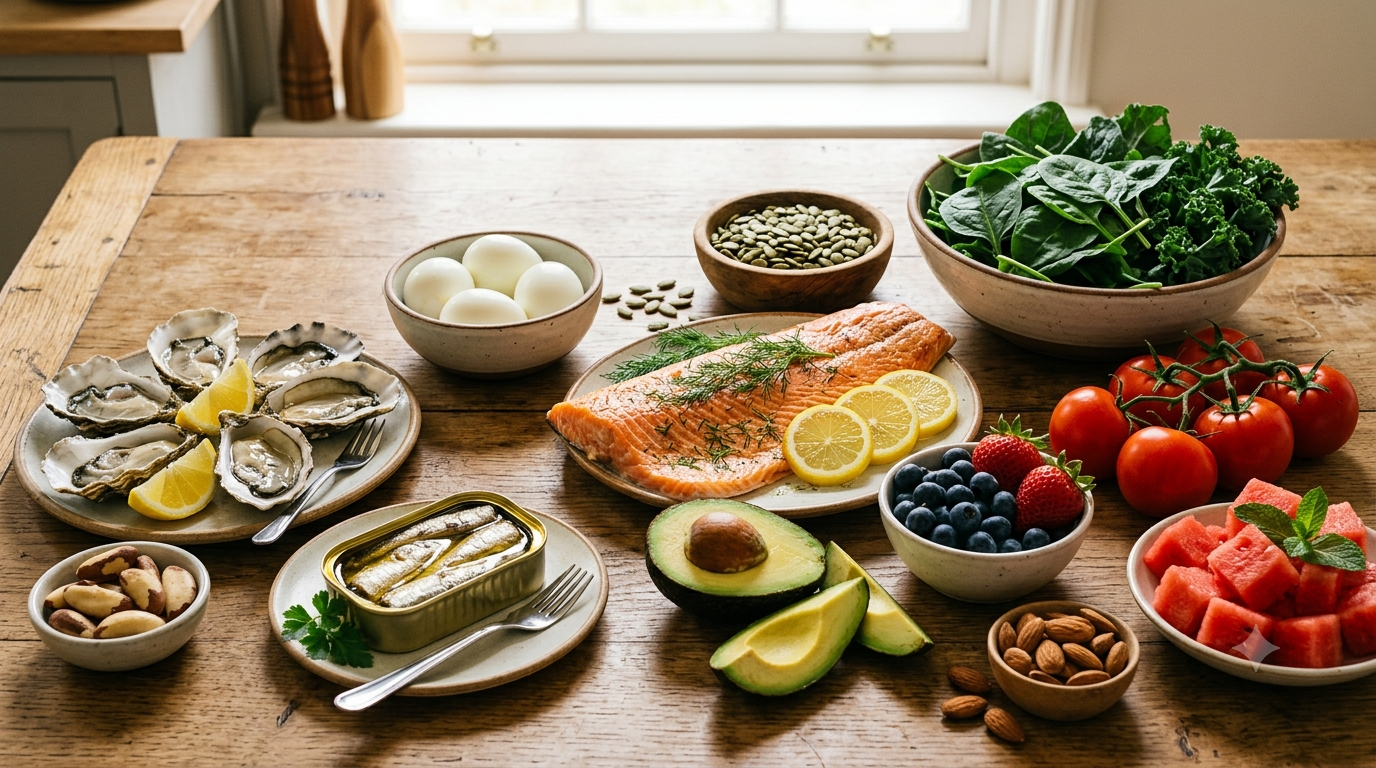
There’s no single “fertility food” that can do the job alone. But a diet rich in antioxidants, zinc, selenium, omega-3 fats, folate and other nutrients can support normal sperm production and reproductive health.
So, what deserves a place on your plate? Here are 15 foods worth knowing about — and easy ways to work them into everyday meals.
What Does Food Have to Do with Sperm Health?
A semen analysis looks at several things, including sperm concentration, total count, motility (how well they move) and morphology (their shape and structure).
That matters because sperm cells are particularly vulnerable to oxidative stress, which can damage cells and the DNA they carry. This is where nutrition comes in.
Think of your plate as a support system. Antioxidant-rich foods help the body manage oxidative stress. Zinc and selenium support normal reproductive function, while omega-3 fats contribute to healthy cell membranes. Folate is involved in DNA synthesis and cell division.
No single nutrient guarantees better fertility, but getting a variety of these nutrients through a balanced diet is a sensible place to start.
Zinc-Rich Picks: Pumpkin Seeds, Eggs and Oysters

Zinc plays an important role in normal reproductive function, making zinc-rich foods worth adding to your routine.
Pumpkin seeds are perhaps the easiest everyday option. Sprinkle them over curd, oats, salads or simply keep a small handful ready for snacking.
Eggs bring zinc along with protein, vitamin D and choline. And yes, the yolk has nutritional value too — so there’s no need to turn every omelette into an egg-white-only affair.
Then there are oysters, one of the richest food sources of zinc. They may not be an everyday option for everyone, but they’re an especially rich source of this mineral.
Looking to make nutrient-rich choices easier? Explore zinc-rich options
Omega-3-Rich Foods: Salmon, Sardines and Mackerel

Sperm cells have membranes made partly from fats, which is one reason the type of fat in your diet matters.
Oily fish such as salmon, sardines and mackerel are naturally rich in omega-3 fatty acids and can be an easy addition to a balanced diet. Sardines and mackerel are particularly practical choices when you want something that doesn’t require elaborate cooking.
Avocado joins the list with heart-friendly monounsaturated fats, along with vitamin E and folate.
Try having oily fish a couple of times a week and rotate the options rather than relying on one food.
The Antioxidant Aisle: Blueberries, Strawberries, Tomatoes and Watermelon

Now for the colourful part of the list.
Blueberries and strawberries provide vitamin C and other antioxidant compounds. Tomatoes are particularly known for lycopene, while watermelon also contains lycopene alongside other nutrients.
Why does this matter? Oxidative stress is one factor researchers study in relation to sperm quality, so adding a variety of colourful fruits and vegetables is a simple way to increase antioxidant intake.
And tomatoes come with a delicious bonus: cooking them with a little healthy fat can improve the body’s absorption of lycopene.
In other words, your tomato curry, sauce or cooked tomato dish absolutely counts.
Explore antioxidant-rich options
Go Green: Spinach and Kale

Leafy greens bring folate, vitamin C, carotenoids and other nutrients to the table.
Spinach is easy to add to eggs, dals, curries, sandwiches or smoothies, while kale can be tossed into salads, soups or stir-fries.
Folate is involved in DNA synthesis and cell division — both important processes during sperm development. So don’t underestimate the humble greens sitting in the vegetable aisle.
A little lemon juice over your greens can also brighten up the flavour while making a simple vegetable dish much more interesting.
Selenium and Vitamin E: Brazil Nuts and Almonds

Brazil nuts are exceptionally rich in selenium, a mineral involved in normal reproductive function. But there’s no need to eat them by the handful — their selenium content can vary considerably.
Almonds, meanwhile, provide vitamin E, healthy fats and other nutrients. Keep a small portion handy for an easy snack, or add chopped almonds to breakfast bowls and curd.
The bigger takeaway? Variety beats loading up on one “superfood”.
A Day of Nutrient-Rich Eating
You don’t need to redesign your entire kitchen to eat better. A day could look something like this:
Breakfast: Eggs with spinach and a side of blueberries
Mid-morning: A few almonds and Brazil nuts
Lunch: Sardines with toast or rice, plus a tomato salad
Snack: Watermelon or curd topped with pumpkin seeds
Dinner: Salmon or mackerel with kale and avocado
Simple? Yes. A miracle fertility diet? No. That’s precisely the point.
The Habits That Can Quietly Work Against Sperm Health
Food is only one piece of the picture.
Smoking, heavy alcohol consumption, poor sleep, excess heat around the testicles and some health conditions can affect sperm quality. Regular physical activity, maintaining a healthy weight and getting adequate sleep are also part of a healthy lifestyle.
And remember that roughly 74-day timeline. Don’t expect a dietary change made this week to transform a semen analysis next week. Give healthy habits time.
If you and your partner have been trying to conceive for a year without success — or for six months when the female partner is over 35 — it’s worth speaking with a healthcare professional and considering a fertility evaluation.
Diet can support reproductive health. It cannot diagnose or treat infertility.
Build Better Habits, One Meal at a Time
You don’t need an elaborate fertility meal plan to get started. Add more colourful produce, choose nutrient-rich proteins and healthy fats, and build meals around variety.
Looking for convenient ways to support your everyday nutrition routine? Explore nutrition options
0 comments on “Foods That Support Healthy Sperm Production Naturally”