

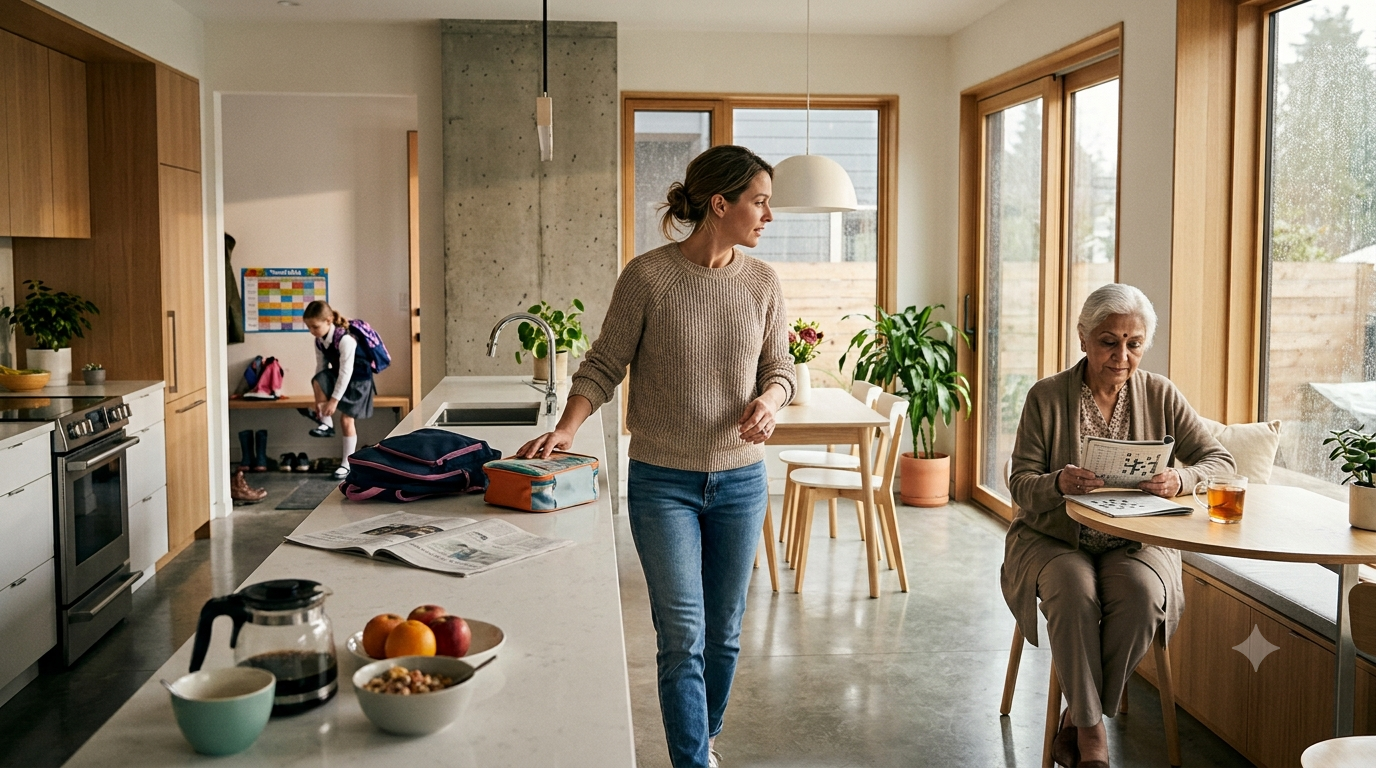
It’s 7 a.m. Your daughter can’t find her other shoe, your son needs a signed permission slip, and your phone buzzes. It’s Mom, asking whether she already took her blood pressure medicine.
Sound familiar? You’re part of the sandwich generation — adults caring for ageing parents while raising kids of their own. It’s one of the most loving responsibilities there is, and one of the most demanding.
You don’t have to manage it perfectly. A few practical systems, a willingness to share the load and some kindness towards yourself can make this stage of family life more manageable.
Why the Sandwich Generation Feels So Stretched
Children need time, structure and emotional support. Ageing parents may need help with medication, appointments, mobility or simply staying connected.
And in the middle is you, juggling schedules, meals, household responsibilities and everyone’s needs.
Acknowledging that this is a significant responsibility is the first step. You don’t have to prove that you can do everything alone.
Get Real About What You Can Manage

Start by sorting your responsibilities into three buckets: what truly needs you, what can be shared and what can be simplified.
A sibling might handle some doctor visits. Older children can take on age-appropriate household tasks. Busy weeknights might call for simpler meals rather than elaborate cooking.
The goal isn’t to lower the standard of care. It’s to make the routine sustainable for everyone.
Turn Your Family Into a Care Team

One of the meaningful parts of caring for ageing parents can be seeing grandparents and grandchildren develop a closer relationship.
Children can read aloud, bring a glass of water, help with a phone or spend time chatting with a grandparent. When they’re able and willing, grandparents can share family stories, help with homework or pass down a treasured recipe.
Keep responsibilities age-appropriate and voluntary. Children shouldn’t become caregivers, but small acts of participation can help them feel connected and valued.
Lighten the Mental Load With Simple Systems

When several people depend on you, relying on memory alone can quickly become overwhelming.
A shared family calendar can keep school events, medical appointments, medication timings and errands in one place. A weekly pill organiser can simplify routines when several prescribed medicines are involved, while an automated dispenser with reminders may be useful for older adults who frequently forget scheduled doses.
Keep important health information together too, including your parent’s current medication list, doctors’ contact details, allergies and emergency numbers. If a dose is missed or a medication needs to be changed, check with the prescribing doctor or pharmacist rather than adjusting it yourself.
Make daily routines easier with medical organisers and medicine planner box for everyday elderly care.
Home Safety for Seniors, Room by Room

Changes in balance, strength or vision can make familiar spaces more difficult to navigate.
Start with the basics: keep walkways clear, improve lighting in darker areas, secure loose rugs and place everyday items within easy reach. Give the bathroom extra attention with appropriate grab bars, non-slip surfaces and other safety aids where needed.
These small changes can support both comfort and independence.
Explore home safety essentials for bathroom aids, non-slip solutions and practical products designed to make everyday spaces more accessible.
Monitor Senior Health Without Hovering

Depending on your parent’s health needs and their doctor’s advice, a blood pressure monitor, blood glucose meter or pulse oximeter may help track certain readings between appointments.
Look for devices with clear displays and simple controls that your parent can comfortably use. Keep a record of readings so you can share relevant information with their healthcare professional during appointments.
Remember, home monitoring is there to support professional medical care, not replace it.
Browse health monitoring collection for easy-to-use devices that can help families keep track of important health measurements at home.
Protect Their Independence and Dignity
It’s natural to become more protective as a parent gets older, but caregiving doesn’t have to mean taking over.
Ask your parent what kind of help they want and which everyday tasks they would prefer to continue doing independently.
Sometimes the most useful support isn’t doing something for them. It’s making it easier for them to do it themselves.
Respecting their choices wherever possible can help preserve a sense of independence and dignity.
Ask for Help Before You Hit a Wall

Every family has limits. Recognising yours early can make caregiving more sustainable.
Depending on your circumstances, home-care services, meal delivery, transport assistance or senior day programmes may help lighten the workload. Support can also come from relatives, friends or neighbours.
Sometimes help means someone taking your parent to an appointment. Sometimes it’s simply having someone who will listen.
Asking for help is responsible caregiving, not failure.
Spot the Signs of Caregiver Burnout
When you’re focused on everyone else’s wellbeing, your own can easily slip down the list.
Persistent tiredness, poor sleep, irritability, difficulty concentrating or losing interest in activities you usually enjoy can be signs that you need more support.
Protect the basics: eat regular meals, rest when you can, stay physically active and maintain some connection with friends and activities outside caregiving. Even a short walk or a few quiet minutes with a cup of tea can create some breathing room.
Recharge with caregiver wellness essentials, featuring comfort and relaxation products that can fit naturally into busy daily routines.
Save Room for the Moments That Matter

Caregiving can easily become a schedule of medicines, appointments, meals and errands. But your relationship with your parent is about more than their care routine.
Cook a favourite recipe together. Look through old photographs. Ask about their childhood. Let your children hear the stories and traditions that have shaped your family.
These ordinary moments may become some of the memories your children treasure most.
The Bottom Line
Caring for ageing parents while raising children takes planning, flexibility and a willingness to share the load. Some days will be smooth; others won’t. That’s part of family life.
Build routines that reduce mental load, make the home safer, involve your family, respect your parent’s independence and reach out when you need additional support.
And remember that caring for your family also means caring for the person holding it all together: you.
Explore our elderly care essentials for the parents you love
You may also like:
0 comments on “Caring for Elderly Parents While Raising Your Own Kids”