

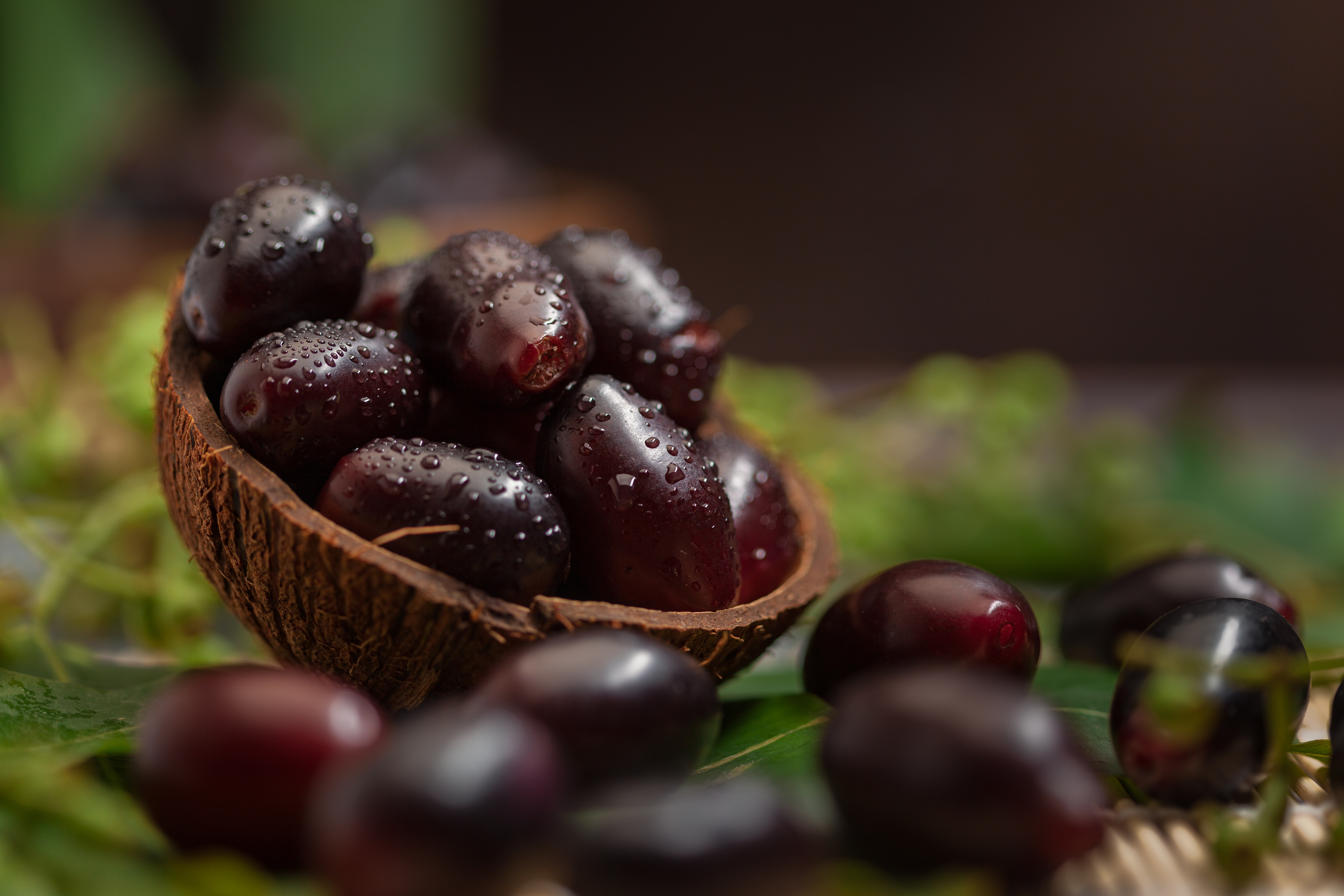
Imagine a landscape dappled with the hues of twilight, where trees stand as silent sentinels, their branches heavy with small, glossy, deep purple fruits. This is the world of the Jamun tree, a treasure trove of health and history, whispering tales of ancient times and culinary delights.
The Origin Story
Jamun, also known as Java plum, Black plum, or Indian blackberry, hails from the Indian subcontinent, thriving in the wild landscapes of India, Nepal, Pakistan, and Sri Lanka. Scientifically named Syzygium cumini, the Jamun tree has been revered in various cultures for centuries, not only for its delicious fruit but also for its medicinal properties.
Meet the Jamun Tree
The Jamun tree has a robust water-resistant trunk. The tree’s trunk is so strong that its timber is used to make several objects and appliances. Called Neredu in Telugu, the sturdy tree trunk is used to assemble bullock-cart wheels and other agricultural supplies. It is also used in constructing doors and windows.
Jamun is a fast-growing tree, growing up to approximately 30 meters. It is blessed with a very long life (100 years and counting) and grows throughout the year. This evergreen tropical tree is grown in India. It is also native to Myanmar, Sri Lanka, the Andaman Islands, Southeast Asia, and Indonesia. It begins to sprout petite fragrant flowers in March-April, and by May-June, it begins to bear fruits. Each Jamun tree usually bears fruits for 60+ years once planted. The yield gradually increases to produce an incredible amount of fruits per tree.
Jamun Tree in Medicine and Nature
The Jamun tree, with its multitude of uses, holds a special place in traditional medicine systems like Ayurveda and Unani. Its bark, leaves, and seeds are used in various remedies, addressing ailments from skin problems to respiratory issues.
In the urban landscape, Jamun trees are a common sight, often lining avenues and parks, providing shade and beauty. Their fruits attract a variety of birds and wildlife, making them an integral part of the ecosystem.
The Jamun Berry
Botanically called Syzygium Cumini, Jamun is popularly known as Malabar plum, Java plum, Phanir, Jambu, Neredu, Negai, Black plum, or Jambolan.
The fruit or berry is oblong in shape and resembles a small egg. It is interesting to see how the berry takes on various hues of attractive colour at different stages of ripening. It is green when unripe, turns pink while maturing, and finally, takes on a deep purple-black shade with a pinkish juicy flesh on reaching maturity.
The Jamun fruit is sweet in taste with a slightly acidic aftertaste. The most joyful part of bingeing on Jamuns is being left with a purple tongue, and don’t we all remember sticking out that colourful tongue to see who’s got the darkest shade? That’s just one of the many reasons why Jamuns have such a fan following among kids and adults alike!
Why It’s Good for You
- The berry is approximately 83% water, 16% carbohydrates, 1% protein, and some vitamin C. However, the fruit is rich in calcium, iron, and vitamin B with active phytochemicals such as polyphenols.
- The seed, too, has many uses in various alternative medicines such as Ayurveda and Unani, while the bark and the leaves help in controlling blood pressure and gingivitis.
- The fruit has therapeutic properties that help tackle digestive issues, and more importantly, diabetes. It has two components, namely jamboline and jambosine, which reduce the release of sugar in the blood. Its seed is also believed to increase insulin production in the body.
- Being low in calories, Jamuns help lose weight. It has a high fibre content that keeps one satiated for longer, preventing unwanted hunger pangs.
- With phytochemicals like polyphenols containing anthocyanin, black plums are thought to prevent cancer as well as heart diseases.
Nutritional Chart: Jamun by the Numbers (per 100g)
| Nutrient | Amount |
|---|---|
| Calories | 55 |
| Carbohydrates | 14g |
| Fibre | 3g |
| Vitamin C | 20mg |
| Vitamin A | 175 IU |
| Potassium | 195mg |
| Iron | 0.3mg |
Interesting Trivia
- In Hindu mythology, the Jamun tree is said to be Lord Krishna’s favourite. Its deep purple hue is often compared to the complexion of the deity.
- Similar to jackfruit, the bark and leaves of the Jamun tree were historically used to produce a natural dye for fabrics.
- The tree plays a crucial role in preventing soil erosion due to its extensive root system, which binds the soil and prevents it from washing away.
- Jamun trees are known for their longevity, with some specimens living for over a hundred years.
- There is a variant of the Jamun fruit that is white in colour. It is believed to have several medicinal properties.
For more delicious Jamun treats, try Jamun Conserve, Jamun Honey, and for the health-conscious, Karela Jamun Ayurvedic Juice.
Nice
Very useful information thanks for sharing
This is very helpful for diabties patient
Jamun is natural fruits and Very Best for health also help in dibitic patient. In season eat lots Jamun or Jamun juice
Very useful information on Jamun
Thanks for this useful information. I love Jamun. Unfortunately, Big Basket doesn’t deliver it in our city.
In Kannada language it is called NERALE HANNU. Seasonal fruit, must have it.
Very good results in dibitic help for reduce sugar
Very good eating Jamun for health
Good for diabetics
Jamun is good for diabetic patients, its helps to reduce sugar level. Jamun Increases Haemoglobin. …
Jamun Keeps the Heart Healthy. …
Jamun Treats Digestive Problems. …
Fights Respiratory Problems. …
Jamun Helps with Weight Loss. …
Keeps Skin Healthy and Radiant. …
Diabetes Management. …
Strengthens Teeth and Gums.
Thank for sharing this information bcoz of this is very useful information
Plucking a jamun from the tree which grows to great heights is the tricky part . The Java plum is an exotic name for the local black berry
I have a daily 3pcs , in this session
Is this help it stumack problems
Very nice information
Very healthful jamun
It is just superb..Good for health
Thanks, for great advice or information about jamun. 👍❤
Informative. Keep on posting them
Seasonal fruits.. must have it.. good for health
All information I say my children and make them eat. TQ for sharing valuable information. Here we have in abundance. Have to make use of it to have natural benefites. 💃👍🏻🧡
Thanks for such an interesting information about Jamun fruit and its benefits, was not knowing that it’s wood is used for making doors and windows. Excellent 👍
Thanks for sharing. A nice effort by the BB team