

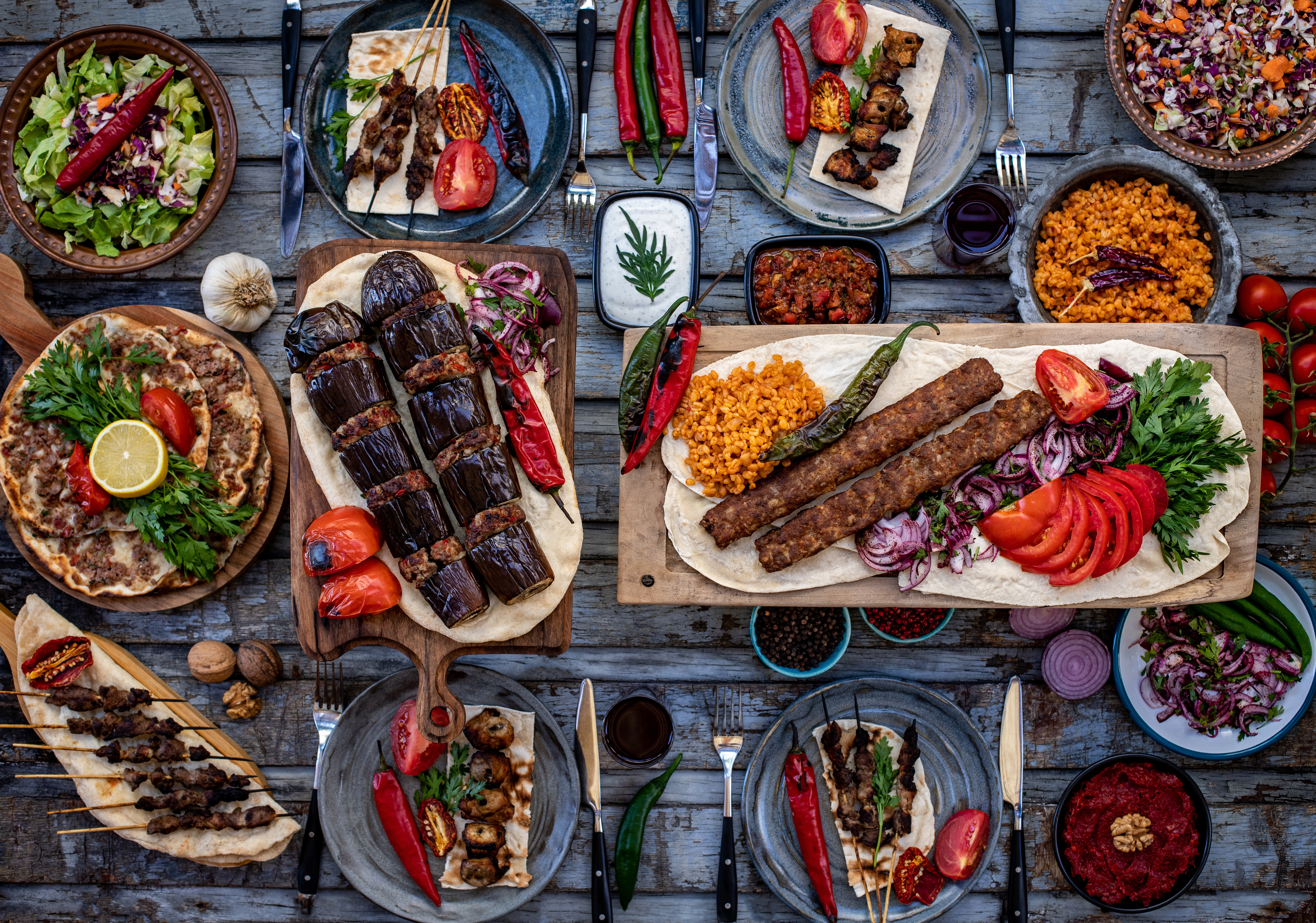
Ramadan is here and all households that follow Islam are filled with festive spirit and fervour. Undoubtedly the period of Ramadan is a time for prayers and penance, but the Suhur and Iftaar times require prior preparations.
During Ramadan, it is quite common for people to invite their family and friends to break the fast together. During such times, it is natural that you would want to put out a unique yet traditional fare.
If you wish to steer away from the conventional biryani and kebabs, here are a few traditionally prepared recipes across the world, that you can try at home.
Lebanese Fattoush Salad With Grilled Chicken

Including a good amount of fibre in your diet is very important during Ramadan, to prevent any digestive troubles. Relish this delectable salad with a healthy protein to break your fast.
Serves: 4 Servings
Total Time: 30 minutes
Ingredients:
For Grilled Chicken
- 2 large size chicken breast
- 1 tbsp olive oil
- 1 tsp garlic powder
- 1 tsp paprika powder (or Kashmiri Red chilli powder)
- 1 tsp of Za’atar (or use Italian herbs if you don’t have za’atar)
- Salt to taste
For Fattoush Salad
- 2 cups of pita bread roughly chopped into smaller pieces
- 1 cup cherry tomatoes, halved.
- 1 large cucumber, chopped into cubes
- 2 ½ cups Romaine lettuce, washed, dried and roughly chopped)
- 1/3 cup radish, thinly sliced
- 1/3 onions finely chopped
- 1/3 cup of fresh parsley finely chopped
- 1/3 cup olive oil
- Juice of 1 whole lemon
- ¼ cup freshly chopped mint leaves
- 1 tbsp sumac
- Salt to taste
- Pepper to taste
Method:
- Preheat the oven to 400°C while other preparations are on.
- To prepare the chicken, place the breasts in a mixing bowl, and rub them well with olive oil, za’atar, garlic powder, paprika powder and salt. Mix everything well and let it marinate for at least 20 minutes.
- While the chicken is marinating, make preparations for the salad.
- Take a large mixing bowl, and add all the chopped vegetables in it. (cherry tomatoes, cucumber, onions, radishes, romaine lettuce and parsley). Give it all a quick stir.
- Top the salad with olive oil, lemon juice, sumac, salt and pepper.
- Place the chicken pieces directly on the grill and grill for 5-6 minutes on each side.
- Once the chicken is perfectly grilled, remove it from the oven and cool. Once they are cooled, chop them into smaller bite-sized pieces.
- Add the chopped chicken pieces to the prepared salad and lightly toss everything.
- Serve the Fattoush salad with chicken in serving dishes, and top it with crushed pita bread. You can even lightly toast the pita bread to add a little crunch.
Kibbeh

Kibbeh or fried meat croquettes are the definition of Middle Eastern comfort food. These meatballs are savoury, crunchy and a perfect combination of crunchy from the outside and soft and juicy from the inside.
Serves: 40 servings (Depending on the size)
Total Time: 2 hours 20 minutes
Ingredients:
Kibbeh Filling:
- 500g minced mutton (mutton qeema)
- 3 medium size onion, finely chopped
- 1 tsp 7 spice (A combination of 5 tbsp garam masala, 2 tbsp turmeric, 2 tbsp black pepper, 2 tbsp cinnamon powder, 1 tbsp paprika or Kashmiri red chilli powder, 1 tbsp coriander powder, 1 tsp cumin powder, 1 tsp red chilli powder)
- 1.5 tbsp Kibbeh Spice mix (2 tbsp cumin seeds, 1 tbsp dried rose petals, 1 tbsp crushed black peppercorns, 2 tbsp dried basil, 1 tsp dried mint, ½ tsp cinnamon, 1 tbsp 7 spice powder, 1 tsp salt)
- ½ tsp black pepper
- Salt to taste
- 1 cup chopped walnuts or pine nuts
- 2 tbsp sumac
For the Kibbeh Outer cover
- 1 kg fine whole wheat dalia
- 1 kilo minced mutton
- 2 onions
- 1.5 tsp Kibbeh Spice Mix
- 1.5 tbsp cornflour
- 1 tsp 7 spice
- ½ tsp black pepper
- Salt to taste
- Cooking oil for frying the kibbeh
Method:
- First, soak the fine dalia in some warm water and keep it aside.
- To make the inner stuffing, take a large-sized kadhai, place it on medium heat, and add some oil to it, now add the chopped onions and sauté them, until they turn light golden.
- Once the onions are nice and golden, add the minced mutton and cook it on medium heat. Once the mutton is cooked, add the seasonings. First add the 7 spice mix, then the kibbeh spice mix followed by the black pepper and salt. Mix everything well. Lightly mash the mutton to ensure the minced meat is well seasoned.
- Once the meat is well cooked and seasoned, remove it from the flame and then add the sumac and chopped walnuts (or pine nuts). Check the flavours and make any adjustments in the seasoning at this stage.
- Now drain the water from the soaked dalia, and transfer it into a food processor. Now add the other batch of minced mutton to it, and blitz it in the processor such that they combine and form a lump. If you are using smaller quantities, then add proportionate amounts of the dalia and mutton. Remove from the food processor.
- Now add some roughly chopped onions, 7 spice mix, kibbeh mix, black pepper and salt and blitz once again till everything is well combined.
- Mix the minced mutton and Dalia mix with the onions and spices mixture, with some cornflour and use your hands to mix everything evenly. Ensure the consistency of the mix is such that you can handle it easily, add a few drops of water if it’s too dry, and ensure it’s not very loose and runny.
- Now take a scoopful of the outer covering meat mix, make a ball out of it, and slowly flatten it in the centre to add the meat filling inside. Inside the hollow, add enough of the inner stuffing meat so that it does not overflow from the outer covering.
- Slowly use greased palms to close and seal the outer covering, and gently shape it in the traditional kibbeh shape. Repeat for all kibbeh.
- Heat some oil at the same time. Once the oil is hot enough, slowly add a few kibbeh at a time and fry them until they are golden brown and well-cooked. Repeat for the entire batch of kibbeh.
- Serve piping hot with a yoghurt dip of choice.
Afghani Kabuli Pilaf

We all would have tasted the regular biryani variants available in India, making the upcoming Ramadan a little special with an Afghani Kabuli Pilaf. It is simple, fragrant and flavourful without being overly spicy. The best part is this pilaf is easily prepared in a pressure cooker.
Serves: 6 servings
Total Time: 1 hour 45 minutes
Ingredients:
For the Broth:
- 1 onion, chopped in half
- 1 whole head of garlic, with skin removed
- 1 cinnamon stick
- 4 green cardamoms (lightly crushed)
- 1 tsp cumin seeds
- Salt to taste
- 1 tsp sugar
- 1 tsp paprika powder (Or Kashmiri red chilli powder)
- 1 tsp coriander seeds
- 4 cloves
- About 4 cups of water
For Rice Preparation:
- 2 cups Basmati Rice
- 1 tbsp cooking oil
- 1 onion, finely chopped
- 3-4 cloves of garlic, minced
- 1 cup carrots thinly julienned
- ½ cup raisins
- ½ almonds, thinly slivered
- 1 tsp cumin seeds
- 1 tsp freshly cracked black pepper
- 1 tsp cardamom powder
- 1 clove
Method:
- To make the broth, take a pressure cooker, in it, add the halved onion, cumin seeds, coriander seeds, garlic cloves, cinnamon stick, cardamom pods, pepper, salt, sugar, and paprika, add enough water into the cooker and shut the lid.
- Set the flame on high, and let the water boil for about 5 minutes or until the whistles release. Boil for another 20 minutes, then remove from flame. Wait until the pressure naturally releases. Then unlock the lid. Remove the broth and use the same pressure cooker for the rice preparation.
- Once the broth is ready, wash and soak the rice for 5 minutes. In the same pressure cooker, add the cooking oil and place it on medium heat. Now add the chopped onions and minced garlic, and cook until they are light brown. Then add in the carrots and cook until the carrots are soft. Now add the drained rice along with raisins, almonds, cumin seeds, pepper, cardamom powder and clove. Mix everything well.
- Now add the fragrant broth to the rice, enough to cook the rice perfectly. (About double the quantity of rice used)
- Close the cooker securely and allow the pilaf to cook for about 5-7 whistles. Then remove from the flame and allow the pressure to naturally release. Once the rice is cooked, transfer it to the serving dish. Serve hot with a mutton curry or any meat curry of choice.
Lebanese Fatteh

This is an easy and delicious dip. It is cool, healthy and a perfect dip to be enjoyed during Ramadan.
Serves: 4 servings
Total Time:
- ½ cup soaked chickpeas
- Salt to taste
- Freshly cracked black pepper
- ½ tsp cumin powder
- 1/3 cup pine nuts
- 2 tbsp freshly chopped parsley
- Red chilli flakes (optional)
For Sauce:
- 1 cup Greek Yoghurt
- ¼ fresh lemon juice
- 2 tbsp tahini (sesame seeds and olive oil crushed into a paste)
- 2 garlic cloves, minced
- Salt to taste.
Method:
- Boil the soaked chickpeas with a little salt for 4-5 whistles or until they are cooked but firm.
- To make the sauce, combine all the yoghurt, tahini, garlic, lemon juice and salt and whisk it all well to form a uniform mixture.
- Drain excess water from the chickpeas and season them. Take a saucepan, add some olive oil, toss the chickpeas in it with some salt, red chilli flakes, paprika, and cumin powder and cook for a few minutes, till the seasonings are well absorbed in the chickpeas.
- To assemble the fatteh, Pour the yoghurt mix into a deep dish. Top it with and border it with the seasoned chickpeas.
- Fatteh is best served with some fresh pita bread or even oven-baked crispy pita bread. You can arrange some crunchy pita bread along the borders of the fatteh serve plate and enjoy.
Nice