

At the heart of Onam is the legend of King Mahabali, a benevolent ruler whose reign was marked by equality, wealth, and peace. During his time, there was no discrimination or poverty—only harmony. However, Mahabali’s increasing popularity unsettled the gods, leading to his encounter with Lord Vishnu.
In his Vamana avatar (the dwarf Brahmin), Lord Vishnu approached Mahabali, asking for three paces of land. The generous king, known for his charitable nature, agreed. Vishnu then grew in size, covering the earth and heavens in two steps. For the third, Mahabali, realizing the divine presence, humbly offered his head. Vishnu pushed him to the underworld but granted him the boon to visit his people once a year—a visit that coincides with Onam.
Onam reflects Mahabali’s reign, symbolizing unity, generosity, and the celebration of abundance. The festival’s harvest aspect ties in beautifully, as people thank the land for its bountiful produce and rejoice in the spirit of community.

Did you know? |
Time-Honoured Traditions of Onam

Onam is a festival where tradition takes centre stage, blending mythological reverence with vibrant festivities. Each custom is an homage to Kerala’s rich culture and reflects the festival’s deep-rooted symbolism.
1. Vallam Kali (Snake Boat Race)
One of the most exhilarating spectacles of Onam is the Vallam Kali, the traditional snake boat race. Long, slender boats adorned with rhythmic paddlers slice through Kerala’s backwaters in perfect synchronization. The excitement is palpable as locals and tourists gather to cheer for their favourite teams in races like the famous Nehru Trophy.
2. Pookalam (Floral Rangoli)
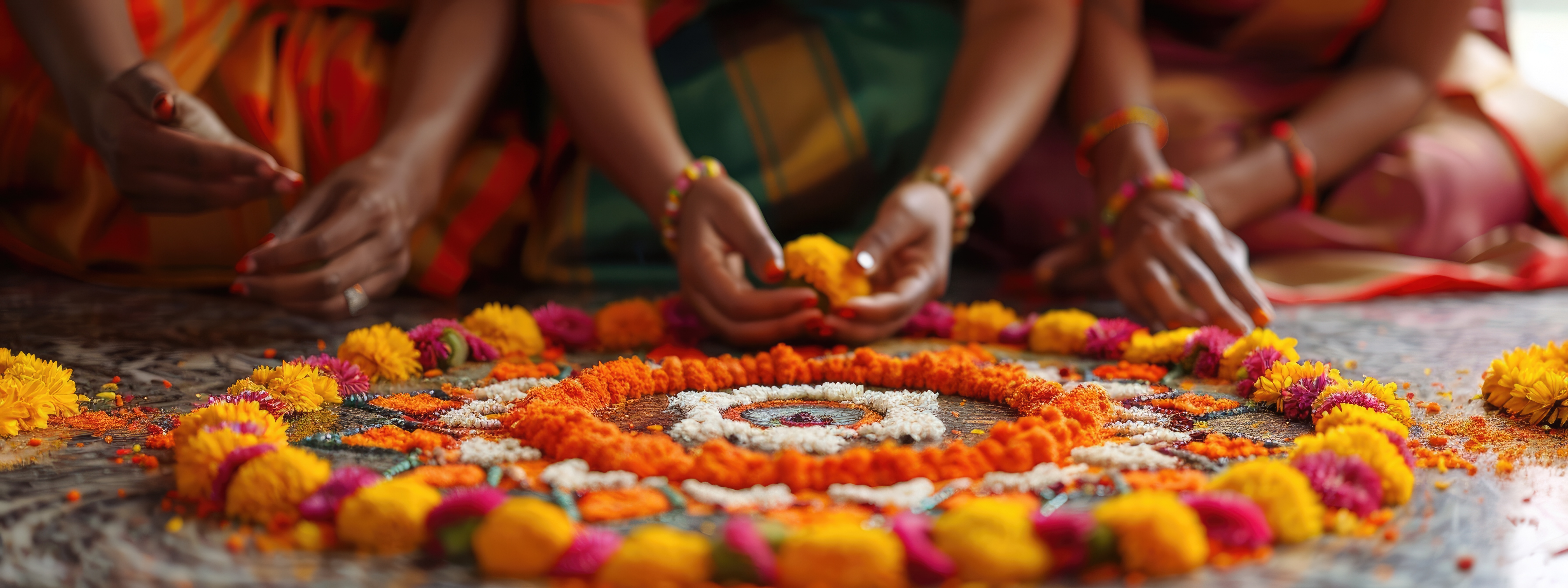
The entrances of homes during Onam are adorned with Pookalam, intricate floral designs created from a variety of vibrant blooms. Every day, new layers of flowers are added to the patterns, symbolizing growth, prosperity, and a warm welcome for King Mahabali’s spirit.
3. Onam Sadhya (The Grand Feast)
The Onam Sadhya is a grand feast served on a banana leaf, featuring an array of dishes that represent Kerala’s rich food culture. This culinary masterpiece brings family and friends together to enjoy a multi-course meal that showcases the essence of the harvest season.
4. Pulikali (Tiger Dance)
A unique tradition during Onam is Pulikali, where performers paint their bodies like tigers and dance to traditional beats. This lively folk art form adds a playful, energetic vibe to the celebrations, captivating audiences with its bold colours and synchronized movements.
5. Kaikottikali and Thumbi Thullal
These traditional dances, performed by women in groups, involve rhythmic clapping, graceful movements, and songs that praise the harvest and joy of the season. The dances are a beautiful expression of unity, femininity, and cultural pride.
6. Onam Games and Competitions
Onam also features a variety of traditional games and competitions, such as tug-of-war, archery, and boat races. These games not only bring out the competitive spirit but also strengthen community bonds during the festive season.
7. Onam Clothes
During Onam, men and women don Kerala’s traditional attire, adding grace and elegance to the celebrations. Men wear crisp white mundus, while women drape themselves in elegant kasavu saris, exuding cultural pride.
 Did you know? Did you know?
|

Very beautifully explained about the festival and the food of the country
It’s a great festival.
Tourist from all over visit during Onam.
Very traditional and cultural festival.
I love this festival.