

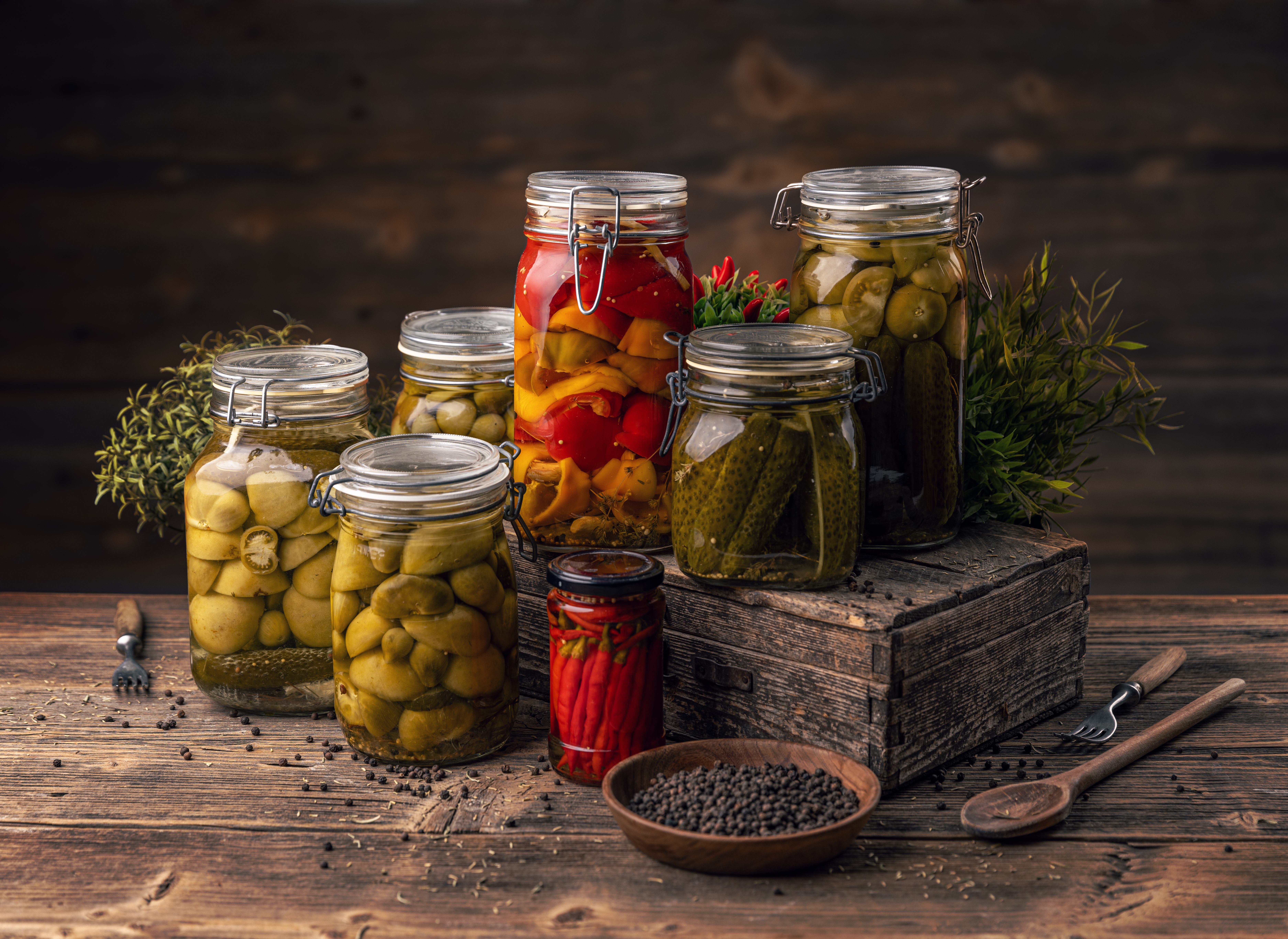
There’s something deeply satisfying about opening a jar of homemade pickles—the sharp aroma, the layered spices, the crunch of perfectly fermented vegetables. It’s a process that’s less about shortcuts and more about patience and instinct. At the heart of this process lies the base—the medium that kickstarts fermentation and shapes the final taste and texture. From traditional salt brines to kitchen secrets like rice water, each base offers its own personality to the pickle. Here’s a closer look at the different bases that go into fermenting vegetable pickles.
1. Salt Brine – Simple, Reliable, and Time-Tested
Saltwater brine is the backbone of classic veg pickle-making. This method relies purely on the magic of time, salt, and good bacteria.
How it works:
Vegetables are submerged in a mix of clean water and salt. Over the next few days, natural fermentation begins, turning the bland into bold and tangy.
Why it’s trusted:
- Easy to prepare
- Helps retain the crunch and colour of vegetables
- Encourages probiotic activity naturally
Tip: Weigh the vegetables down so they stay submerged—this keeps spoilage away and fermentation steady.
2. Dry Salting – Letting Veggies Create Their Own Brine
This method skips added water altogether. Instead, salt is rubbed directly onto the chopped or grated vegetables, allowing them to release moisture and create their own brine.
Great for:
Cabbage, radish, carrot, turnip, and similar water-rich vegetables.
Why it’s effective:
- Intensifies flavour since there’s no dilution
- Allows for quicker fermentation
- No risk of over-salting the brine
Make sure the mixture is packed tightly in the jar to reduce air pockets and allow the natural brine to rise and cover the veggies.
3. Whey or Curd Water – A Culture-Rich Kickstart
That leftover liquid from homemade curd or paneer—the watery whey—isn’t waste. It’s full of friendly bacteria that can jumpstart fermentation in veg pickles.
Why it’s used:
- Introduces active cultures early on
- Helps when the temperature is cooler or when fermentation is slow
- Adds a subtle tang that blends well with spices
Just a spoon or two mixed with your veggies and salt can go a long way. A smart way to use what’s already available in the kitchen.
4. Mustard – Not Just a Spice, But a Base
Mustard isn’t only used for flavour—it plays a protective and fermentative role too. Whether you use mustard seeds or oil, it brings warmth, preservation, and a signature kick.
Best suited for:
Pickles with cauliflower, green chilli, or mixed vegetables.
Why it works:
- Has natural antibacterial properties
- Deepens the overall flavour over time
- Keeps the pickle shelf-stable without overpowering the veg
Mustard oil, especially when lightly warmed, opens up the spices and binds everything together beautifully.
5. Vinegar – The Instant Preserver
Though not traditionally used for fermenting, vinegar-based pickles have found their space in modern kitchens for their convenience and tangy bite.
Why it’s chosen:
- Works well when you need pickles quickly
- Balances flavours when paired with jaggery or sugar
- No need to wait for fermentation to develop sourness
Do note—vinegar halts fermentation, so you won’t get probiotic benefits. But it’s excellent when you’re after a sharp, clean flavour.
6. Rice Water – The Hidden Hero
One of the more underused but effective bases, rice water—especially the liquid from rinsing or boiling rice—can act as a natural fermentation starter thanks to its starch and wild microbes.
Why it surprises:
- Encourages quick fermentation
- Adds subtle sweetness
- Reduces waste in the kitchen
Perfect for lightly seasoned vegetable pickles that don’t require bold oil or spice.
Closing Thoughts
Fermenting vegetable pickles is a blend of method and memory. Each base—whether salty, starchy, or spiced—has its own way of transforming simple vegetables into jars full of character and complexity. While some methods take their time, others offer quicker satisfaction. The joy lies in choosing what suits your taste, your pantry, and the rhythm of your kitchen.
So the next time you’re chopping up radish, cauliflower, or carrot for a pickle, think about the base. It’s not just a medium—it’s the soul of the ferment.
Very useful information
Very useful and interesting