

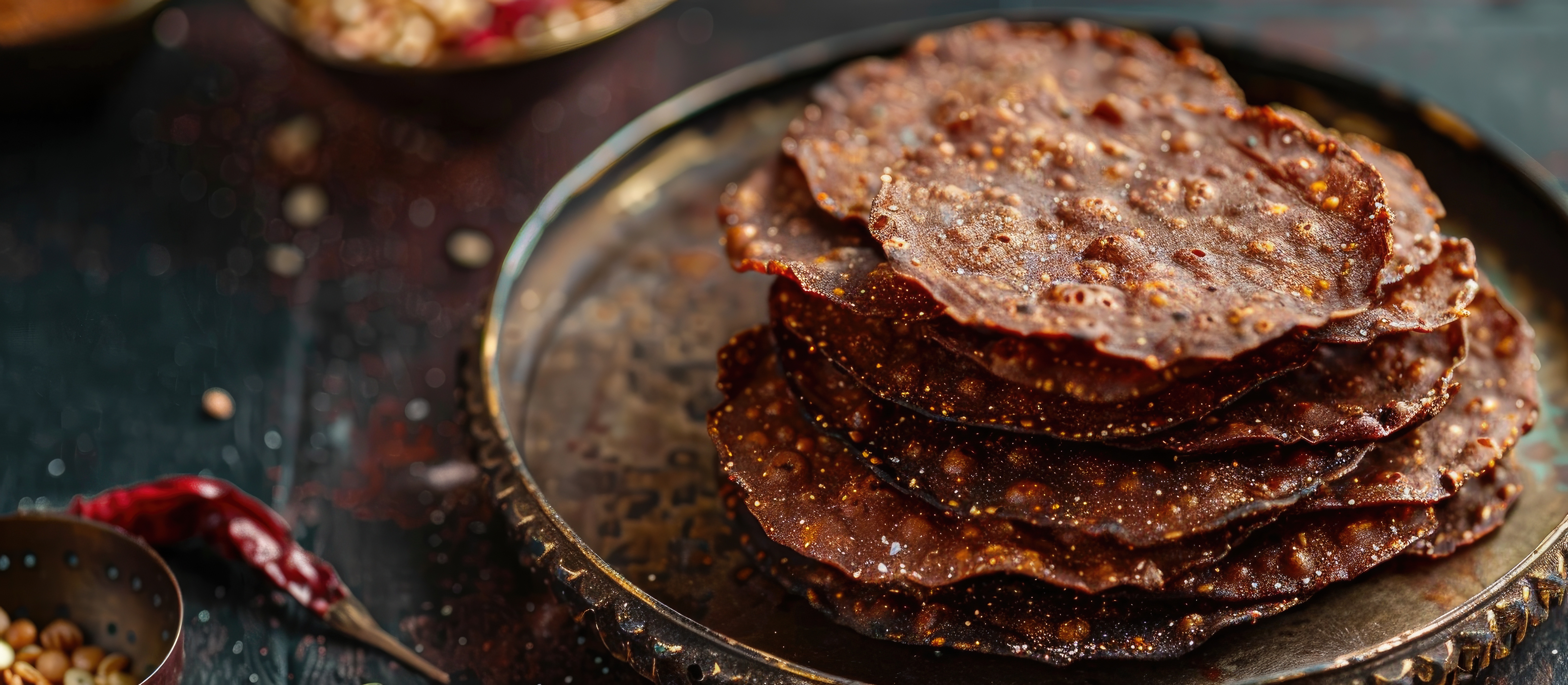
From sun-dried traditions to family secrets rolled thin between greased polythene sheets, papads have been a beloved staple in Indian kitchens for centuries. Their story stretches back to around 500 BC, with mentions in ancient Vedic texts which suggest that early forms of these crisp, spiced discs were crafted to preserve grains and pulses.
Over time, this practical solution evolved into a culinary tradition, with each region adding its own unique twist—be it the peppery urad dal versions of the north or the rice-based, steamed varieties of the south.
Today, this legacy thrives with the help of socially responsible brands that source and hygienically pack handmade papads directly from local producers, in turn supporting their small communities. And for those who want to recreate the joy of helping nani in the courtyard—yes, we’ve got her time-tested recipes too! Find them below.
#1 Tomato Rice Papad

A tangy twist to the classic rice papad, this version uses tomato powder for a subtle sour note that pairs beautifully with simple dals or can be enjoyed fried to crisp perfection.
Ingredients:
- 1 cup rice flour
- 2 tbsp tomato powder
- 1 tsp red chilli powder
- ½ tsp cumin seeds
- ½ tsp carom seeds
- 1 tsp salt
- 4 tsp oil
- 1½ to 2 cups water
- 1 teaspoon Baking soda
- ½ teaspoon sodium benzoate powder
Method:
- Add 1-1/2 cups of water to a pan. Add papad khar, baking soda and sodium benzoate powder. Sieve the sediment with a strainer. Add salt, cumin seeds, carom seeds and bring the mixture to a good boil.
- Add rice flour and tomato powder gradually, stirring continuously with a rolling pin. Lower the flame after adding the rice flour. Mix thoroughly until it forms a dough. Turn off the heat and cover with a lid until slightly cool.
- Put the dough in a plastic bag and knead well until very smooth and pliable.
- In a boiler, add water and a stand, and keep the dough with a hole in the centre so that it cooks inside out on a plate. Cover it with an absorbent cloth and steam for 15 minutes.
- Cool slightly and make balls from the dough.
- Roll out papads between 2 plastic films until very thin, using oil to grease the plastic sheets.
- Dry on clean cotton cloth in the shade under the fan.
#2 Khichiya Papad

Popular in Gujarat and Rajasthan, this chewy-yet-crunchy papad often includes sago, making it light, airy, and perfect for roasting or deep-frying into a bubbly delight.
Prep Time: 1 hour
Cook Time: 15 minutes (steaming)
Drying Time: 2–3 days
Serves: 6–8
Ingredients:
- 1 cup rice flour
- 1½ cups water
- 2 teaspoons of sago soaked for 2 hours
- 1 teaspoon baking soda
- 1 teaspoon sodium benzoate powder or papad khar
- 1 teaspoon cumin seeds
- 1 teaspoon salt
- ½ teaspoon black pepper
- 3 teaspoons oil
Method:
- Boil ½ cup of water and add baking soda and sodium benzoate powder, mix well and sieve with a strainer. Boil water in a pan with salt, cumin seeds, and sago, drained and powdered. Add rice flour after the water boils. Reduce the flame to a minimum and continuously mix with a rolling pin so no lumps are formed.
- Remove from the flame and cover the pan with a lid to cool slightly. Add the dough to a plastic bag and knead well by rolling with a rolling pin until the dough is very smooth and pliable.
- Make the dough into a round shape with a hole in the centre and place it in a boiler on a stand covered with a clean cotton or cheese cloth so no moisture enters the dough, but the dough is cooked evenly for 15 minutes.
- Slightly cool the dough and knead again by oiling the palms and shape into small balls.
- Roll out papads between well-greased plastic sheets. Leave it to dry on a clean cotton cloth in the shade. Turn the papads around to dry on the inner side and let them dry for 2 or 3 days until hard and brittle.
- Store in a tight, lidded container.
#3 Nachani (Ragi) Papad

From the health-conscious kitchens of the Western Ghats, this papad uses ragi (finger millet), combining earthy flavour with the goodness of calcium and fibre—a guilt-free crunch.
Prep Time: 45 minutes
Cook Time: 15 minutes (steaming)
Drying Time: 2–3 days
Serves: 6–8
Ingredients:
- 1 cup ragi flour
- 1½ cups water
- 1 teaspoon cumin seeds
- 1 teaspoon sesame seeds
- 1 teaspoon salt
- ½ teaspoon red chilli powder
- 1 teaspoon oil
- ½ teaspoon Papad khar or baking soda
- 1/2 teaspoon sodium benzoate powder
Method:
- Boil water in a deep pan. Add salt, cumin seeds, sesame seeds, baking soda, sodium benzoate and oil. Let the mixture boil for 5 minutes until the flavours combine.
- Reduce the flame and slowly add ragi flour, stirring constantly with a rolling pin to avoid lumps. Remove from the fire and let the mixture cool slightly. Form a dough of the mixture with well-oiled palms or in a plastic bag. Knead well and form a big doughnut-shaped ball.
- Keep the doughnut-shaped ball on a plate and steam for 15 minutes, covering it with an absorbent cloth so it does not get wet with the water from the lid, but is cooked well. Check it with a toothpick. If the toothpick comes out clean after inserting it into the dough, it is done.
- Remove from the steamer and knead very well to a soft, very pliable dough. Make small balls and roll the papads between well-oiled sheets of plastic. Leave it to dry on a clean cotton cloth in the sun for at least 2 to 3 days, turning sides.
- Store in a container with a tight-fitting lid.
#4 Appalam

Hailing from Tamil Nadu, Appalam is the southern cousin of the papad family. Soft when raw and super crisp when fried, it’s often served with sambar or rasam for that perfect bite.
Prep Time: 30 minutes
Cook Time (Microwaving + Kneading): 10 minutes
Drying Time: 3–4 days
Serves: 8–10
Ingredients:
- 250 g urad dal
- 1 tsp baking soda
- ½ tsp sodium benzoate powder
- ½ tablespoon Salt
- 30 ml sesame oil
- 3 tablespoons rice flour
Method:
- Powder the urad dal to make a fine flour.
- Sieve the flour with a fine sieve.
- Take 150 ml of water, heat it in the microwave for 1 minute.
- Add baking soda and sodium benzoate powder to the heated water. Mix well. Sieve the sediments and add the water to the dough. Add salt and mix well.
- Keep the tight dough covered for about 15 minutes.
- Knead the dough using sesame oil well by folding and kneading until the oil is completely absorbed and the dough is very smooth.
- Elongate the dough and cut it into small sections. Cover with rice flour in a container with a lid.
- Roll out the papads using a liberal amount of flour into small roundels. Keep one roundel over the other in a heap and press hard.
- Dust off the extra flour by holding the heap and shaking well.
- Dry in shade for 3 to 4 days.
- Store in a container with a tight-fitting lid.
#5 Spinach Rice Papad

Adding a nutritious twist to tradition, this green-hued rice papad uses spinach powder for colour and goodness—perfect for those who like their crunch with a touch of green.
Ingredients:
- 1 cup rice flour
- 2 tbsp spinach powder
- 1 tsp red chilli powder
- ½ tsp cumin seeds
- ½ tsp carom seeds
- 1 tsp salt
- 4 tsp oil
- 1½ to 2 cups water
- 1 teaspoon Baking soda
- ½ teaspoon sodium benzoate powder
Method:
- Add 1-1/2 cups of water to a pan. Add papad khar, baking soda and sodium benzoate powder. Sieve the sediment with a strainer. Add salt, cumin seeds, carom seeds and bring the mixture to a good boil.
- Add rice flour and spinach powder gradually, stirring continuously with a rolling pin. Lower the flame after adding the rice flour. Mix thoroughly until it forms a dough. Turn off the heat and cover with a lid until slightly cool.
- Put the dough in a plastic bag and knead well until very smooth and pliable.
- In a boiler, add water and a stand, and keep the dough with a hole in the centre so that it cooks inside out on a plate. Cover it with an absorbent cloth and steam for 15 minutes.
- Cool slightly and make balls from the dough.
- Roll out papads between 2 plastic films until very thin, using oil to grease the plastic sheets.
- Dry on clean cotton cloth in the shade under the fan.
🧂 Storage Tips
- Always store dried papads in an airtight container.
- Add a few grains of uncooked rice to absorb moisture.
- For the best crunch, fry or roast just before serving.
Want to spice up your snack game? Try making a batch of these at home and rediscover the joy of traditional Indian crunchies. Each variety tells a different story—pick your favourite or make them all!
Discover the full range of authentically handmade papads and appalams.
0 comments on “Papad Yatra: A Crispy Trail Across Indian Kitchens”