

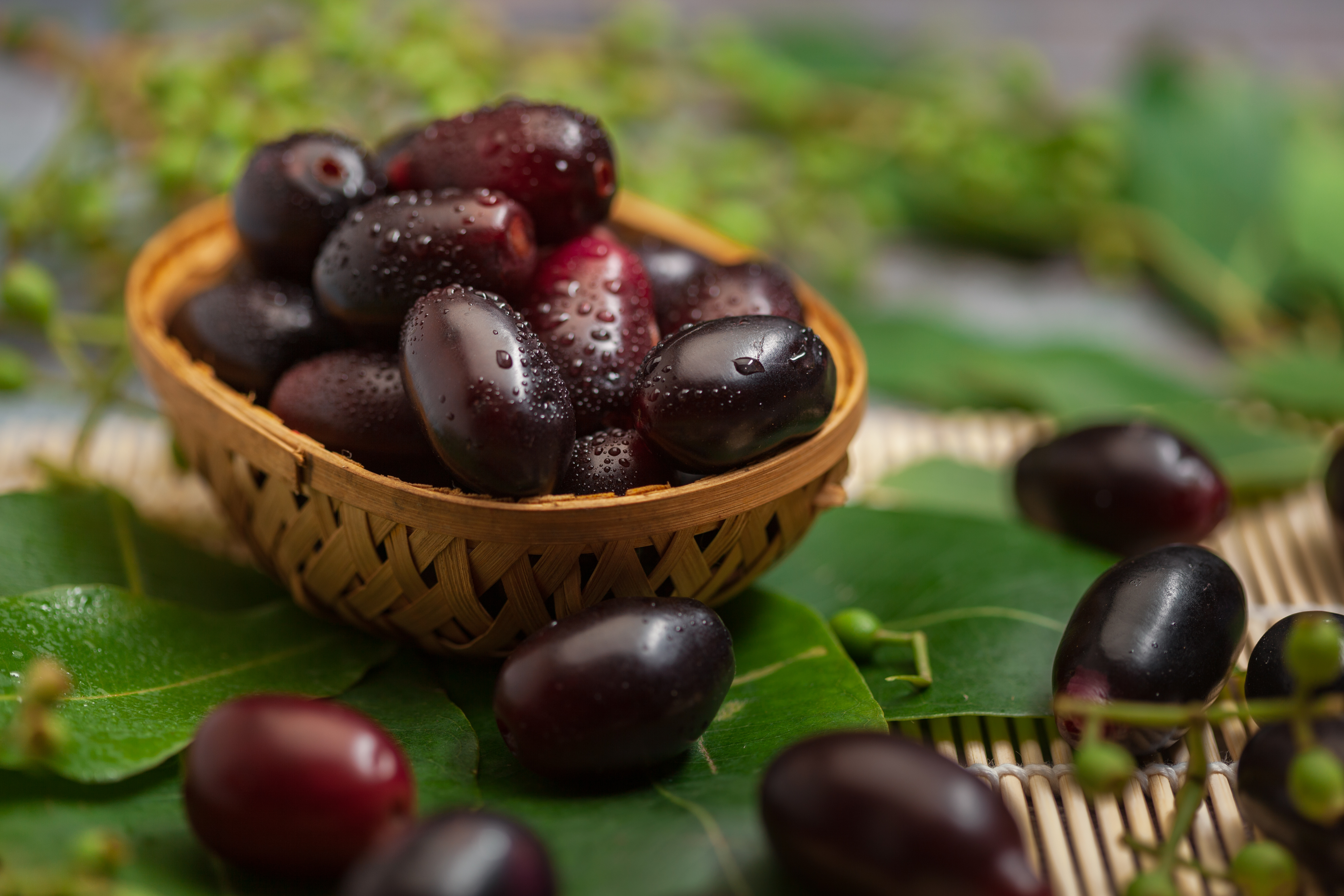
With monsoon clouds rolling in and the scent of wet earth filling the air, jamuns quietly make their way onto roadside carts, kitchen counters, and childhood memories. The deep purple fruit, also known as Java plum or Indian blackberry, may stain your tongue, but it also leaves a sweet mark on Indian culture and Ayurveda.
Jamun isn’t just a seasonal treat—it’s a medicine chest in fruit form. Revered in Ayurveda for centuries, jamun has made a strong case for itself in modern health circles too. From blood sugar control to digestive balance, this humble monsoon fruit proves that age-old wisdom still holds power today.
The Fruit with a Heritage
Jamun (botanical name: Syzygium cumini) has been mentioned in ancient Ayurvedic texts like Charaka Samhita and Sushruta Samhita for its myriad healing properties. Traditionally known as Jambu or Mahaphala, it is said to balance the Kapha and Pitta doshas.
Unlike many fruits that Ayurveda considers “heating” in nature, jamun has a cooling, astringent profile. That makes it ideal for the Indian monsoon—when the body needs help staying balanced amid rising humidity, sluggish digestion, and seasonal infections.
Why Ayurveda Loves Jamun
In Ayurveda, jamun is celebrated for its tikta (bitter) and kashaya (astringent) taste, which helps detoxify the body. Its properties are said to:
- Regulate blood sugar – The seeds, in particular, are known to support insulin sensitivity. Jamun seed powder (churna) has long been used in Ayurvedic remedies for managing diabetes.
- Aid digestion – The fruit’s astringent nature helps tone the digestive system and reduce bloating.
- Improve liver function – Jamun is believed to strengthen the liver and enhance bile flow.
- Promote oral health – In traditional practices, chewing jamun leaves or gargling with decoctions made from the bark is said to reduce gum inflammation.
- Cool the body – Its inherent cooling effect helps soothe excessive body heat and control acidity.
In short: jamun doesn’t just satisfy a seasonal craving—it nurtures your body from the inside out.
Seeds, Leaves, Bark—Nothing Wasted
Ayurveda doesn’t believe in waste, and jamun is a perfect example. While most of us eat the pulp and toss the rest, traditional medicine puts the entire plant to use:
- Jamun Seeds: Dried, powdered, and used as a supplement for regulating blood sugar.
- Leaves: Used in Ayurvedic formulations for digestive issues and mouth ulcers.
- Bark & Roots: Decoctions made from them are prescribed for diarrhoea, skin issues, and urinary disorders.
Even today, jamun seed powder is available online and used as a natural supplement. It’s proof that modern lifestyles are beginning to rediscover the old wisdom.
From Tradition to Trend
Thanks to its growing recognition, jamun has made its way from folk medicine into mainstream health. Here’s how it’s being used today:
- Cold-pressed jamun seed oil is used in skincare for its antibacterial properties.
- Jamun vinegar is a rising trend in detox regimens and is believed to aid metabolism.
- Health drinks, powders, and capsules made from jamun are now sold by Ayurvedic and wellness brands online.
- Frozen jamun pulp is a popular smoothie ingredient with those seeking immunity-boosting fruits.
Ayurvedic nutritionists often recommend jamun-based products to clients with PCOS, diabetes, or weak digestion—bridging tradition and modern wellness.
A Bite of Nostalgia
For many Indians, jamun is more than medicine—it’s memory. Of climbing trees, chasing vendors with stained fingers, and spitting seeds on the sidewalk. Of sharing a cone of salt-dusted jamun with siblings after school. Even its tangy taste feels like a time machine.
That connection between the heart and healing is exactly why Ayurveda values seasonal eating—not just for physical wellness, but emotional balance too.
Tips to Use Jamun the Ayurvedic Way
Want to get the most from your jamun this season? Here’s how:
- Don’t mix with milk – Ayurveda advises against mixing jamun with dairy. Enjoy it solo or with a pinch of black salt.
- Eat fresh or sun-dried – Avoid overripe or fermented jamuns. They may disrupt digestion.
- Try jamun seed powder – Mix with warm water and have on an empty stomach (only under guidance if you have medical conditions).
- Store in the fridge – If you buy jamun online or in bulk, refrigerate in breathable bags and use within 2–3 days.
A Seasonal Superfruit, Rooted in Wisdom
Jamun may be seasonal, but its benefits aren’t. Whether you’re following a traditional Ayurvedic lifestyle or simply trying to eat better, jamun is the kind of fruit that earns its spot in your basket—and your wellness routine.
Its healing story stretches back thousands of years, but it fits just as comfortably into a smoothie bottle or supplement jar today. That’s the power of age-old wisdom: it never goes out of season.
Click here to buy the freshest jamun
You may also enjoy:
0 comments on “Jamun in Ayurveda: Age-Old Wisdom, Modern Use”