

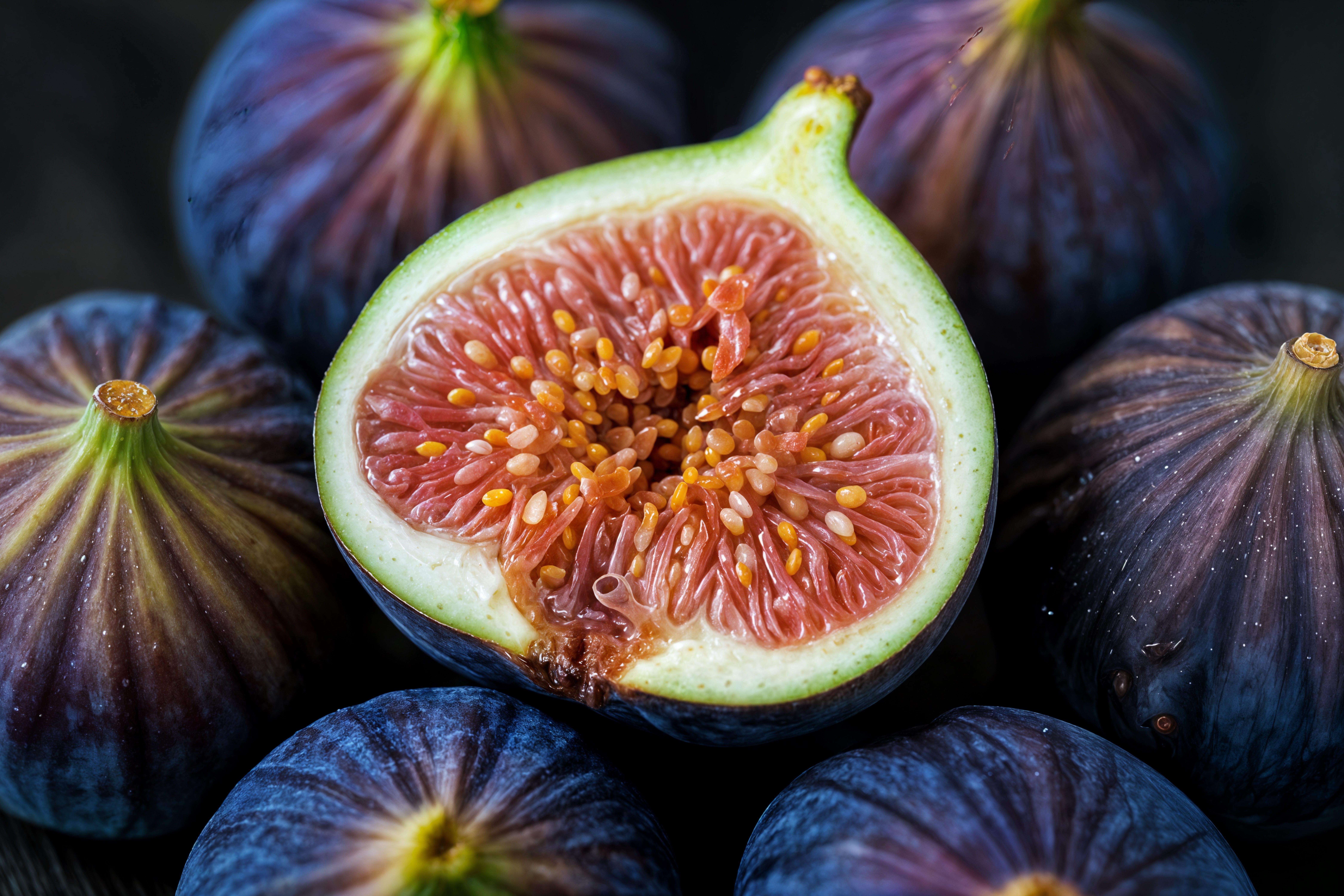
At first glance, a fig may seem like just another fruit. Soft, luscious, honeyed on the tongue—figs are beloved in everything from breakfast bowls to ancient scriptures. But here’s the twist: the fig is no ordinary fruit. It’s part mystery, part marvel, and what lies inside it challenges our basic understanding of fruit itself.
So… is a fig a fruit? A flower? Or somehow both? Let’s peel back the skin (gently) and find out.
What You See vs. What You Get
The fig, or Ficus carica, is often called a fruit, and technically, it is—but not in the way you’d expect. Unlike apples or mangoes, a fig is actually a syconium—a special kind of structure that houses hundreds of tiny flowers… on the inside.
That’s right. What looks like the fleshy interior of a fig is not pulp in the conventional sense. It’s a dense collection of inward-facing flowers, all tucked inside a bulbous stem.
So, in a way, you’re eating a flower bouquet turned inside out.
A Secret Garden Within
Botanically speaking, most fruits come after flowers. A flower blooms, pollination occurs, and the fruit develops. But figs decided to flip the script. Their flowers never bloom in the open air. Instead, they’re hidden inside the fig, shielded from the world.
That’s where the fig wasp comes in—yes, an actual insect plays a starring role here.
Enter the Fig Wasp: Nature’s Tiny Matchmaker 🐝
Here’s where it gets really fascinating. Some species of figs rely on a tiny wasp (from the Agaonidae family) to pollinate these enclosed flowers. This relationship is called mutualism, where both parties benefit.
Here’s the dramatic version:
- A female fig wasp enters a fig through a tiny opening, often losing her wings in the process.
- Inside, she pollinates the hidden flowers while laying her eggs.
- The wasp larvae hatch, mate, and the new females leave—carrying pollen with them to another fig.
By the end of this process, the original female wasp dies inside the fig.
Do we eat dead wasps then? Not really. Most edible figs grown commercially (like the ones you buy at the store) are parthenocarpic—meaning they don’t need pollination or wasps at all. Even in wild figs, enzymes in the fruit break down any insect remnants long before you take a bite.
Figured in History and Culture
Figs have been cultivated for over 11,000 years, making them one of the first plants domesticated by humans—possibly even before wheat or barley. Ancient Egyptians offered figs to their gods, and Greek athletes used them as a training food.
In many cultures, figs symbolise fertility, abundance, and even wisdom. The fig tree is also mentioned in religious texts—from the Bible and Quran to Buddhist scriptures. In fact, under a fig tree (Ficus religiosa), the Buddha is said to have attained enlightenment.
Nutrition & Culinary Fun
Beyond the science and mythology, figs are a powerhouse of fibre, potassium, and natural sugars, making them a favourite for healthy snacking. They aid digestion, boost heart health, and pair brilliantly with both sweet and savoury dishes.
Try them:
- Fresh with goat cheese and honey
- Dried in granola or laddoos
- Roasted with balsamic on toast
- Or blended into a jammy chutney
Fig Facts to Impress at Brunch
- Technically not a fruit: Botanists call figs an infructescence, a cluster of flowers and seeds inside a stem.
- Over 800 species: There are hundreds of fig types, including the banyan and strangler figs.
- Figs feed forests: Some fig trees bear fruit multiple times a year, making them a keystone species in rainforest ecosystems—feeding birds, bats, and monkeys.
Final Thought: A Fruit That Defies Labels
So, is a fig a fruit or a flower? In truth, it’s a little of both—and a little more. It’s a hidden garden, a biological marvel, and a timeless favourite all rolled into one humble, sweet package.
Next time you bite into a fig, remember: you’re tasting something ancient, complex, and surprisingly floral. Nature, as always, loves to keep us guessing.
You may also like:
Good knowledgeble post 😁
Nice knowing about all’ these, because we eat daily soaked figs in the night in a brass glass, and every morning starting with a healthy diet 😊