The idli is only half the story. What sits beside it — the chutney, the podi, the sambar — is what transforms a good breakfast into an extraordinary one. Most of us reach for the same coconut chutney and sambar every morning without a second thought. But South Indian kitchens have always known something the rest of us are still discovering — that the right accompaniment changes everything. These five lesser-known, deeply traditional pairings are the ones worth knowing this World Idli Day.
1. Agase Chutney Pudi (Flaxseed Podi)

A nutritious, intensely nutty dry powder made by roasting flaxseeds with lentils, red chillies, garlic, and curry leaves — this is the podi that the health-conscious South Indian kitchen has quietly been making for generations.
Prep Time: 10 mins | Cook Time: 10 mins | Makes: approximately 1 cup | Stores: up to 2 weeks
Ingredients
- Flaxseeds – ½ cup
- Urad dal – 2 tbsp
- Dry red chillies – 4, broken
- Garlic – 4 cloves
- Curry leaves – 1 sprig
- Salt – to taste
Click here to buy the ingredients
Method
- Dry roast flaxseeds in a pan on low heat for 3–4 minutes until they begin to splutter. Set aside to cool.
- In the same pan, dry roast urad dal until golden.
- Add dry red chillies, garlic, and curry leaves and roast for 1–2 minutes until fragrant. Cool completely.
- Combine all roasted ingredients and grind to a coarse powder.
- Add salt and pulse once more.
Tip: Store in an airtight container at room temperature for up to 2 weeks. Mix with a drizzle of sesame oil or ghee and serve alongside hot idlis.
Pairs well with: Ragi idli, oats idli, foxtail millet idli — the nuttiness of the podi complements earthy, grain-forward idlis beautifully.
2. Karivepaku Chutney (Curry Leaf Dry Chutney)

A deeply aromatic, dry-ground chutney made almost entirely from fresh curry leaves — bitter, earthy, and packed with flavour in a way that no other chutney quite replicates. Karivepaku means curry leaf, and this chutney puts it firmly at the centre where it belongs.
Prep Time: 10 mins | Cook Time: 5 mins | Makes: approximately ½ cup | Stores: up to 1 week
Ingredients
- Fresh curry leaves – 2 cups, packed
- Dry red chillies – 4
- Urad dal – 1 tbsp
- Chana dal – 1 tbsp
- Tamarind – a small piece (approximately ½ tsp)
- Garlic – 3 cloves
- Salt – to taste
- Oil – 1 tsp
Click here to buy the ingredients
Method
- Heat oil in a pan. Add urad dal and chana dal and roast until golden.
- Add dry red chillies and garlic, and roast for 1 minute.
- Add curry leaves and roast until completely dry and crisp, about 2–3 minutes. Cool completely.
- Add tamarind and salt. Grind to a coarse, dry powder — do not over-grind.
- Store in an airtight container for up to 1 week.
Tip: Serve dry alongside hot idlis or mix with a few drops of sesame oil for a slightly moist consistency.
Pairs well with: Plain rice idli, rava idli, vegetable idli — the bitterness of the curry leaf cuts through the mildness of classic idlis beautifully.
3. Sorrel Leaf Chutney (Gongura Chutney)

Gongura — also known as sorrel leaf — is one of South India’s most beloved and distinctive ingredients, prized for its sharp, intensely tangy flavour that no other leaf can replicate. This chutney, pungent and spicy with a deep green colour, is traditionally paired with rice but makes an extraordinary, unexpected partner for idlis — adding a zingy, acidic contrast that wakes up every bite.
Prep Time: 10 mins | Cook Time: 15 mins | Servings: 1–2
Ingredients
- Gongura leaves (sorrel leaves) – 2 cups, packed, stems removed
- Dry red chillies – 5
- Garlic – 5 cloves
- Onion – 1 small, roughly chopped
- Oil – 2 tbsp
- Mustard seeds – ½ tsp
- Cumin seeds – ½ tsp
- Curry leaves – 1 sprig
- Turmeric – ¼ tsp
- Salt – to taste
Click here to buy the ingredients
Method
- Heat 1 tbsp oil in a pan. Add dry red chillies, garlic, and onion. Sauté for 3–4 minutes until softened.
- Add gongura leaves and turmeric.
- Cook on medium heat for 5–6 minutes until the leaves wilt completely and turn darker. Cool completely.
- Grind to a coarse paste — gongura chutney should have some texture, not be completely smooth.
- Heat the remaining oil.
- Add mustard seeds, cumin seeds, and curry leaves and let them splutter.
- Add to the ground chutney and mix well. Adjust salt.
Tip: Serve alongside hot idlis with a side of raw sliced onions — the sharpness of the raw onion balances the intense tanginess of the gongura beautifully.
Pairs well with: Plain idli, ragi idli, pesarattu — the intense tanginess of gongura works best with simple, unflavoured idlis that let the chutney take centre stage.
4. Andhra-Style Tomato Chutney (Tomato Pachadi)

Pachadi means chutney in Telugu — and this tangy, spicy tomato preparation is nothing like the regular tomato chutney most of us know. Sautéed with onions, garlic, and dry red chillies and finished with a sharp mustard and curry leaf tempering, it is bold, deeply flavoured, and completely addictive.
Prep Time: 10 mins | Cook Time: 15 mins | Servings: 1–2
Ingredients
- Tomatoes – 3 medium, roughly chopped
- Onion – 1 medium, roughly chopped
- Garlic – 4 cloves
- Dry red chillies – 4
- Oil – 2 tbsp
- Mustard seeds – ½ tsp
- Curry leaves – 1 sprig
- Turmeric – ¼ tsp
- Salt – to taste
Click here to buy the ingredients
Method
- Heat 1 tbsp oil in a pan. Add garlic, dry red chillies, and onion. Sauté for 3–4 minutes until softened.
- Add tomatoes and turmeric.
- Cook on medium heat for 8–10 minutes until tomatoes are completely broken down and the oil separates. Cool completely.
- Grind to a smooth or slightly coarse paste depending on preference. Transfer to a bowl.
- Heat the remaining oil.
- Add mustard seeds and curry leaves and let them splutter.
- Pour tempering over the chutney and mix well.
Tip: Serve at room temperature alongside hot idlis — the tanginess cuts through the softness of the idli perfectly.
Pairs well with: Plain idli, rava idli, oats idli — the bold tanginess of the pachadi works best against mild, delicate idlis.
5. Raw Mango Sambar (Manga Sambar)

Manga means raw mango — and this summer sambar, made by cooking tart green mango directly into the toor dal base in place of tamarind, is one of the most seasonal, most flavourful, and most underrated sambars in the South Indian repertoire. The raw mango adds a fresh, fruity sourness that is completely different from tamarind — lighter, brighter, and perfectly suited to summer mornings.
Prep Time: 15 mins | Cook Time: 25 mins | Servings: 1–2
Ingredients
- Toor dal – ½ cup, washed
- Raw mango – 1 medium, peeled and cubed
- Tomato – 1 medium, chopped
- Small onions (shallots) – 8, peeled
- Green chilli – 1, slit
- Sambar powder – 1½ tsp
- Turmeric – ¼ tsp
- Oil – 1 tbsp
- Mustard seeds – ½ tsp
- Dry red chilli – 1
- Curry leaves – 1 sprig
- Fresh coriander – 2 tbsp, chopped
- Salt – to taste
- Water – 2 cups
Click here to buy the ingredients
Method
- Pressure cook toor dal with turmeric and 1 cup water for 3 whistles until completely soft. Mash well and set aside.
- In a pot, combine raw mango cubes, shallots, tomato, green chilli, sambar powder, salt, and 1 cup of water. Cook on medium heat for 10–12 minutes until the mango is completely tender.
- Add mashed dal and stir well. Simmer for 5 minutes until the sambar reaches a medium consistency — not too thick, not too watery.
- Heat oil in a small pan. Add mustard seeds, dry red chilli, and curry leaves and let them splutter. Pour tempering over the sambar.
- Finish with fresh coriander and serve hot.
Tip: Raw mango sambar is best made fresh and served immediately — the brightness of the mango fades if left to sit too long.
Pairs well with: Plain idli, rava idli, foxtail millet idli — the fresh sourness of raw mango sambar is particularly beautiful against light, delicate idlis.
Beyond the Usual Bowl
The coconut chutney and sambar on your breakfast table are classics for a reason — but South Indian kitchens have always had so much more to offer. These five accompaniments are the ones that deserve a regular spot beside your idli, not just on World Idli Day, but every morning, worth eating well. Try one, try all five, and taste the difference the right pairing makes. 🍽️
You may also like:
5 Indian Chutneys Ranked Best in the World
If you like this post, a share would be epic!
Like this:
Like Loading...


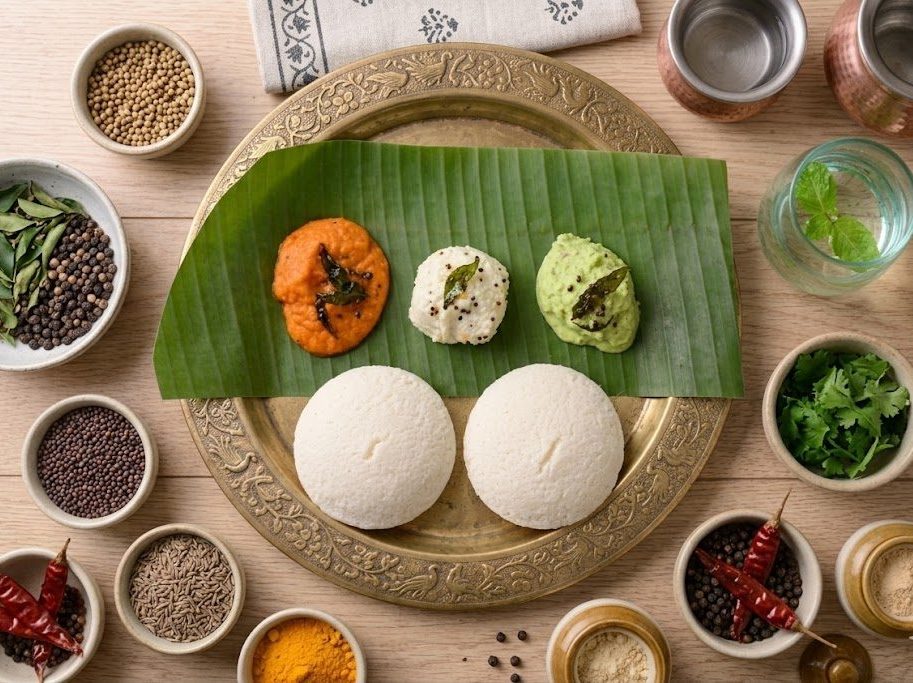
The idli is only half the story. What sits beside it — the chutney, the podi, the sambar — is what transforms a good breakfast into an extraordinary one. Most of us reach for the same coconut chutney and sambar every morning without a second thought. But South Indian kitchens have always known something the rest of us are still discovering — that the right accompaniment changes everything. These five lesser-known, deeply traditional pairings are the ones worth knowing this World Idli Day.
A nutritious, intensely nutty dry powder made by roasting flaxseeds with lentils, red chillies, garlic, and curry leaves — this is the podi that the health-conscious South Indian kitchen has quietly been making for generations.
Prep Time: 10 mins | Cook Time: 10 mins | Makes: approximately 1 cup | Stores: up to 2 weeks
Ingredients
Click here to buy the ingredients
Method
Tip: Store in an airtight container at room temperature for up to 2 weeks. Mix with a drizzle of sesame oil or ghee and serve alongside hot idlis.
Pairs well with: Ragi idli, oats idli, foxtail millet idli — the nuttiness of the podi complements earthy, grain-forward idlis beautifully.
A deeply aromatic, dry-ground chutney made almost entirely from fresh curry leaves — bitter, earthy, and packed with flavour in a way that no other chutney quite replicates. Karivepaku means curry leaf, and this chutney puts it firmly at the centre where it belongs.
Prep Time: 10 mins | Cook Time: 5 mins | Makes: approximately ½ cup | Stores: up to 1 week
Ingredients
Click here to buy the ingredients
Method
Tip: Serve dry alongside hot idlis or mix with a few drops of sesame oil for a slightly moist consistency.
Pairs well with: Plain rice idli, rava idli, vegetable idli — the bitterness of the curry leaf cuts through the mildness of classic idlis beautifully.
Gongura — also known as sorrel leaf — is one of South India’s most beloved and distinctive ingredients, prized for its sharp, intensely tangy flavour that no other leaf can replicate. This chutney, pungent and spicy with a deep green colour, is traditionally paired with rice but makes an extraordinary, unexpected partner for idlis — adding a zingy, acidic contrast that wakes up every bite.
Prep Time: 10 mins | Cook Time: 15 mins | Servings: 1–2
Ingredients
Click here to buy the ingredients
Method
Tip: Serve alongside hot idlis with a side of raw sliced onions — the sharpness of the raw onion balances the intense tanginess of the gongura beautifully.
Pairs well with: Plain idli, ragi idli, pesarattu — the intense tanginess of gongura works best with simple, unflavoured idlis that let the chutney take centre stage.
Pachadi means chutney in Telugu — and this tangy, spicy tomato preparation is nothing like the regular tomato chutney most of us know. Sautéed with onions, garlic, and dry red chillies and finished with a sharp mustard and curry leaf tempering, it is bold, deeply flavoured, and completely addictive.
Prep Time: 10 mins | Cook Time: 15 mins | Servings: 1–2
Ingredients
Click here to buy the ingredients
Method
Tip: Serve at room temperature alongside hot idlis — the tanginess cuts through the softness of the idli perfectly.
Pairs well with: Plain idli, rava idli, oats idli — the bold tanginess of the pachadi works best against mild, delicate idlis.
Manga means raw mango — and this summer sambar, made by cooking tart green mango directly into the toor dal base in place of tamarind, is one of the most seasonal, most flavourful, and most underrated sambars in the South Indian repertoire. The raw mango adds a fresh, fruity sourness that is completely different from tamarind — lighter, brighter, and perfectly suited to summer mornings.
Prep Time: 15 mins | Cook Time: 25 mins | Servings: 1–2
Ingredients
Click here to buy the ingredients
Method
Tip: Raw mango sambar is best made fresh and served immediately — the brightness of the mango fades if left to sit too long.
Pairs well with: Plain idli, rava idli, foxtail millet idli — the fresh sourness of raw mango sambar is particularly beautiful against light, delicate idlis.
The coconut chutney and sambar on your breakfast table are classics for a reason — but South Indian kitchens have always had so much more to offer. These five accompaniments are the ones that deserve a regular spot beside your idli, not just on World Idli Day, but every morning, worth eating well. Try one, try all five, and taste the difference the right pairing makes. 🍽️
You may also like:
If you like this post, a share would be epic!
Like this: