

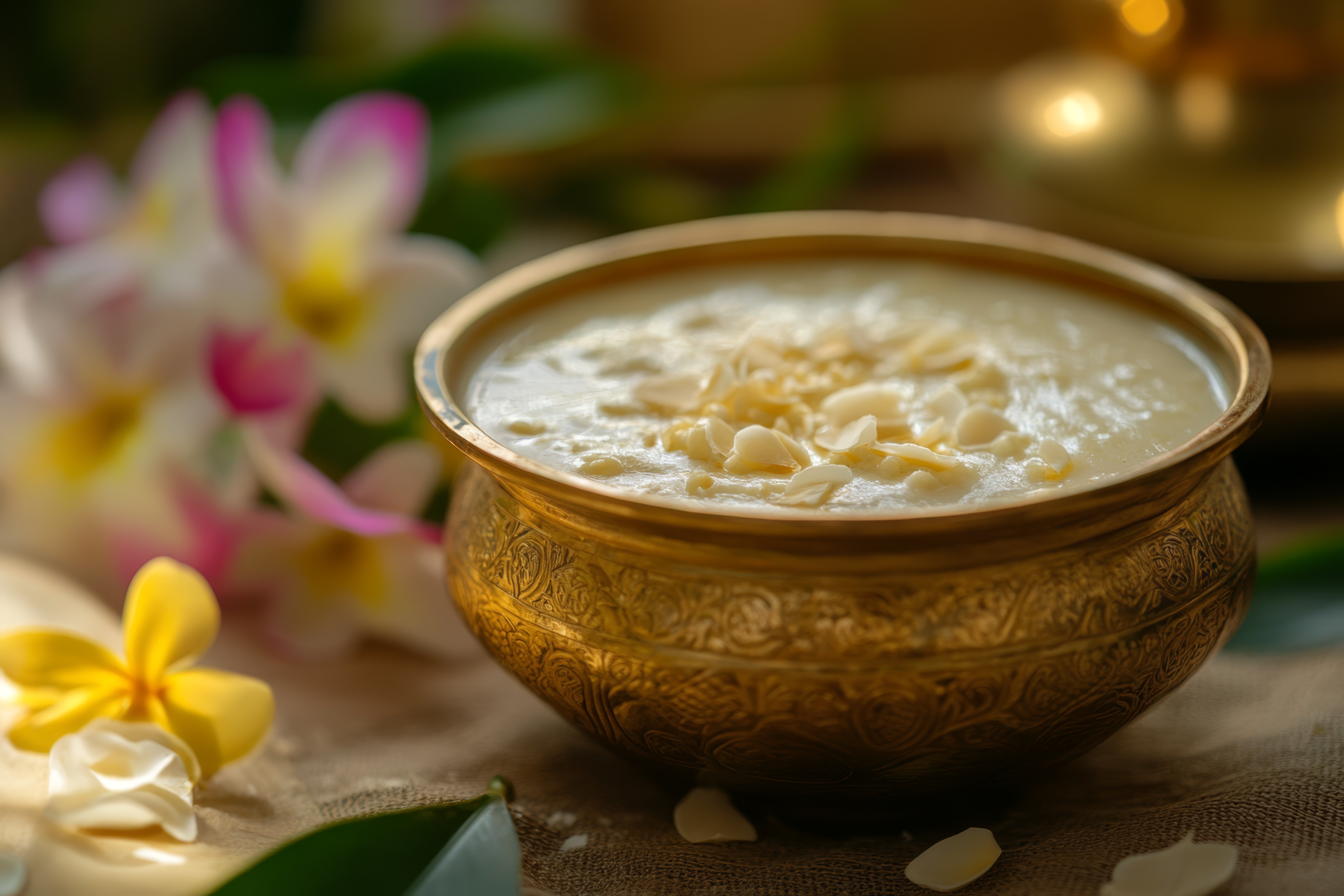
The first taste of the New Year is never random. Across India, it is almost always sweet.
As the harvest season turns into celebration, every region begins its year with a bite of something comforting, symbolic and rooted in what the land has just offered. From jaggery-rich classics to milk-based delicacies, these sweets are more than festive indulgences. They carry a quiet intention — to begin the year with abundance, balance and hope.
As the New Year travels across India, so does this tradition. Different regions, different recipes, but the same belief — that life should begin on a sweet note.
1. Meethe Chawal for Baisakhi

Baisakhi celebrates the harvest season and the Sikh New Year in Punjab, a time filled with lively Bhangra rhythms, vibrant gatherings, and festive meals shared in joy. Among the many traditional dishes prepared for the occasion, Meethe Chawal holds a special place on the table.
Also known as Zarda Pulao, this fragrant sweet rice shines with the golden warmth of saffron and is generously studded with nuts and raisins. Made with aromatic basmati rice, its delicate sweetness and rich aroma reflect the spirit of gratitude, prosperity, and new beginnings that define the festival.
Prep time: 20 mins | Cook time: 20 mins | Serving: 2
Ingredients
For rice:
- 1 cup basmati rice (soaked for 30 minutes)
- 3 cups water
- 2-3 green cardamoms
- 1 small cinnamon stick
- 2 cloves
- A pinch of salt
For sweet flavouring:
- ¾ cup sugar (adjust as per taste)
- 2 tbsp ghee
- ½ tsp saffron strands (soaked in 2 tbsp warm milk)
- ½ tsp cardamom
- ¼ cup chopped dry fruits (almonds, cashews, pistachios)
- 1 tbsp raisins
- 2 tbsp grated coconut
- A few drops of kewra or rose water
Click here to buy the ingredients
Method
- Boil 3 cups of water with cardamoms, cinnamon, cloves, and a pinch of salt.
- Add soaked rice and cook until 90% done. Drain the excess water and set the rice aside.
- Boil 3 cups of water with cardamoms, cinnamon, cloves, and a pinch of salt.
- Add soaked rice and cook until 90% done. Drain the excess water and set the rice aside.
- Boil 3 cups of water with cardamoms, cinnamon, cloves, and a pinch of salt.
- Add soaked rice and cook until 90% done. Drain the excess water and set the rice aside.
- Heat ghee in a pan and fry dry fruits and raisins until golden brown. Remove and keep aside.
- In the same ghee, add sugar and ¼ cup water. Let the sugar melt completely.
- Add saffron-infused milk and mix well.
- Add the cooked rice to the sugar syrup and mix gently.
- Add the cooked rice to the sugar syrup and mix gently.
- Sprinkle cardamom powder and kewra/rose water.
- Cover and cook on low heat for 10 minutes until the rice absorbs the flavour.
2. Poornam Boorelu for Puthandu

Puthandu welcomes the Tamil New Year with rituals centred on balance and renewal, where festive meals symbolise the many flavours of life. Sweets made with jaggery hold special importance, marking an auspicious start to the year. Poornam Boorelu, golden dumplings filled with a sweet lentil and jaggery mixture and fried until crisp outside and soft within, bring warmth and celebration to the festive table.
Prep time: 6 hrs (soaking) | Cook time: 40 mins | Serving: 2
Ingredients
For the Poornam (filling):
- ½ cup chana dal — soaked 2 hours
- ½ cup jaggery — grated
- 2 tbsp fresh grated coconut
- ½ tsp cardamom powder
- 1 tsp ghee
For the Batter (outer cover):
- ½ cup raw rice — soaked 4–6 hours
- ¼ cup urad dal — soaked 4–6 hours
- A pinch of salt
- Oil — for deep frying
Click here to buy the ingredients
Method
- Pressure cook chana dal with 1 cup of water for 3 whistles until soft. Drain completely — no water should remain.
- Mash the dal smooth. Heat ghee in a pan, add mashed dal and jaggery. Cook on medium heat, stirring, until mixture dries and comes together — about 8 minutes.
- Turn off the heat. Add coconut and cardamom. Mix well. Cool completely, then shape into small lemon-sized balls. Set aside.
- Drain the soaked rice and urad dal. Grind together with a pinch of salt and just enough water to a smooth, thick batter — similar to idli batter.
- Heat oil in a deep pan for frying.
- Dip each poornam ball into the batter, coat evenly and slide gently into hot oil.
- Fry on medium-low heat, turning occasionally, until golden brown and crisp all over — about 5 minutes.
- Drain on paper. Serve hot with a drop of ghee on top.
3. Jolpan for Bohag Bihu

Bohag Bihu celebrates the Assamese New Year and the arrival of spring, honouring fresh harvests and simple traditions. The day begins with Jolpan, a wholesome spread of beaten rice, sticky rice, puffed rice, fresh curd, jaggery, and seasonal fruits, enjoyed before the festivities unfold. Light yet nourishing, it reflects the simplicity and agricultural roots of the celebration.
Prep time: 10 mins | Cook time: 0 mins | Serving: 2
Ingredients
- ½ cup chira (beaten rice/poha)
- ¼ cup muri (puffed rice)
- ¼ cup bora saul (sticky rice) — soaked overnight and steamed, or substitute with cooked glutinous rice
- 1 cup thick curd (doi) — preferably fresh homemade
- 3 tbsp jaggery (gur) — grated or broken into small pieces
- 1 ripe banana — sliced (optional but traditional)
Click here to buy the ingredients
Method
- Soak chira in warm water for 3–5 minutes until softened. Squeeze out excess water and place in a bowl.
- Add muri and cooked bora saul alongside the chira.
- Spoon thick curd generously over the rice.
- Place jaggery on top.
- Add sliced banana alongside if using.
- Serve immediately in a brass or steel bowl — do not mix, let each person stir their own. Eat fresh.
4. Unniyappam for Vishu

Vishu marks the Malayali New Year, symbolising prosperity and hopeful beginnings, with festive foods prepared using seasonal ingredients. Unniyappam, soft golden fritters made with rice flour, ripe bananas, jaggery, and coconut, are cherished for their warm flavour and comforting sweetness during the celebrations.
Prep time: 3–4 hrs (soaking) | Cook time: 30 mins | Serving: 2
Ingredients
For the Batter:
- ½ cup raw rice — soaked 3–4 hours
- ½ cup jaggery — melted and strained
- 1 ripe banana (nendran/Kerala variety)
- 3 tbsp fresh grated coconut
- 1 tsp black sesame seeds
- ½ tsp cardamom powder
- ¼ tsp dry ginger powder (chukku)
- A pinch of baking soda
- A pinch of salt
- ¼ cup coconut oil — for cooking
Click here to buy the ingredients
Method
- Soak raw rice in water for 3–4 hrs. Drain before grinding.
- Melt jaggery in 3–4 tbsp water, stir until dissolved, strain. Cool slightly.
- Grind rice + banana to a smooth, thick batter with minimal water.
- Add jaggery syrup, coconut, sesame seeds, cardamom, chukku, baking soda, and salt. Mix well. Rest 30 mins.
- Heat unniyappam pan on medium. Add a few drops of coconut oil to each mould.
- Fill each mould ¾ full. Don’t overfill — they puff up.
- Cook until edges set and bottom is golden (~3–4 mins). Flip, cook other side 2–3 mins.
- Drain on paper. Serve warm — soft inside, crisp outside.
5. Malai Patishapta Pitha for Poila Boishakh

0 comments on “Harvest to Mithai: India’s Sweet New Year Traditions”