

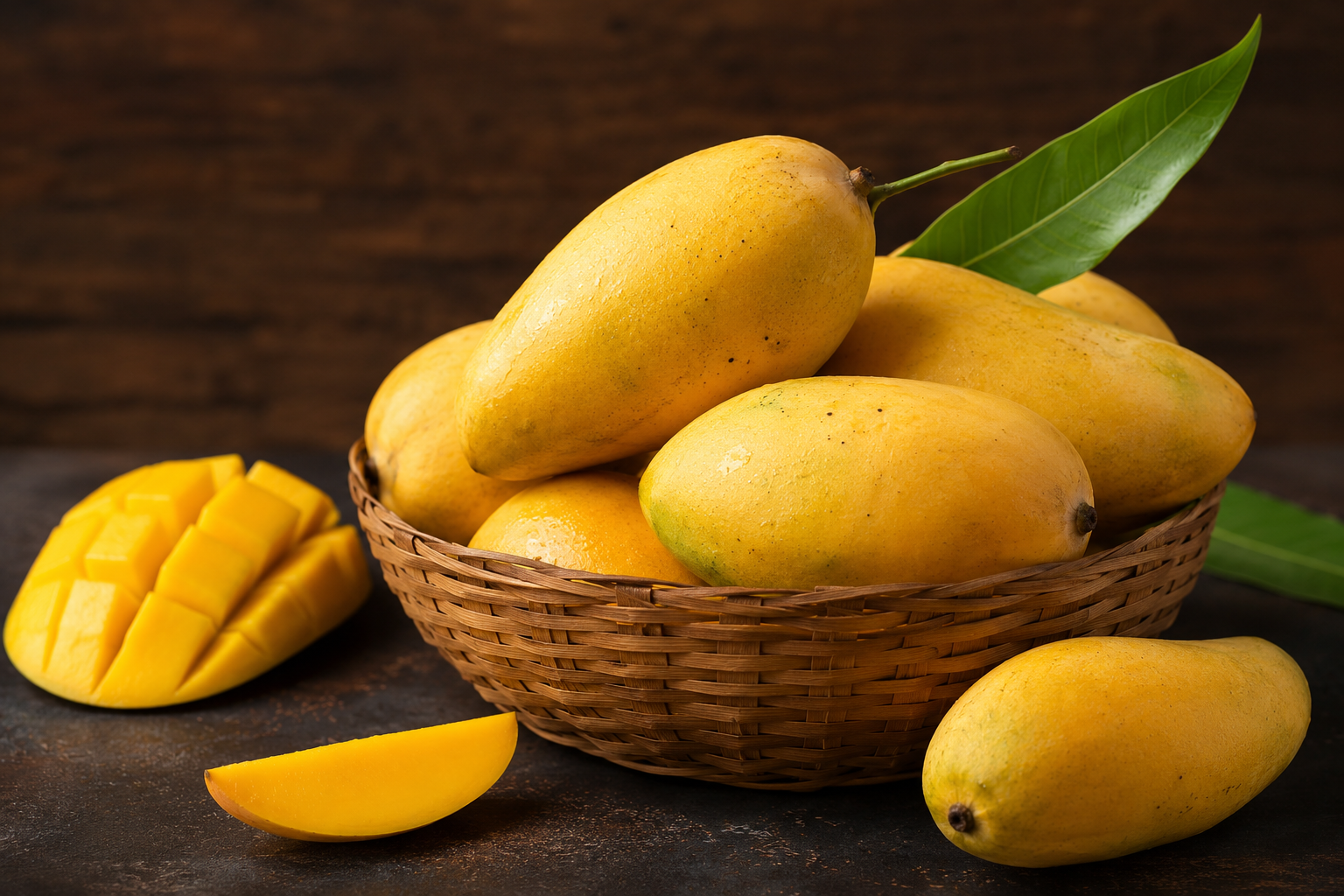
The story begins in the town of Banganapalle in Andhra Pradesh’s Kurnool district, where this mango was first grown in the Nawab’s gardens during the 18th century — so yes, this mango has royal roots.
Today, it’s cultivated across Andhra Pradesh, Telangana, Karnataka, and Tamil Nadu, where the warm climate and fertile soil help create its signature flavour and size.
Why It’s Called the “King-Sized Mango”
Let’s be real, India has hundreds of mango varieties, but Banganapalli stands out effortlessly. It’s big, often weighing between 250 and 400 grams or more, with a thin, smooth, bright yellow skin that you can almost peel by hand.
Inside, the flesh is juicy, buttery, and almost completely fibre-free, so no annoying strings. The taste is beautifully balanced, mildly sweet with a gentle hint of tang, never overpowering. And unlike many others, it stays fresh longer, making it ideal for transport and export.
The GI Tag — A Badge of Honour
In 2017, Banganapalli mango earned a Geographical Indication (GI) tag from the Government of India. It’s essentially a certificate of origin, meaning only mangoes grown in specific parts of Andhra Pradesh can officially carry the name “Banganapalli.”
Think of it like Darjeeling tea or Kolhapuri chappals, where the name itself carries legacy and identity.
It’s more than a label. It protects farmers, preserves authenticity, and tells the world this mango belongs to a place, its people, and a long-standing tradition.
Wait — Is It the Same as Safeda or Badami?
Here’s where mango confusion begins.
Banganapalli, Benishan, and Safeda are essentially the same mango — just known by different names in different regions. In Andhra Pradesh and Telangana, people often call it Benishan, while many North Indian markets sell it as Safeda.
Banganapalli is an early-season mango, available from April to June, just when summer cravings hit hardest. The best ones come from Andhra Pradesh, especially Kurnool district and Chittoor district. If you find those, don’t think twice.
Banganapalli, Served the Indian Way
Banganapalli is at its best when you keep things simple and let the fruit shine. Slice it chilled and eat it as is, no fuss needed. Blend it into a smooth milkshake or aamras for that comforting, nostalgic feel. Use raw pieces for a bold Andhra-style avakaya or toss them into mango rice for a tangy twist. And when you’re craving something chatpata, just add a pinch of salt and chilli to fresh slices, that street-style magic never misses.
Here are a few delicious ways to enjoy it:
 Mango Sago with Coconut Jelly Mango Sago with Coconut Jelly |
 Thick Mango Shake
Why It Deserves More Love
Alphonso mango gets the spotlight. Kesar mango has its loyal fanbase. But Banganapalli quietly feeds millions every summer, affordable, accessible, and consistently delicious.
It’s the mango of everyday India. Found on roadside carts, in local mandis, and supermarket shelves. No unnecessary hype, just pure, feel-good mango joy.
So when you spot those big golden mangoes this season, pick them up. Chill them overnight, slice them in the morning, and taste what 300 years of legacy feels like.
Found this interesting? Share it with a fellow mango lover. They deserve to know.
0 comments on “The Giant of the South: Meet Banganapalli Mango”