

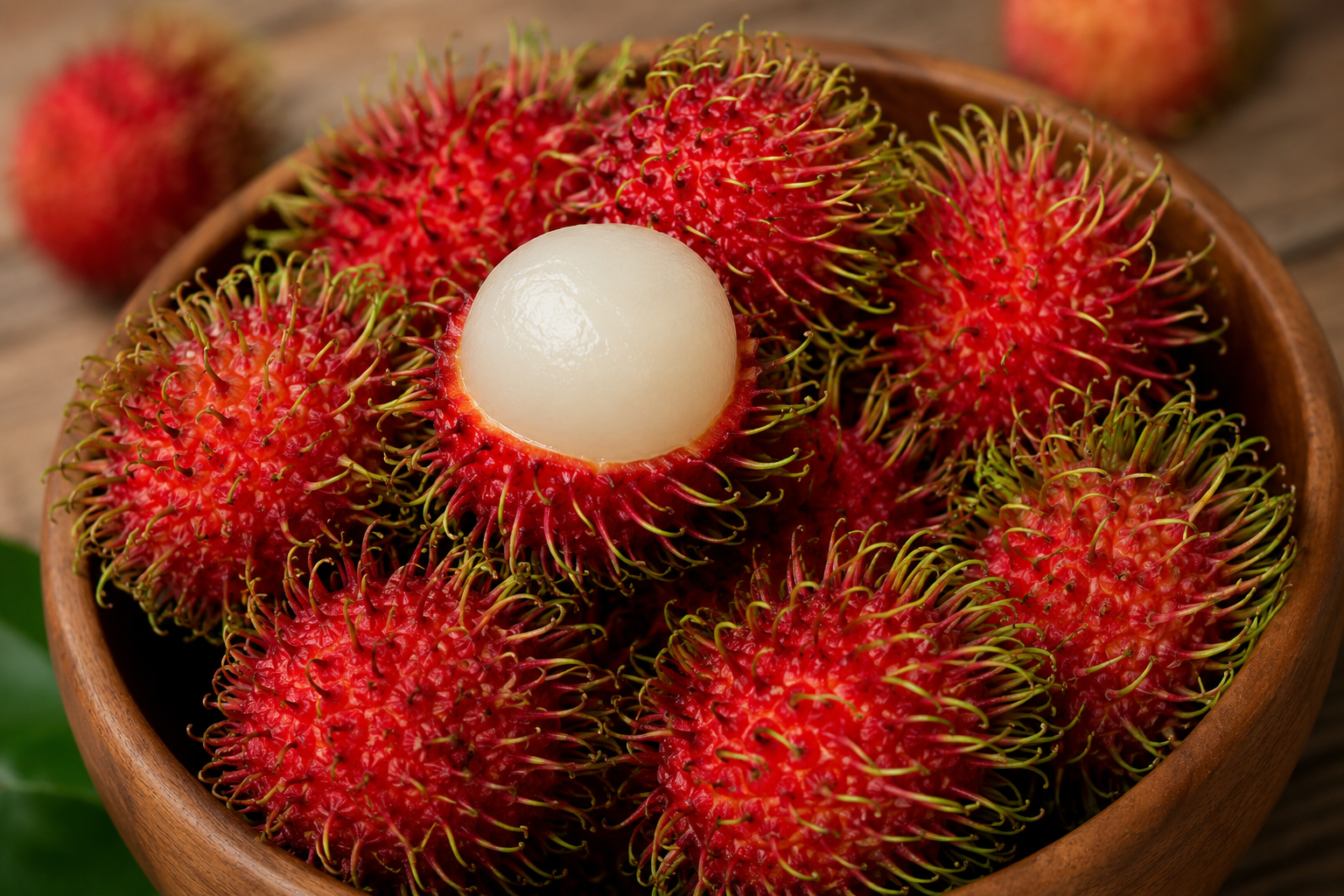
If you happen to visit a local fruit stall or a supermarket during the heavy monsoon months, you might spot something that looks less like a snack and more like a colourful sea creature.
With its bright red shell covered in soft, neon-green spikes, the rambutan definitely looks wild. But don’t let its eccentric, punk-rock exterior fool you. This exotic tropical treasure has officially arrived in India—not just on cargo flights, but straight from our very own farms. Beneath that crazy, spiky armor lies a sweet, juicy centre that is incredibly refreshing.
Let’s take a look at why this unusual fruit deserves a spot in your basket this season.
What Exactly is a Rambutan?
Originally native to the rainforests of Southeast Asia (primarily Malaysia and Indonesia), the name rambutan comes from the Malay word rambut, which means “hair.” Quite literally, it is a “hairy fruit.”

For a long time, Indians only knew it as an expensive, imported luxury. But things have changed. Over the last decade, farmers across the lush, tropical belts of South India—particularly in Kerala (Wayanad, Pathanamthitta, Thrissur), Karnataka (Kodagu, Mangaluru), and parts of Tamil Nadu—have successfully cultivated huge orchards.
The hot, humid climate and heavy rainfall of the Western Ghats match its native habitat perfectly, making homegrown rambutans sweet, fresh, and highly affordable.
 Did you know? Did you know?
The juicy flesh of a rambutan is perfectly safe to eat, but the seed inside should not be eaten raw. It contains natural compounds that may be harmful in large amounts, making it one of the few fruits where the sweet flesh and the seed have very different safety profiles. |
The Wild Exterior vs. The Sweet Interior
Holding a rambutan for the first time can be a little confusing. Those long, spindly hairs look like they might sting you like a sea urchin.
✨ Good News: The spines (scientifically called spinterns) are completely soft and pliable. They won’t hurt you at all!
Once you breach that neon armor, you’re rewarded with something completely unexpected. The tough shell peels away cleanly to reveal a translucent, pearl-white grape-like bulb of flesh.
What Does It Taste Like?
Imagine a cross between a high-quality green grape and a sweet pear, with a faint hint of floral acidity. It’s incredibly juicy, mildly sweet, and deeply refreshing on a hot day. In the very center, you’ll find a single, almond-shaped woody seed.
The Desi Comparison: Rambutan vs. Litchi

If you’ve never tasted a rambutan before, the easiest way to picture it is as litchi’s colourful tropical cousin. Both fruits belong to the same soapberry family and have juicy, translucent flesh hidden beneath a colourful outer shell. However, while litchi is known for its rough pinkish-red skin and intensely sweet, floral flavour, rambutan stands out with its bright red shell covered in soft green “hairs” and a slightly firmer texture.
Don’t let the strange anatomy throw you off. Eating one is incredibly simple, and you don’t even need a knife.
1. Find the Seam: No tools required
Hold the rambutan firmly between your thumbs and forefingers.
2. Squeeze and Crack: Apply gentle pressure
Press into the centre until the outer rind splits open. Alternatively, you can use your fingernail or a knife to score a shallow line around the middle.
3. Peel the Shell: Reveal the fruit
Peel back the hairy skin just like a hard-boiled egg. The glossy white fruit will pop right out.
4. Eat Around the Seed: Watch out for the middle
Pop the fruit into your mouth and bite the sweet flesh away from the central pit. Note that the seed coat can sometimes stick to the flesh, which is totally normal but a bit papery!
Small Fruit, Big Health Benefits
While the rambutan is fun to look at and eat, it’s also packed with nutritional value. It’s an absolute powerhouse for your immune system and skin health.
-
Vitamin C Boost: Just five or six of these fruits can provide up to 50% of your daily recommended intake of Vitamin C. This helps your body fight off infections and keeps your skin glowing by supporting collagen production.
-
Digestive Health: Rambutans contain a good amount of insoluble fiber, which adds bulk to your stool and keeps your digestive system moving smoothly.
-
Rich in Antioxidants: The skin and flesh are loaded with plant compounds like polyphenols, which help protect your cells from damage caused by free radicals (unstable molecules that can cause aging and disease).
-
Essential Minerals: You’ll get a healthy dose of copper and iron, both crucial for maintaining healthy blood vessels and red blood cell production.
🧺 Storage Tip: Rambutans dry out quickly once picked. Keep them in a breathable or perforated plastic bag in your refrigerator crisper drawer. They’ll stay fresh and juicy for about one to two weeks this way. Enjoy them fresh, toss them into tropical fruit salads, or use them to garnish an exotic weekend mocktail!
0 comments on “Meet Rambutan: The Tropical Fruit with a Wild Side”