Seasonal Fruits

Green Almonds: Monsoon’s Mythical Nut

If you’ve ever spotted fuzzy green pods at a fruit stall during the monsoon and wondered whether they were unripe mangoes, tiny peaches, or something entirely different, you may have just met one of the season’s most intriguing treats—green almonds.

Available only for a short time each year, green almonds are often surrounded by curiosity and a fair share of myths. They’re not exactly nuts in the way most people imagine them. In fact, they’re young, immature almonds harvested before they fully mature into the hard-shelled almonds we snack on year-round.

Let’s crack open the story of this fascinating seasonal delicacy.

So, What Exactly Are Green Almonds?

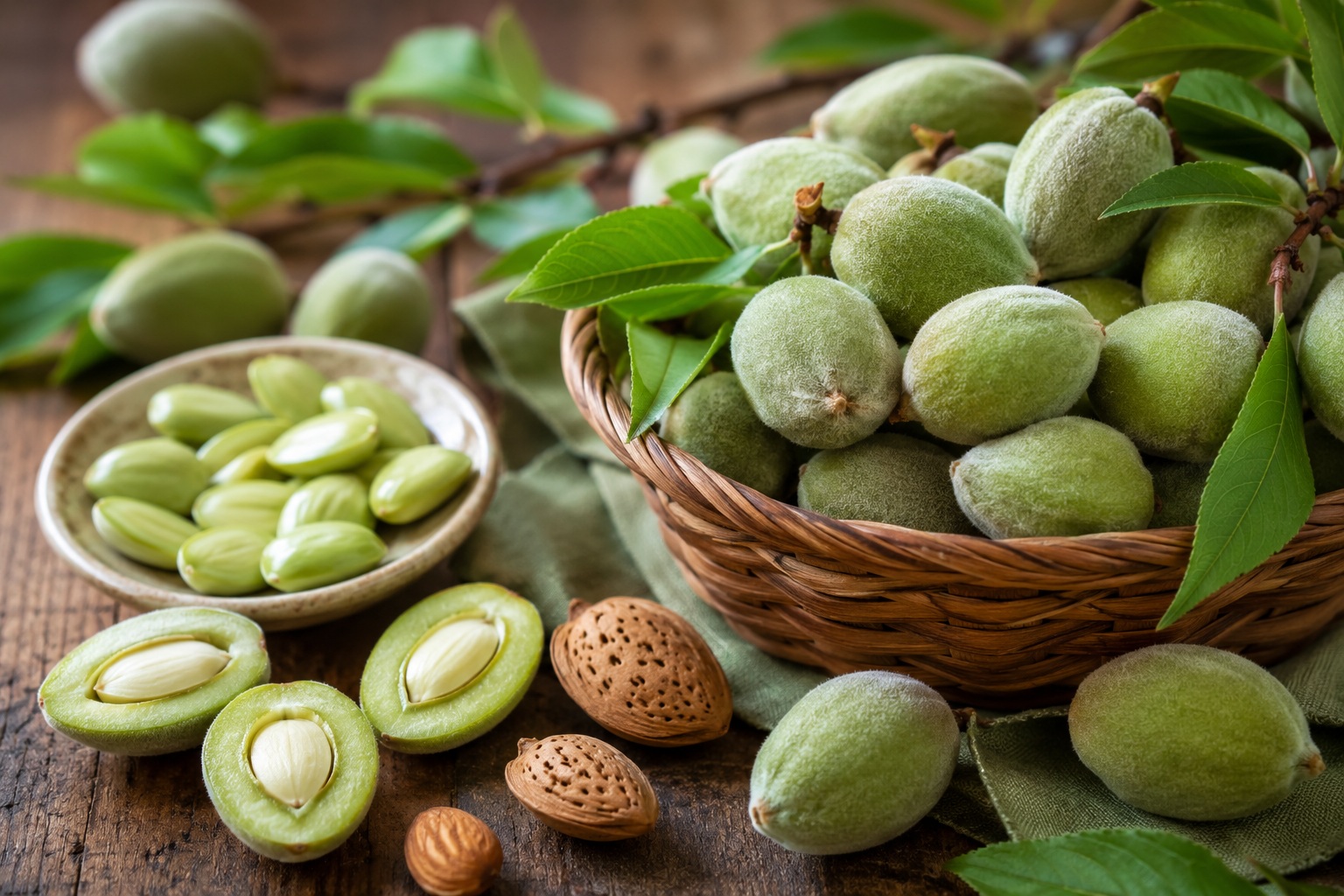
Think of a regular almond, but before it develops its hard brown shell. At this stage, the entire fruit is soft and edible.

Green almonds have a velvety, light-green outer covering. Bite into one, and you’ll find a jelly-like seed in the center with a mild, slightly nutty taste. The texture is what surprises most first-timers—crisp on the outside and tender on the inside.

As the fruit matures, the fuzzy green hull dries up, the shell hardens, and eventually becomes the almond we know today.

Why Are They Called the “Mythical” Nut?

Part of the mystery comes from their fleeting appearance.

Unlike regular almonds, which are available throughout the year, green almonds make only a brief seasonal appearance, often during late spring and the monsoon months in some regions. Miss the window, and you’ll have to wait another year.

Their rarity has turned them into a sought-after seasonal treat, much like fresh lychees, jamuns, or mulberries.

The Taste That Divides People

Green almonds are one of those foods that create two camps.

Some people instantly fall in love with their fresh, tangy, slightly grassy flavour. Others take a few bites before appreciating their unique character.

A sprinkle of salt can enhance their flavour, making them a refreshing snack on humid monsoon afternoons.

Fun fact: Many people describe the taste as a cross between a cucumber, a green apple, and a traditional almond.

Tiny Fruit, Big Nutrition

Although green almonds are harvested before reaching full maturity, they still contain valuable nutrients.

They provide:

  • Dietary fibre
  • Vitamin E
  • Healthy fats
  • Plant-based antioxidants
  • Small amounts of protein

Since they contain more moisture than mature almonds, they feel lighter and fresher when eaten.

Did you know?

Most people think almonds are nuts, but they’re actually the seeds of a fruit closely related to peaches, plums, and apricots. In fact, a green almond looks so much like a tiny unripe peach that it’s hard to believe they’re the same food that eventually becomes the crunchy almond in your snack bowl!

Monsoon’s Best-Kept Secret

Seasonal foods often have a certain charm. They arrive unexpectedly, stay briefly, and disappear before we get tired of them.

Green almonds fit perfectly into that category. Their unusual appearance, limited availability, and refreshing taste make them feel like a hidden monsoon treasure rather than an everyday snack.

Perhaps that’s why food lovers eagerly await their arrival each year. They’re not just another fruit or nut—they’re a reminder that some of nature’s most interesting offerings are the ones that don’t stick around for long.

The Final Bite

Green almonds may look mysterious, but they’re simply almonds caught in their youthful stage. Soft, fuzzy, seasonal, and packed with character, they offer a completely different experience from the crunchy almonds sitting in your kitchen jar.

So the next time you spot these fuzzy green gems at a market, don’t walk past them. Grab a handful, sprinkle on a little salt, and discover why this short-lived seasonal snack has earned its reputation as monsoon’s mythical nut. 🌿🥜

Click here to buy fresh green almonds and enjoy this monsoon rarity

You may also like:

How to Use Amla in Daily Meals: Simple Recipe Ideas

0 comments on “Green Almonds: Monsoon’s Mythical Nut

Leave a Reply

Discover more from Bigbasket Lifestyle Blog

Subscribe now to keep reading and get access to the full archive.

Continue reading