

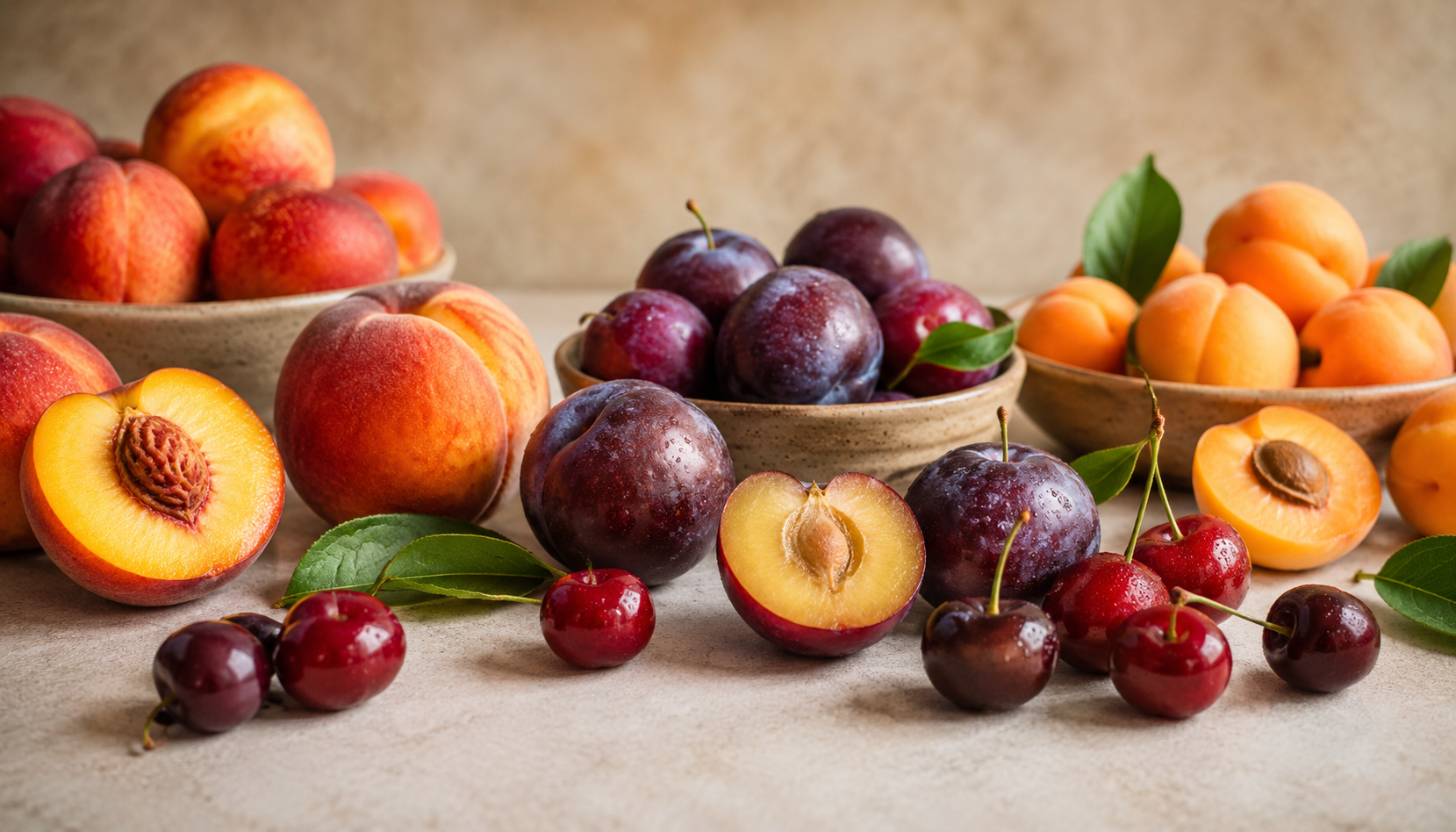
Walk into a fruit market and you’ll probably spot peaches, plums, nectarines, apricots, cherries, and maybe even a few unfamiliar fruits. They may look different, taste different, and come in every shade from sunny yellow to deep purple—but they all belong to one delicious family: stone fruits.
What exactly makes them “stone fruits”? And why do peaches and nectarines look like siblings? Let’s crack open the pit and find out!
🪨 First Things First… What Is a Stone Fruit?
A stone fruit is exactly what it sounds like—a fruit with a large, hard pit (or “stone”) in the centre that protects a seed inside. Around that pit is the juicy, edible flesh we all love.
Botanically, these fruits belong to the Prunus family, making many of them close cousins despite their different appearances and flavours.
 Did you know? Did you know?
Despite looking completely different, mangoes and peaches belong to the same botanical category of fruits because both contain a single large stone inside. |
🍑 Peaches: The Fuzzy Favourite

If a fruit had a signature texture, the peach owns “velvet.” That signature peach fuzz is actually a brilliant evolutionary defense mechanism—it acts as a natural barrier to keep insects away and traps moisture so the skin doesn’t crack.
-
The Flavour Profile: Sweet, deeply aromatic, and slightly acidic.
-
Yellow vs. White: Yellow peaches have a classic, tangy-sweet balance that mellows out as they ripen. White peaches are far less acidic, meaning they taste incredibly sugary-sweet even when they are still a bit firm.
-
Best For: Jamming, grilling (the sugars caramelize beautifully over open flame), and classic cobblers.
🍊 Nectarines: The Peach’s Smooth Twin

Ever looked at a nectarine and thought, “This is literally just a peach without the fuzz”?
You are completely right.
Nectarines and peaches are genetically nearly identical. The only thing separating them is a single recessive gene that stops the nectarine from growing fuzz. In fact, peach trees can occasionally grow nectarines, and nectarine trees can grow peaches entirely by chance!
-
The Flavour Profile: Because they lack the fuzzy barrier, nectarines tend to have slightly thinner skin, which translates to a more intense, intensely aromatic, and tangier flavor than their fuzzy siblings.
-
Best For: Slicing fresh into salads, packing into lunches (no fuzz to scratch your tongue), and rustic tarts.
🟣 Plums: Small Fruit, Big Personality

Plums throw a vibrant wrench into the stone fruit family. They come in an astonishing spectrum of colors—from dusty deep purple and crimson to bright yellow and lime green.
-
The Flavour Profile: Plums play a brilliant trick on your taste buds. The flesh is usually sweet and mellow, but the skin is notoriously tart. When you bite into one, you get an instant hit of sour-sweet complexity.
-
The Dried Upgrade: When you dehydrate a specific type of plum, it becomes a prune. They are packed with fiber and antioxidants!
-
Best For: Eating whole on the go, baking into inverted cakes, or simmering down into a rich, tangy sauce for savory meats like duck or pork.
🔍 Freestone vs Clingstone: What’s the Difference?
Not all stone fruits let go of their pit so easily!
Freestone fruits have pits that separate easily from the flesh, making them ideal for slicing, baking, and cooking.
Clingstone fruits have flesh that clings tightly to the pit. They’re often juicier and sweeter, making them excellent for eating fresh.
Neither is better—it simply depends on how you plan to enjoy them.
🌈 Why Different Colours?
Stone fruits aren’t just pretty to look at.
Yellow, orange, red, and purple colours come from natural plant compounds that help protect the fruit while also providing antioxidants. Different varieties naturally develop different pigment combinations, which is why no two stone fruits look exactly alike.
💪 Tiny Fruits, Big Nutrition
Besides tasting delicious, stone fruits are packed with goodness.
They generally provide:
- Vitamin C for immunity
- Vitamin A for eye health
- Dietary fibre for digestion
- High water content for hydration
- Antioxidants that help protect cells from everyday stress
They’re naturally low in calories, making them an easy addition to balanced meals and snacks.
Beyond Eating Fresh
Stone fruits are surprisingly versatile. Here are two delicious ways to enjoy them:
|
|
Sticky Plum Upside Down Cake
|
 Flaky, fruity, and irresistible
 A beautifully caramelised bake
🍑 One Family, Endless Flavours
Whether you love the velvety sweetness of peaches, the smooth bite of nectarines, the juicy surprise of plums, every stone fruit brings something unique to the table.
So next time you’re choosing between a peach, plum, or nectarine, remember—you really can’t go wrong. You’re simply picking a different personality from one delicious family.
👉 Click here to shop fresh stone fruits and enjoy nature’s juiciest family of fruits
You may also like:
0 comments on “Peach, Plum, or Nectarine? A Guide to Every Stone Fruit”