

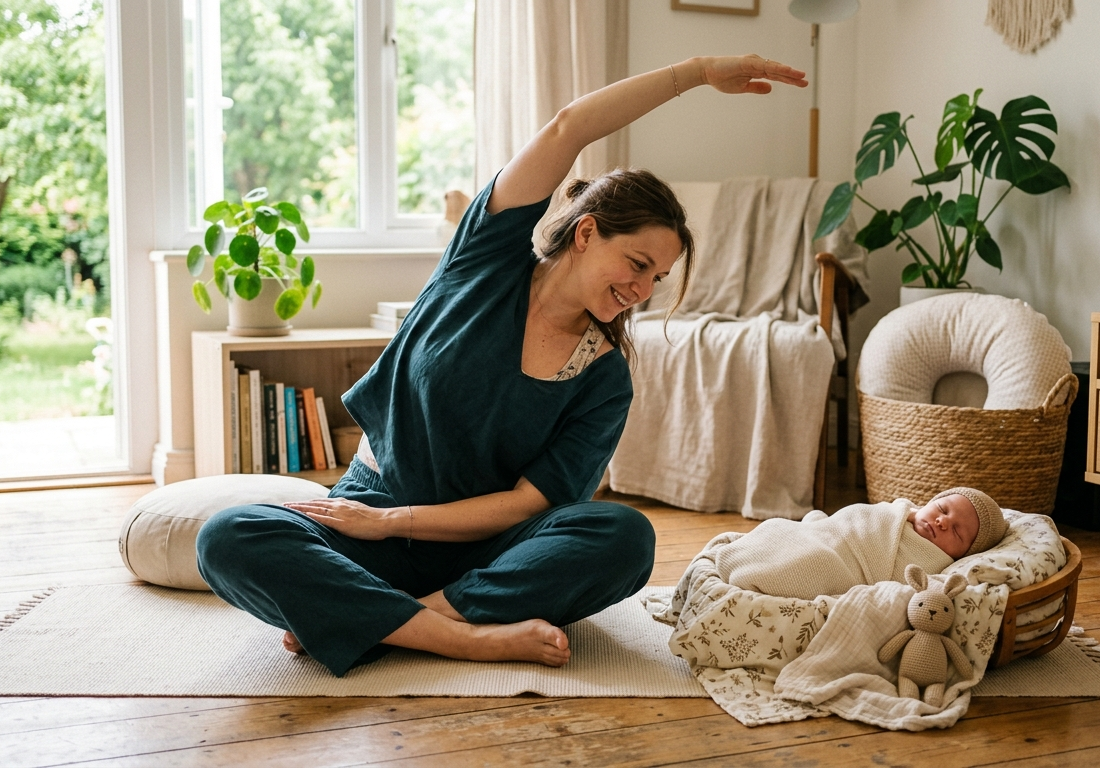
You’ve grown an entire human, been through major abdominal surgery, and somehow taught yourself to eat a full meal with one hand.
And then, usually around 3 a.m., the question arrives: When can I start exercising after a C-section?
Short answer: gentle movement can begin relatively early, but getting back to your usual workouts takes longer than Instagram would have you believe.
Here’s how to rebuild strength after a caesarean without rushing the parts of you that are still healing.
First, a Reality Check: A C-Section Is Major Surgery
Your surgeon made an incision through your abdomen and uterus to bring your baby into the world. Meanwhile, pregnancy has already stretched and changed your abdominal and pelvic floor muscles.
That’s not a body that needs a boot camp. That’s a body that needs a plan.
So, When Can You Actually Start?
There’s no magic date that applies to every mum.
Your postnatal check is a good opportunity to ask your doctor or physiotherapist when you can progress to structured or strenuous exercise. Some women may be ready around six weeks, while others need longer, particularly if recovery has been complicated.
Before you’re cleared for more demanding exercise, though, you’re not stuck on the sofa. Early C-section recovery has its own quiet kind of exercise.
Weeks 0–6: The Gentle Stuff That Actually Counts

Breathe on Purpose
Lie comfortably, place a hand on your belly and take slow breaths, allowing your ribs and abdomen to expand gently as you inhale. Exhale slowly without forcing your stomach inward.
Think of it as your first postpartum core exercise—simple, controlled and focused on reconnecting with your body.
Walk, Slowly
Walking after a C-section is one of the simplest ways to gradually rebuild mobility and stamina.
Start with a few easy minutes and increase the time as you feel comfortable. No hills, no pace goals and definitely no guilt on the days you skip it.
If you’re heading outside, comfortable, loose-fitting postpartum activewear can make those first walks much easier. Look for breathable fabrics and waistbands that don’t press against your healing incision. Comfort, not compression, is the goal right now.
Wake Up Your Pelvic Floor
Gentle pelvic floor exercises can help you reconnect with the muscles that support your bladder, bowel and pelvic organs.
Not sure you’re doing them correctly? A pelvic health physiotherapist can help you find the right technique instead of guessing.
Make Postpartum Comfort Part of the Plan

Postpartum bleeding can continue for several weeks and may become more noticeable as you become more active. During this period, maternity pads are a practical choice instead of tampons.
Your everyday underwear matters too. Soft, breathable postpartum underwear with comfortable coverage can help you feel more at ease while your body heals. Look for styles that sit comfortably around—not tightly against—the incision.
Keeping an extra pad and change of underwear in your stroller or changing bag is one of those small preparations that makes leaving the house considerably less stressful.
Once You’re Cleared: Rebuild Your Foundation

Your first postpartum workout doesn’t need to be a workout that leaves you breathless.
Start with controlled, low-impact movements such as:
- Pelvic tilts and heel slides
- Toe taps and gentle marching
- Glute bridges
- Side-lying leg lifts
- Wall push-ups
- Supported squats
- Resistance-band rows
You can gradually add low-impact cardio such as longer walks or stationary cycling.
If you’re considering a postpartum support belt, speak with your doctor or physiotherapist first. Some women find abdominal support comfortable during everyday activities, but a support belt shouldn’t be used to push through pain or substitute for rebuilding core strength.
Swimming can also be an option once your incision has healed and your healthcare professional says it’s safe.
And remember: form and breathing beat intensity every single time.
Ready to Level Up?

After you’ve built a consistent movement routine without pain, increased bleeding, pelvic heaviness or urinary leakage, you can gradually explore postnatal yoga, Pilates and progressive strength training.
Higher-impact activities such as jogging should come later and be introduced gradually.
The principle is simple and surprisingly effective: increase one thing at a time—duration, frequency or intensity.
You don’t need to prove anything by doing all three at once.
Stop and Speak to Your Doctor If You Notice…
- Sharp or worsening pain around your incision
- Bleeding that becomes heavier after exercise
- Pelvic heaviness or pressure
- Abdominal bulging or pronounced “coning”
- New or worsening urinary leakage
- Redness, warmth, swelling or discharge around the incision
- Feeling unusually weak, dizzy or unwell
These aren’t signs that you’ve failed. They’re signs that your body may need a slower pace or professional assessment.
The Only Postpartum Fitness Goal Worth Having
Not smaller. Stronger.
Right now, recovery is the workout.
The five-minute walk counts. The breathing counts. Rest counts. And yes, the nap you took instead of exercising counts too.
You don’t need to get your body back. It never went anywhere—it just did something extraordinary and is quietly rebuilding itself while you learn a whole new person.
Start gently. Progress slowly. Let your recovery set the pace.
Make Every Step More Comfortable
From supportive postpartum essentials to comfortable everyday wear, choose products designed to make recovery a little easier.
Explore postpartum care and women’s health essentials for the journey ahead
You may also like:
Fatherhood & Mental Health: The Overlooked Crisis New Dads Face
0 comments on “Restart Exercise After a C-Section Without Rushing Your Recovery”