

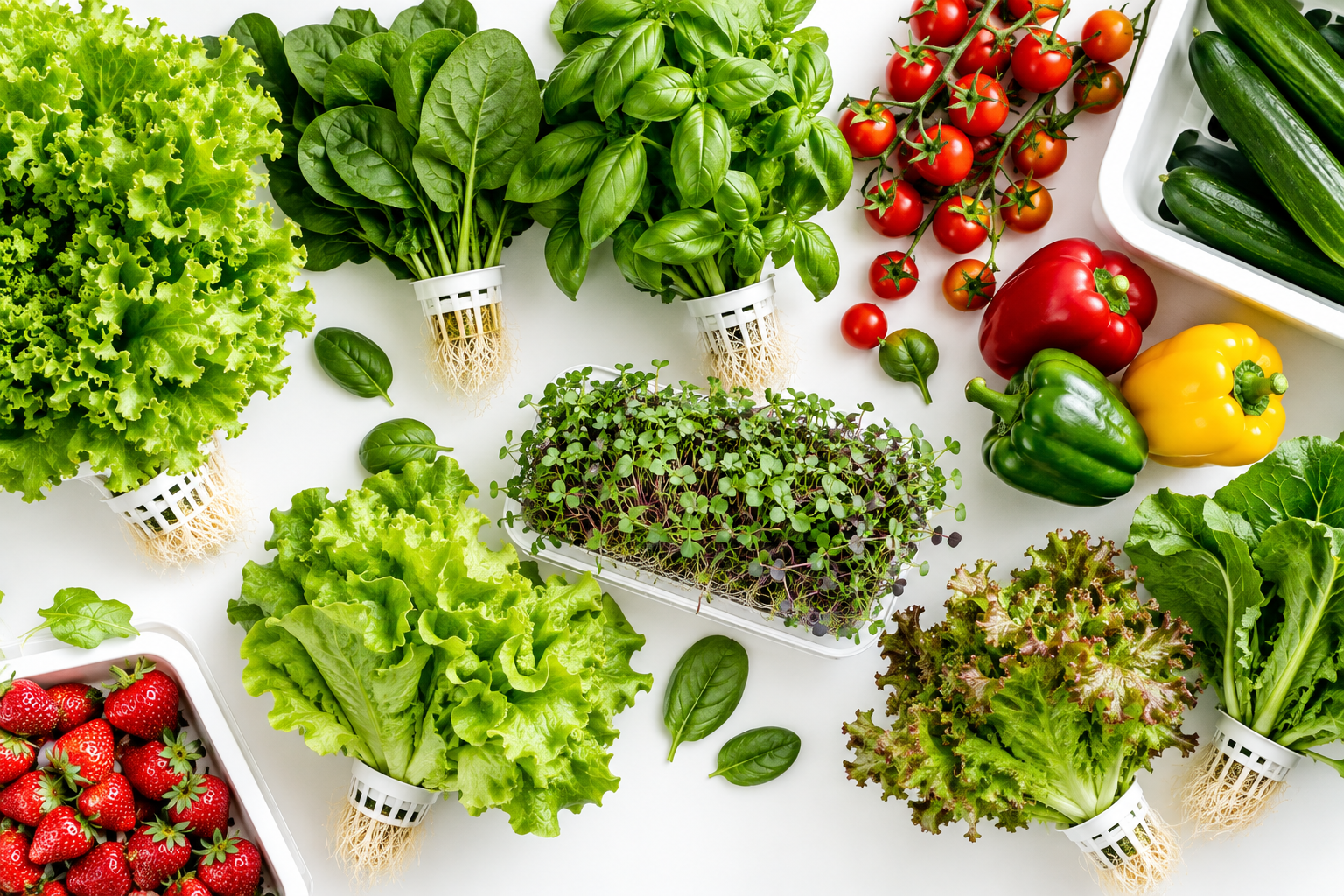
You spot two baskets of lettuce at the store. One is labelled hydroponically grown and looks almost too perfect. The other is slightly muddy but carries a certified organic label.
Both look fresh. Both sound healthy. But are hydroponic vegetables organic?
Not necessarily.
That’s because hydroponic describes how a crop is grown, while organic describes how it is produced under a defined set of standards. Once you understand that difference, those labels become much easier to decode.
First, What Does “Organic” Actually Mean?

Organic isn’t simply another word for fresh, natural or pesticide-free. It refers to produce grown according to defined standards covering farming practices, permitted inputs, handling and certification.
In India, organic production and certification are governed through recognised systems such as the National Programme for Organic Production (NPOP), implemented by APEDA. Certified operators must meet applicable standards and follow the required certification process.
So, words such as natural, chemical-free or grown without soil don’t automatically make produce organic. If organic certification matters to you, check the label and look for the relevant certification mark.
So, What Exactly Is Hydroponic Farming?

What if plants could grow without a traditional patch of soil?
That’s the idea behind hydroponic farming.
Instead of drawing nutrients from soil, plants grow with their roots receiving a carefully balanced water-based nutrient solution. Materials such as coco coir, rockwool or clay pellets may provide physical support while the roots get the water, nutrients and oxygen they need.
The controlled setup allows growers to manage factors such as light, temperature, humidity, water and nutrients. This makes hydroponic farming particularly useful for greenhouses, indoor farms and urban growing spaces.
And while hydroponics works beautifully for some crops, others are trickier to grow this way.
Lettuce, spinach, kale, bok choy and basil are popular hydroponic crops because they grow relatively quickly and don’t require extensive root space.
Tomatoes, cucumbers and bell peppers can also be grown hydroponically. However, their larger plants need additional support, such as trellises, as they grow.
Strawberries are another interesting option. In vertical hydroponic systems, the plants can grow in stacked arrangements with the fruit hanging above the growing surface, making harvesting convenient.
On the other hand, carrots, potatoes and beetroots are less common hydroponic choices because their edible portions develop underground and need more space.
Microgreens are among the fastest-growing options. Depending on the variety, they can be ready to harvest in just one to two weeks.
Looking for fresh ingredients? Explore our Fresh Fruits & Vegetables
Can Hydroponic Produce Be Certified Organic?
This is where things get a little more complicated. Organic certification rules can differ from one country or certification system to another.
In the United States, hydroponic farms can be certified under USDA organic regulations if they meet the applicable requirements.
In India, however, organic certification operates under recognised frameworks such as NPOP, which includes requirements around organic production practices and soil management. This means you shouldn’t assume that a hydroponically grown crop is organic simply because it uses natural-looking inputs or avoids traditional pesticides.
Other regions take a different approach. The European Union generally requires organic crops to be grown in living soil, so conventional hydroponic production does not qualify for organic certification there.
Hydroponic vs Organic: The Quick Difference
The easiest way to tell them apart is:
- Hydroponic: A soilless growing method that supplies plants with water and nutrients through a controlled system.
- Organic: A regulated production system that requires farmers and producers to follow specific organic standards.
- Hydroponic produce: Describes the growing method and does not automatically guarantee organic certification.
- Organic produce: Must meet the requirements of the relevant organic certification system where it is produced and sold.
Prefer certified organic produce? Explore our organic fruits & vegetables
Is Hydroponic Produce Better Than Organic?

Not necessarily. They solve different problems.
Hydroponics can be useful where farming space is limited. Controlled environments allow growers to manage growing conditions closely and cultivate certain crops throughout the year.
For urban farming, this can be particularly useful. Hydroponic farms can operate in greenhouses or indoor facilities rather than relying entirely on large areas of agricultural land.
Organic farming has a different focus, with standards centred on defined organic production practices and ecological management.
0 comments on “Are Hydroponic Fruits and Vegetables Organic? Here’s the Difference”