

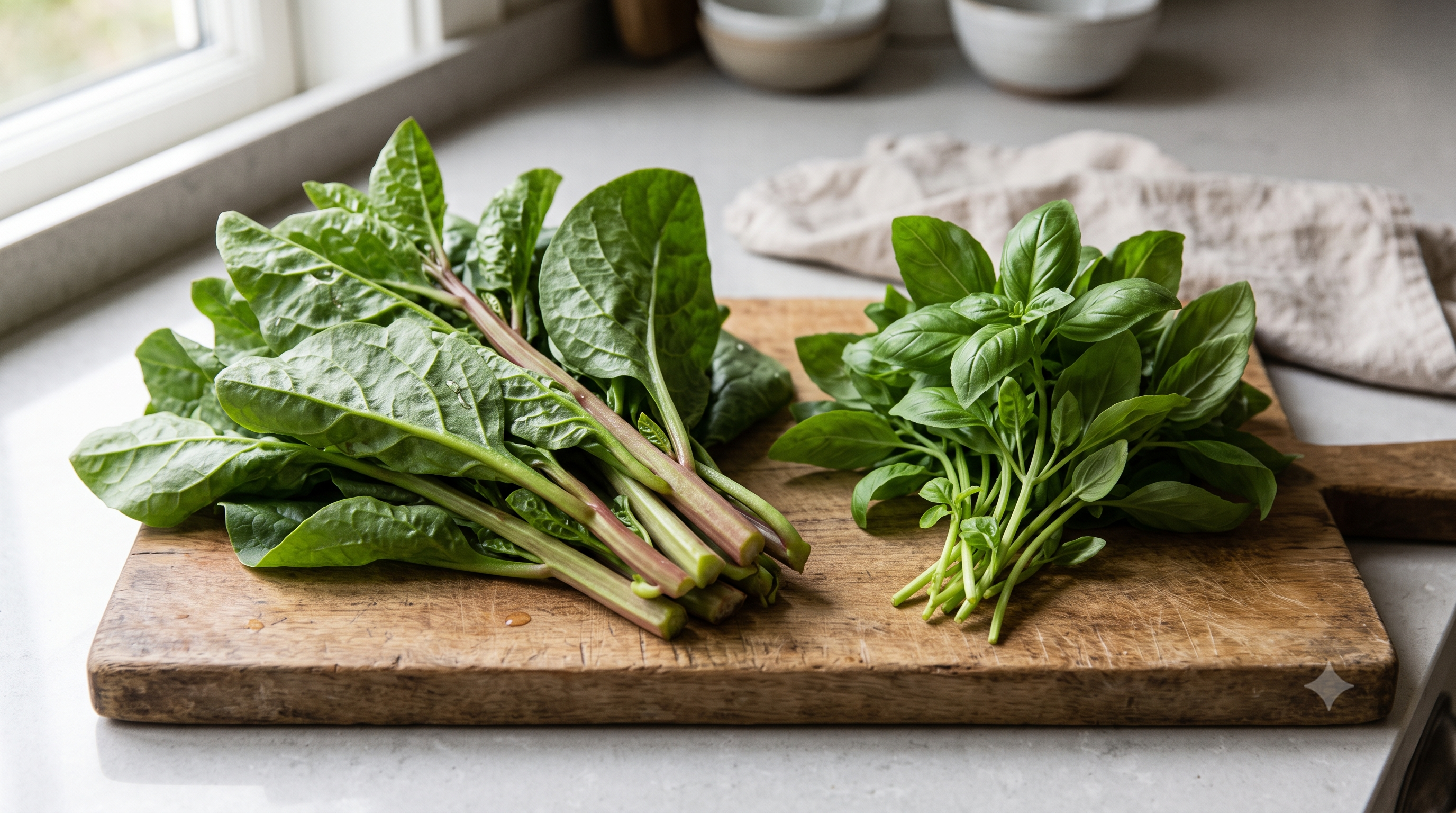
Ever tossed “basale” and “basil” into the same shopping basket because, well, they sound like cousins? You’re not alone.
Half the internet does it too. But here’s the fun twist — these two leafy greens are about as related as a mango and a mango-flavoured candy. One’s a fragrant herb that lives in your pasta sauce. The other is a is a thick, juicy leafy vegetable that basically runs the show in South Indian kitchens.
Let’s settle this leafy rivalry once and for all — and by the end, you’ll never mix them up again.
First Things First: What Is Basale?

Basale, also called Malabar spinach, is a leafy green vegetable commonly used in South Indian and Southeast Asian cooking. Despite its name, it isn’t actually the same as regular spinach.
Its leaves are thick, tender and slightly succulent, with a mild, earthy flavour. When cooked, they become soft and almost silky, making basale a great addition to curries, dals, stir-fries and traditional vegetable preparations.
The stems are edible too, adding a pleasant bite to cooked dishes.
If you’re looking for ways to add more leafy greens to everyday meals, basale is an interesting change from the usual spinach. It works particularly well in recipes where you want a vegetable that can hold its texture and blend beautifully into a rich gravy.
And because fresh produce is all about getting the right ingredient for the right recipe, having fresh basale delivered along with your regular fruits and vegetables can make meal planning a little easier.
Then What Exactly Is Basil?

Basil is an aromatic culinary herb known for its fresh, slightly sweet and peppery fragrance. Unlike basale, you generally don’t use basil as the main vegetable in a dish.
Instead, think of basil as the flavour booster.
A handful of fresh basil can transform pasta, pizza, salads, sandwiches, soups and sauces. It’s also the star ingredient in classic pesto, where its distinctive aroma pairs with nuts, cheese, garlic and olive oil.
Basil comes in several varieties, including sweet basil, Thai basil and holy basil, with each offering a different flavour profile.
So while basale brings volume and texture, basil brings aroma and flavour.
Where the Confusion Actually Comes From
Here’s the plot twist — the name mix-up isn’t random. “Basale” and “basil” share a linguistic coincidence more than a botanical one. Basale belongs to the Basellaceae family, while basil sits comfortably in the mint family, Lamiaceae. Different families, different growth habits, different everything — except that satisfying rhyme when you say them out loud. Add regional pronunciation quirks, and it’s easy to see how grocery lists and recipe searches get tangled.
There’s also a texture trap. Both have that vibrant green color and soft leaf structure at a glance. But pick them up and the difference is obvious — basale leaves are thick, almost succulent, holding water like a mini reservoir. Basil leaves are delicate, tender, and bruise if you look at them wrong.
There’s one more easy giveaway: the smell. Rub a basil leaf gently between your fingers and you’ll notice its unmistakable aromatic scent. Basale, in comparison, has a much milder aroma.
One is built for cooking as a vegetable; the other is usually added as an aromatic finishing ingredient. That’s exactly why basil is often added towards the end of cooking, when you want to preserve its fresh fragrance.
Nutrition Face-Off (Because Everyone’s Counting Something Now)
This is where basale genuinely flexes. Health-conscious shoppers scrolling through superfood trends will love this: basale is remarkably low in calories yet high in dietary fiber, folate, and antioxidants — a useful leafy vegetable for anyone looking to add more nutrient-dense produce to their meals. Basil brings its own perks too, providing nutrients such as vitamin K along with naturally occurring aromatic plant compounds.
The important part? They play different nutritional roles because they’re eaten differently. Basale can form a substantial part of a meal, while basil is generally used in smaller quantities to add flavour.
Think of it this way: reach for basale when you want a filling, nutrient-dense vegetable base for your meal. Reach for basil when you want to elevate flavor without adding bulk. Smart kitchens keep both on rotation — it’s not really a competition, it’s a collaboration.
How to Actually Use Them (Without Overthinking It)
- Basale: sauté with garlic and a pinch of turmeric, blend into a creamy dal, or toss into a stir-fry with lentils for a protein-packed, fiber-rich bowl.
- Basil: tear fresh over pizza, blitz into pesto, muddle into a refreshing summer mocktail, or steep in tea for a calming end-of-day ritual.
And here’s what you shouldn’t do: swap one for the other. Basil can’t replicate the texture or bulk of basale in a curry, while basale won’t give pesto or pasta that unmistakable basil aroma. If a recipe specifically calls for one, it’s best to stick with it.
Both greens are having a moment on wellness feeds right now, and honestly, they deserve it. Fresh, seasonal, minimally processed produce is exactly what modern kitchens are craving, and stocking up on farm-fresh basale and basil is an easy win for anyone leveling up their meals.
The Bottom Line
Basale and basil might share a name game, but they play completely different roles on your plate. One’s a hearty, iron-rich green vegetable ready to anchor your next curry. The other’s a fragrant herb ready to make your dish unforgettable with just a few leaves. Knowing the difference isn’t just trivia — it’s the difference between nailing a recipe and wondering why your pasta tastes like a spinach curry gone rogue.
So next time your grocery app autocorrects “basale” to “basil,” you’ll know exactly why that’s a mistake worth correcting.
Explore our farm-fresh greens and vegetable collection here
You may also like:
0 comments on “Basale vs Basil: Similar Names, Completely Different Greens”