

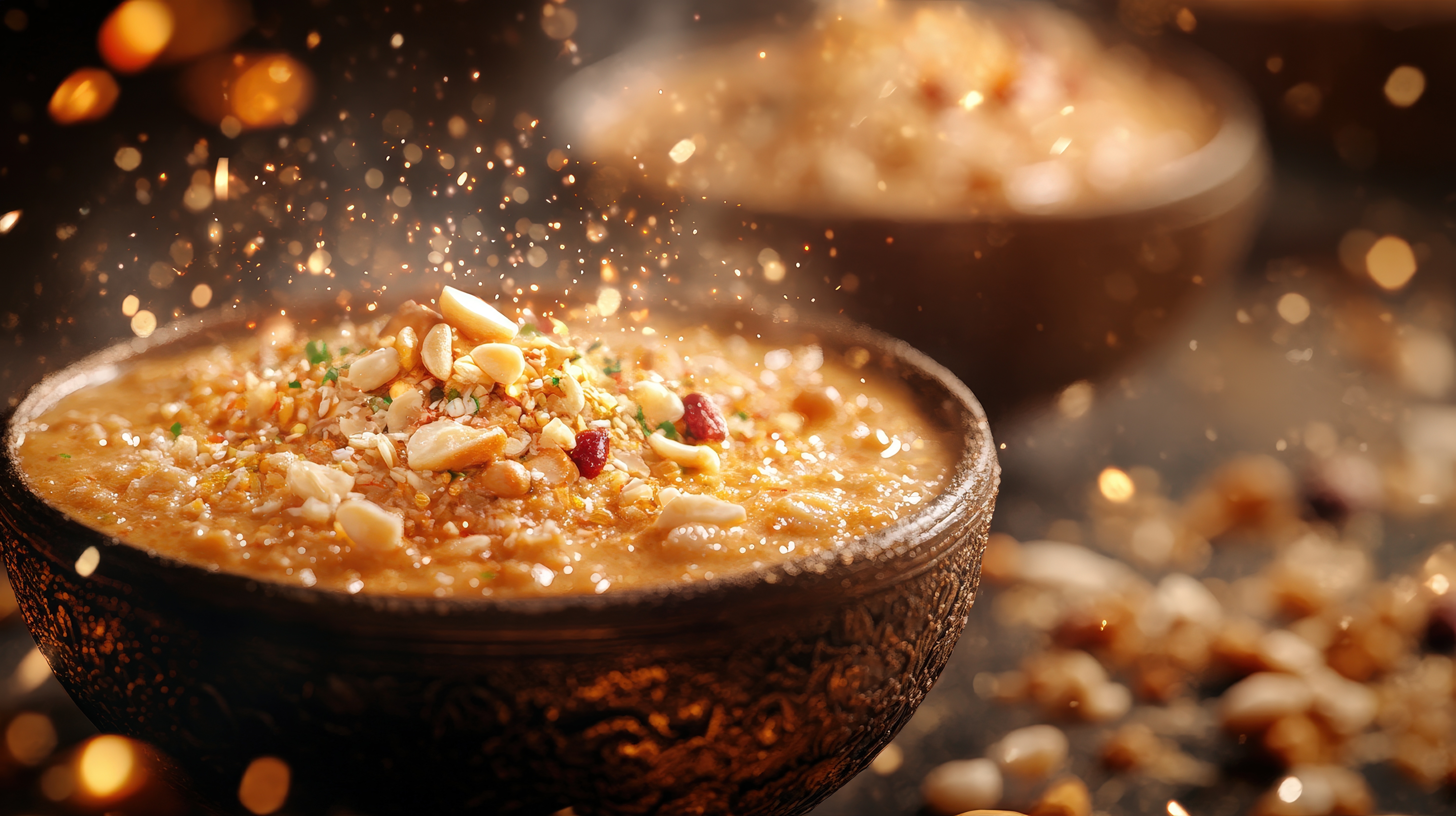
As spring unfolds its colours, kitchens across India come alive with timeless traditions and treasured ingredients. It’s not just a season—it’s a celebration woven into meals passed down through generations. From golden-hued rice sweetened with saffron in the north to grated raw mango turned into a fiery pickle in the south, every dish reflects a unique way of welcoming the new year.
While the ingredients may differ—jackfruit in Kerala, sesame in Assam, and mustard oil in Bengal—they all share one thing: the joy of harvest, home, and heritage. Dive into these festive recipes that turn spring’s bounty into soulful celebrations.
1. Zarda Pulao (Meethe Chawal) for Baisakhi in Punjab

Baisakhi marks the vibrant harvest festival and Sikh New Year in Punjab. Amidst the energetic Bhangra beats and colourful festivities, tables are laden with delicious food.
Zarda Pulao, or Meethe Chawal (sweet rice), is a celebratory staple. This fragrant dish, gleaming with the golden hue of saffron and studded with nuts and raisins, is a sweet jewel made from aromatic Basmati rice. Its gentle sweetness and rich aroma perfectly capture the spirit of abundance and celebration.
Prep time: 20 minutes
Cooking Time: 20 minutes
Serves: 2 servings
Ingredients:
For rice:
- 1 cup basmati rice (soaked for 30 minutes)
- 3 cups water
- 2-3 green cardamoms
- 1 small cinnamon stick
- 2 cloves
- A pinch of salt
For sweet flavouring:
- ¾ cup sugar (adjust as per taste)
- 2 tbsp ghee
- ½ tsp saffron strands (soaked in 2 tbsp warm milk)
- ½ tsp cardamom
- ¼ cup chopped dry fruits (almonds, cashews, pistachios)
- 1 tbsp raisins
- 2 tbsp grated coconut
- A few drops of kewra or rose water
Method:
- Boil 3 cups of water with cardamoms, cinnamon, cloves, and a pinch of salt.
- Add soaked rice and cook until 90% done. Drain the excess water and set the rice aside.
- Boil 3 cups of water with cardamoms, cinnamon, cloves, and a pinch of salt.
- Add soaked rice and cook until 90% done. Drain the excess water and set the rice aside.
- Boil 3 cups of water with cardamoms, cinnamon, cloves, and a pinch of salt.
- Add soaked rice and cook until 90% done. Drain the excess water and set the rice aside.
- Heat ghee in a pan and fry dry fruits and raisins until golden brown. Remove and keep aside.
- In the same ghee, add sugar and ¼ cup water. Let the sugar melt completely.
- Add saffron-infused milk and mix well.
- Add the cooked rice to the sugar syrup and mix gently.
- Add the cooked rice to the sugar syrup and mix gently.
- Sprinkle cardamom powder and kewra/rose water.
- Cover and cook on low heat for 10 minutes until the rice absorbs the flavour.
2. Jackfruit Thoran for Vishu in Kerala

Vishu welcomes the New Year in Kerala with auspicious rituals like the ‘Vishukkani’—a hopeful arrangement of harvest bounty viewed first thing in the morning. The celebratory feast, ‘Vishu Sadhya,’ features an array of dishes served on a banana leaf. Jackfruit Thoran is a beloved part of this spread. Made from tender raw jackfruit, grated coconut, and mild spices, this dry stir-fry (Thoran) offers a unique, delightful texture and embodies the fresh flavours of the region.
Prep time: 30 mins
Cook time: 15 mins
Serves: 3-4 servings
Ingredients:
- 2 cups raw jackfruit (cleaned, pressure-cooked & shredded)
- ½ cup grated coconut
- 2 green chillies (slit or chopped)
- 4-5 shallots (or 1 small onion), chopped fine
- 2 garlic cloves (optional, crushed)
- 1/4 tsp turmeric powder
- 1 sprig of curry leaves
- 1/2 tsp mustard seeds
- 1 dry red chilli, broken
- 1-2 tbsp coconut oil
- Salt to taste
Method:
- Peel the green outer skin and chop the raw jackfruit into chunks.
- Pressure cook with salt and turmeric for 2–3 whistles until soft but not mushy.
- Drain and mash/shred roughly with hands or a spoon.
- In a bowl mix grated coconut, chopped green chillies, crushed garlic, a few curry leaves and a pinch of turmeric.
- Heat coconut oil in a pan, sputter mustard seeds, add red chillies and curry leaves. Saute chopped shallots until soft, add the coconut mixture and saute for 2 minutes. Add the shredded jackfruit and mix well.
- Cook on low flame for 5-7 minutes, stirring occasionally until everything blends together.
- Serve with hot rice, sambar/rasam/moru curry.
3. Mango Thokku for Puthandu in Tamil Nadu

Puthandu, the Tamil New Year, is celebrated with feasting and family gatherings. A significant part of the Puthandu meal often includes dishes representing the six tastes (Aru Suvai), symbolising the varied experiences of life.
Mango Thokku, a vibrant grated raw mango pickle, brings the essential sour and spicy notes. This quick, cooked pickle is fiery, tangy, and utterly delicious, capturing the essence of unripe mangoes that signal the arrival of summer.
Prep time: 15 mins
Cook time: 15 mins
Serves: Approx. 1.5 cups
Ingredients:
- 2 raw mangoes
- 2 tbsp red chilli powder
- 1/2 tbsp turmeric powder
- 1 tbsp mustard seeds
- ¼ tsp fenugreek seeds
- ¼ tsp asafoetida
- 2 tsp salt
- ½ cup sesame oil
Method:
- Peel and grate raw mangoes.
- Heat sesame oil in a thick-bottomed pan.
- Add mustard seeds and let them sputter.
- Add grated mango, salt and turmeric powder.
- Cook well on medium heat for 6-8 minutes stirring until the mango becomes soft.
- Add red chilli powder, asafoetida and fenugreek powder.
- Mix well and cook for another 5 minutes.
- Store in a clean and dry ceramic or glass container with a lid.
- Store in a cool dry place.
4. Til Pitha for Bohag Bihu in Assam

Bihu, particularly Bohag or Rongali Bihu in spring, is Assam’s most important festival, celebrating the agricultural season and the Assamese New Year. Feasting and merriment are central, with homes preparing various ‘pithas’ (rice cakes/crepes) and ‘larus’ (sweet balls). Til Pitha is a classic Bihu delicacy – a thin, delicate crepe made from rice flour, rolled around a sweet, nutty filling of roasted black sesame seeds and jaggery. It’s simple, traditional, and incredibly comforting, especially when enjoyed warm.
Prep time: 30 Mins
Cook time: 25 mins
Serves: Approx. 8-10 pithas
Ingredients:
- 1 cup rice flour
- 1 and ¼ cups water
- A pinch of salt
- ½ cup black sesame seeds
- ½ cup date palm jaggery
- Cardamom powder (to taste)
- 1 tsp fennel seeds
- 1 tsp dried grated coconut
Method:
- Dry roast black sesame seeds until they pop and become aromatic.
- Cool slightly and coarsely grind them. Mix cardamom powder, fennel seed powder and palm jaggery to it.
- Mix the rice flour, salt and water to form a thin batter. Let it rest for 15 minutes.
- Heat the pan on medium heat.
- Grease lightly with ghee.
- Pour a ladle of the batter into the pan and spread into a thin crepe.
- Add 1 tablespoon of the sesame-jaggery mixture in a line in the centre of the crepe.
- Let it cook till the edges start lifting.
- Roll it gently like a cigar or a spring roll. Remove from the pan on a cloth or warm container. Serve warm with black tea.
5. Aloo Dim Bhorta for Poila Boisakh in West Bengal

Poila Boisakh heralds the Bengali New Year, a time for new clothes, cultural programmes, and of course, delectable food. While festive meals can be elaborate, sometimes the simplest dishes evoke the most comfort and nostalgia. Aloo Dim Bhorta (mashed potato and egg) is a quintessential Bengali comfort food. This humble yet flavour-packed mash combines boiled potatoes and eggs with the sharp pungency of raw mustard oil, fiery green chillies, and onions. It’s a quick, satisfying dish often enjoyed with plain rice.
Prep time: 10 mins
Cook time: 10 mins
Serves: 2-3 servings
Ingredients:
- 2 large potatoes
- 2 hard-boiled eggs
- 1 onion, finely chopped
- 2–3 green chillies (adjust to taste)
- 2 tablespoons mustard oil (or to taste)
- Salt, to taste
- Fresh coriander leaves, chopped
Method:
- Boil the Potatoes. Peel and boil the potatoes in water until tender. Drain and let them cool.
- Hard-boil the eggs and let them cool. Peel and chop them.
- In a bowl, mash the boiled potatoes using a fork or potato masher.
- Add the chopped boiled eggs to the mashed potatoes.
- Add the finely chopped onions, green chillies, mustard oil, and salt. Mix everything well until combined.
- Taste the bhorta and adjust the salt and mustard oil according to your preference.
India’s spring harvest festivals offer a dazzling array of culinary experiences. Each dish tells a story of its region, its traditions, and the universal joy of gathering and sharing good food. We hope these recipes inspire you to bring a taste of India’s vibrant spring celebrations into your home. Whether you try one or all, may they fill your kitchen with delightful aromas and your table with happiness.
Happy Cooking and Happy Festivals!
0 comments on “Recipes for India’s Spring Harvest: A Season of New Beginnings”