

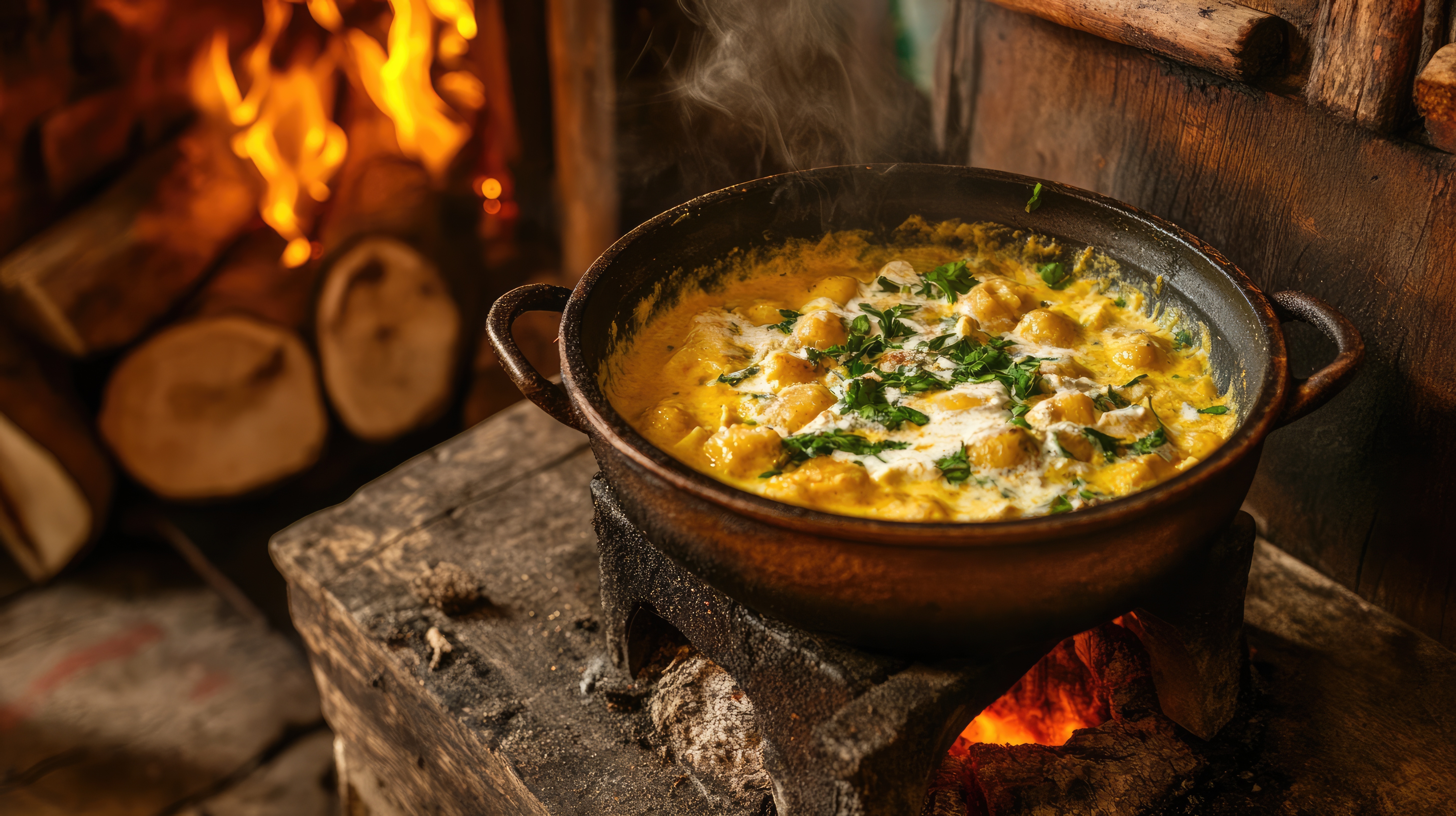
Whether it’s a bowl of Punjabi Butter Chicken or Kerala’s Fish Moilee, curry is one of India’s most recognised culinary inventions. It’s not one dish—it’s a whole world of flavours, traditions, and family secrets passed down through word of mouth, spice-stained cookbooks, and memory.
So, how did curry become such a global phenomenon? Let’s dig into its roots, travel through its journey, and celebrate what it means today.
⏳ Ancient Origins: Where It All Began
Believe it or not, curry goes back over 4,000 years. Archaeologists studying pottery from the Indus Valley Civilization found traces of turmeric, ginger, and garlic—proof that early Indian communities were already cooking up something special. These spice blends, though simple, laid the foundation for what would evolve into the many curries we know today.
The word curry itself likely comes from the Tamil word “kari”, meaning sauce or relish. When the British arrived, they began using the term to describe nearly any spiced Indian dish with gravy. It was easier than learning the name of every local delicacy, but in doing so, they flattened an incredibly nuanced cuisine into one general term.
🍽️ A Dish That Changes With Every State
In India, curry isn’t a single recipe—it’s hundreds, and no two are quite the same.
In the North, you’ll find creamy, comforting gravies like Paneer Makhani, Chicken Korma, and Rajma, made rich with tomatoes, dairy, and garam masala.
In the South, curries are thinner, spicier, and built on coconut, tamarind, and curry leaves—like Chettinad Chicken, Meen Moilee, or Sambar.
Head East, and mustard oil, poppy seeds, and fish reign supreme in dishes like Shorshe Ilish and Machher Jhol.
Out West, curries reflect a vibrant mix of flavours—fiery Laal Maas in Rajasthan, coconut-laced Xacuti in Goa’s coastal kitchens, and sweet-spicy gravies in Maharashtra and Gujarat.
Even within the same region, families often have their own way of making curry. That’s the magic—it’s not just food, it’s personal.
🌍 Foreign Influences & Global Reach
India’s curry story isn’t just about internal diversity—it’s also shaped by what came in from outside. The Mughals introduced rich, slow-cooked gravies with nuts, cream, and dried fruits—dishes like Korma, Nihari, and Rogan Josh were born out of this era. The Portuguese, who arrived in Goa in the 16th century, brought with them ingredients like chillies, potatoes, and vinegar—none of which were native to India at the time. These ingredients changed Indian cooking forever. One of the most iconic dishes to come from this fusion is Vindaloo—originally a Portuguese meat-and-vinegar stew (carne de vinha d’alhos) that evolved in Goan kitchens into the spicy, tangy curry we now know and love.
In Britain, curry became more than just popular—it became part of the national identity. Dishes like Chicken Tikka Masala, born from Anglo-Indian kitchens, are now so ingrained in British culture that they’re often considered national dishes. Curry houses line streets across the UK, serving everything from balti to biryani. The love runs so deep that the UK even celebrates National Curry Week every October—a tribute to the nation’s enduring appetite for Indian flavours and the communities behind them.
In Japan, curry (kare) was introduced via the British during the Meiji era. Over time, it transformed into a mild, slightly sweet stew served with sticky rice—a go-to comfort food across homes, school lunches, and convenience stores.
In the Caribbean, particularly in places like Trinidad and Guyana, Indian indentured labourers brought their masalas, which mixed beautifully with local ingredients and tastes. The result? Dishes like Trinidadian Curry Chicken and Goat Curry—hearty, boldly spiced, and cooked low and slow.
In Thailand, Indian spices and cooking styles mingled with native ingredients like lemongrass, galangal, and coconut milk. This fusion gave rise to Thai red, green, and yellow curries—distinct in flavour, yet carrying echoes of Indian techniques.
Even in Malaysia, Fiji, South Africa, and Mauritius, Indian communities adapted curry to their new environments, often merging it with Chinese, Malay, African, or Creole flavours. Today, curry continues to reinvent itself, shaped by the cultures it touches—while always carrying a piece of India at its core.

Did you know? Curry powder was a British invention created during colonial times as a shortcut blend to mimic Indian flavours abroad.
|
🫕 A Story Still Simmering
Here in India, curry isn’t a trend—it’s a tradition. It’s what we come home to, what we serve guests with pride, and what brings comfort when nothing else does. From weekday lunches to festive feasts, curry is part of our everyday rhythm.
Even today, this story keeps evolving. Young chefs give old recipes a modern twist. Grandmothers pass down secret spice blends. New ingredients find their way into old pots. And every household continues to add its own flavour to the legacy.
Because in India, curry isn’t just a dish—it’s an emotion, a memory, a moment shared over food. And it will always keep simmering, one delicious pot at a time.
a very interesting read