

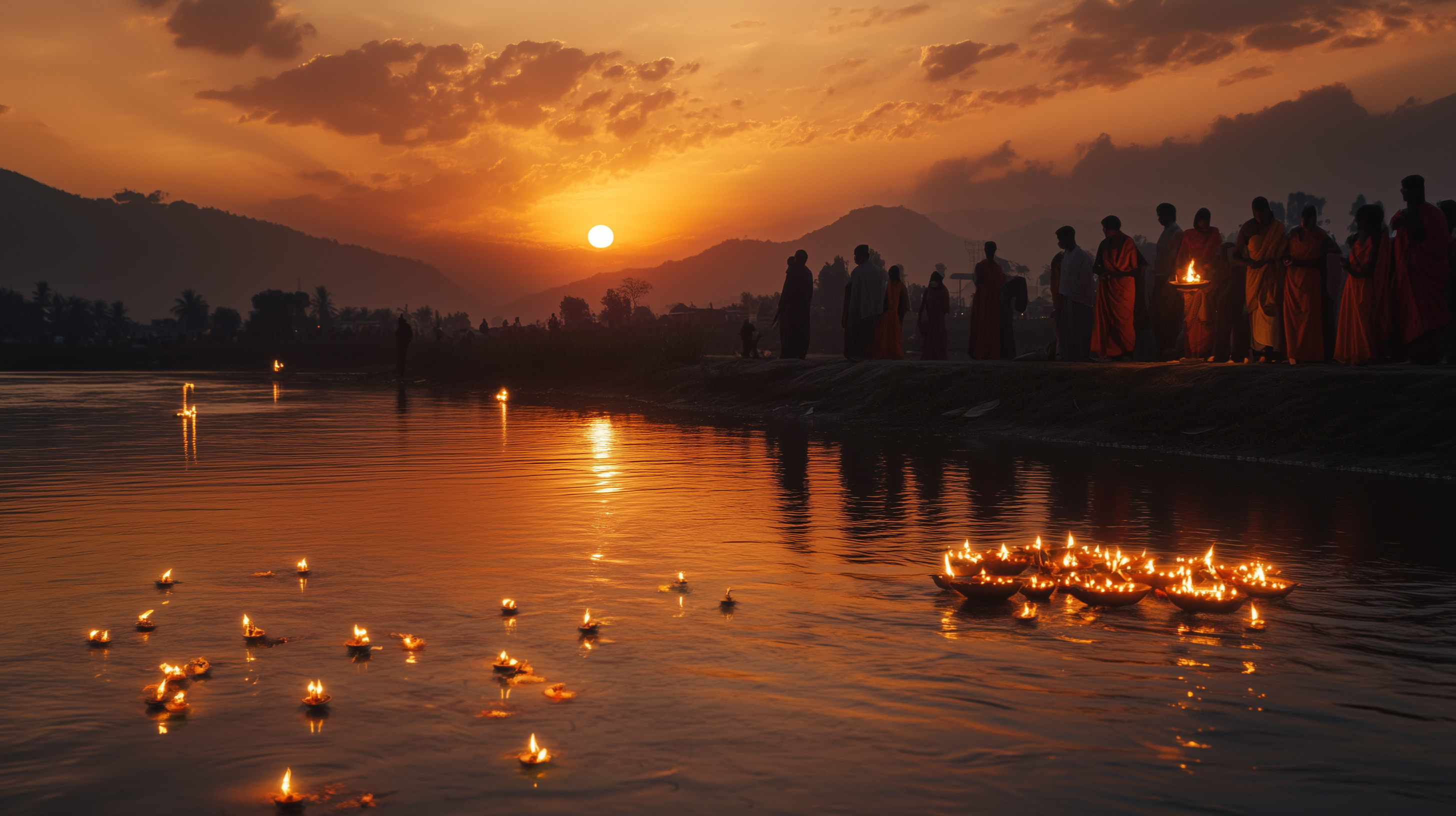
Chhath Puja, a significant Hindu festival dedicated to the Sun God, Surya Dev, and Chhathi Maiya, is celebrated with great fervour and devotion, primarily in the Indian states of Bihar, Jharkhand, and eastern Uttar Pradesh. Revered for its austerity and devotion, Chhath Puja is observed over four days and involves strict fasting, bathing rituals, and paying homage to natural elements. Celebrated six days after Diwali, Chhath Puja is a time of gratitude, worship, and spiritual cleansing. Here’s a comprehensive look at Chhath Puja, its history, rituals, and cultural significance.
Origins and History of Chhath Puja
Chhath Puja is one of the oldest Hindu festivals, with origins believed to trace back to ancient Vedic times. The festival is mentioned in texts like the Rigveda, where sages worshipped the Sun through chants and hymns. Chhath is also connected to the legend of the Mahabharata, where Draupadi and the Pandavas performed rituals to seek divine blessings and get their kingdom back.
Another popular legend revolves around Lord Rama and Sita. Upon their return to Ayodhya after 14 years in exile, they performed Chhath Puja to worship Surya for blessings and prosperity in their kingdom. Over centuries, Chhath has grown into a widespread festival where families honour the Sun God and Chhathi Maiya, who is believed to be a symbol of fertility and protector of children.
Significance of the Sun God and Chhathi Maiya
In Hinduism, the Sun is considered the source of life and a powerful deity capable of healing and offering blessings for longevity, prosperity, and health. Chhathi Maiya is worshipped alongside Surya and is believed to protect the family and children. This festival thus holds immense emotional significance for devotees, as it represents gratitude towards nature, life, and familial well-being.
Rituals and Traditions
Chhath Puja is a meticulous observance, with each day holding specific rituals and traditions.
Day 1: Nahay-Khay

The first day of Chhath Puja, known as Nahay Khay, marks the beginning of the ritual. Devotees, primarily women, start the festival with a purifying bath in a river or lake, symbolising the washing away of sins. They then prepare a simple vegetarian meal, often including items like rice, dal, pumpkin curry, and ghee, which is offered to the Sun God. This meal is shared among family members, marking the beginning of a fasting period that will gradually intensify.
Day 2: Lohanda and Kharna

On the second day, known as Lohanda or Kharna, devotees observe a strict fast, refraining from consuming water throughout the day. In the evening, they prepare offerings that include kheer (rice pudding made from jaggery and rice), chapati, and bananas. After making an offering to the Sun, they break their fast with these items, sharing the prasad with family and neighbours. This act is a form of gratitude to Chhathi Maiya and is believed to foster harmony within the community.
Day 3: Sandhya Arghya

The third day is the main day of Chhath Puja, known as Sandhya Arghya, where devotees fast without water, and in the evening, they gather by a river or water body to offer the first ‘arghya’ (offering) to the setting sun. This is a spectacular event, as families gather in colourful attire, holding offerings in beautifully arranged baskets. Devotees offer fruits, thekua (a traditional sweet), and sugarcane to the setting sun, with the belief that these offerings will bring blessings of health, prosperity, and harmony to their families. As night falls, the atmosphere is filled with devotion, songs, and the sound of conch shells.
Day 4: Usha Arghya

The final day of Chhath Puja called Usha Arghya, is devoted to worshipping the rising sun. Devotees return to the river or lake at dawn to offer the second ‘arghya.’ This day marks the culmination of the rituals, where families pray for prosperity and well-being. After the final prayer, devotees break their fast and share the prasad with loved ones, symbolising the end of Chhath Puja. This day holds a beautiful message of unity, gratitude, and harmony with nature, as the morning rays of the Sun are believed to bestow peace and health on all who participate.
Key Rituals and Offerings of Chhath Puja
The offerings, or ‘prasad,’ used in Chhath Puja are simple yet deeply symbolic. They primarily include fruits, sugarcane, thekua (a type of wheat flour cookie made with jaggery), coconut, and raw vegetables. These offerings represent the pure and unprocessed gifts of nature, which are considered sacred and are believed to foster good health and prosperity.
The ritual of fasting without water, known as ‘Nirjala Vrat,’ is particularly demanding. Devotees maintain this fast as a show of unwavering devotion and gratitude to the divine. These fasts, along with standing in water and chanting hymns, are believed to cleanse both the body and soul, reconnecting devotees with nature and the divine.
Growing Popularity of Chhath Puja
While traditionally celebrated in the northern regions of India, Chhath Puja has grown in popularity across the country and even among Indian communities abroad. The dedication of devotees and the stunning visual aspects of the festival—such as the riverside gatherings, colourful attire, and symbolic offerings—have caught the attention of people worldwide. In places like Delhi and Mumbai, Chhath Puja is celebrated on a grand scale, with public organizations arranging venues for devotees to gather safely and celebrate together.
The Final Thought
Chhath Puja is more than a religious festival; it is a celebration of faith, resilience, and respect for nature. This four-day event beautifully combines physical austerity with spiritual devotion, reminding people of the importance of gratitude and unity.
As Chhath Puja gains more recognition, it serves as a symbol of cultural heritage, bringing people together in a shared expression of faith, reverence for nature, and the quest for blessings of prosperity and health. For those observing Chhath Puja or witnessing it for the first time, it is a festival that illuminates the powerful connection between humans and the natural world.
0 comments on “Chhath Puja: The 4-Day Festival & It’s Traditions”